
Yellow slug moth
Thosea lutea
Description
How to identify
The Yellow slug moth (Thosea lutea) belongs to the Limacodidae family of the order Lepidoptera. The larvae are easily identified by their slug-like appearance, having a fleshy, flattened body with distinct protrusions and a vibrant yellow-green coloration that warns potential predators.
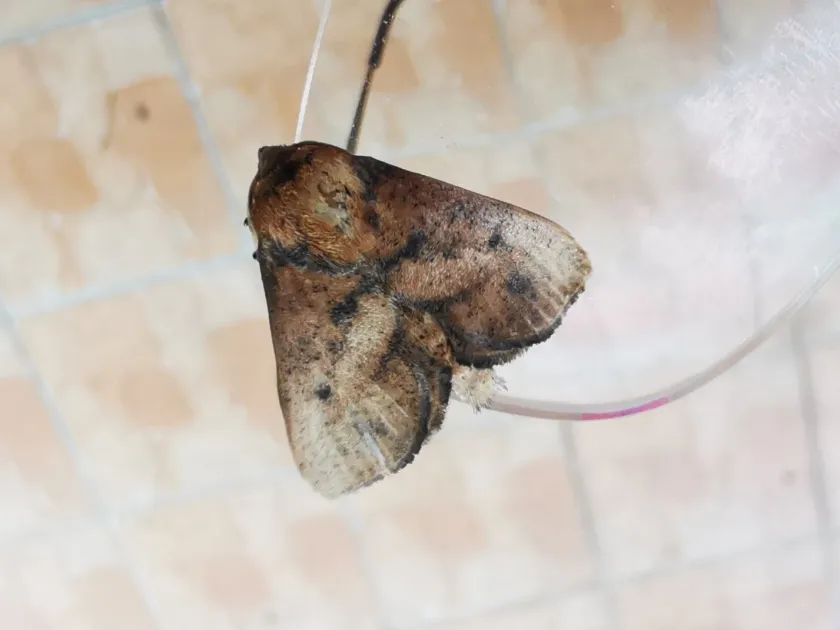
Adult moths are generally small to medium-sized, with a stout, hairy body. Their wings are typically ochre-yellow or brownish, providing excellent camouflage against tree bark, where they remain stationary during the daylight hours.
The life cycle encompasses four stages: egg, larva, pupa, and adult. The insect typically overwinters as a pre-pupa inside a tough, spherical silk cocoon, which is often firmly attached to the branches or hidden within the plant debris on the ground.
A crucial identifying characteristic of Limacodidae larvae is the presence of urticating (stinging) hairs on their body. These hairs can cause significant skin irritation or allergic reactions in humans, requiring careful handling during field assessments.
The species is primarily distributed in East Asian regions, where it is recognized as a recurring pest in orchards and tea plantations due to its ability to build up large populations in favorable climatic conditions.
What it damages
The Yellow slug moth is a polyphagous pest, meaning it attacks a wide variety of host plants. Preferred hosts include fruit trees like apples and pears, citrus species, and tea bushes, which are particularly susceptible to defoliation.
Early-stage larvae feed on the leaf epidermis, skeletonizing the leaf surface and leaving behind translucent patches. As the larvae grow, they consume the entire leaf lamina, leaving only the primary veins, which significantly disrupts the plant's metabolism.
Severe infestations lead to heavy defoliation, which hampers the tree's ability to produce energy through photosynthesis. This results in weakened tree vigor, reduced winter hardiness, and poor development of new shoots and fruit buds.
The resulting stress from caterpillar feeding causes fruit drop and a substantial decline in overall yield. In young trees or nurseries, heavy feeding can even lead to stunted growth or death if the canopy is completely destroyed.
Furthermore, the damaged leaf tissues serve as entry points for various secondary fungal and bacterial pathogens, which can exacerbate the decline of the host plant and complicate the recovery process.
Control measures
Effective management of Thosea lutea relies on an Integrated Pest Management (IPM) approach. Regular monitoring of trees during the growing season allows for early detection of egg clusters and young larvae before significant damage occurs.
Cultural control methods include the mechanical removal and destruction of cocoons found on tree trunks or branches during the dormant season. Maintaining orchard hygiene by clearing fallen leaves helps reduce the number of overwintering pupae.
Biological control is highly encouraged, as the pest has several natural enemies, including parasitoid wasps and predatory insects that can regulate caterpillar numbers. Utilizing pheromone traps helps in tracking the flight period of adults.
Microbial insecticides based on Bacillus thuringiensis provide an environmentally friendly option that effectively targets young larvae while sparing beneficial insects and pollinators in the orchard ecosystem.
If chemical intervention is necessary, insecticides should be applied selectively. It is important to rotate products with different modes of action to prevent the development of resistance and to apply them when the larvae are at their most vulnerable early stages.
Taxonomy
- Latin name
- Thosea lutea
- Order
- Lepidoptera (butterflies)
- Family
- Limacodidae
- EPPO code
- THOSLU
Discussion
No discussions yet — be the first.