
Thosea
Thosea
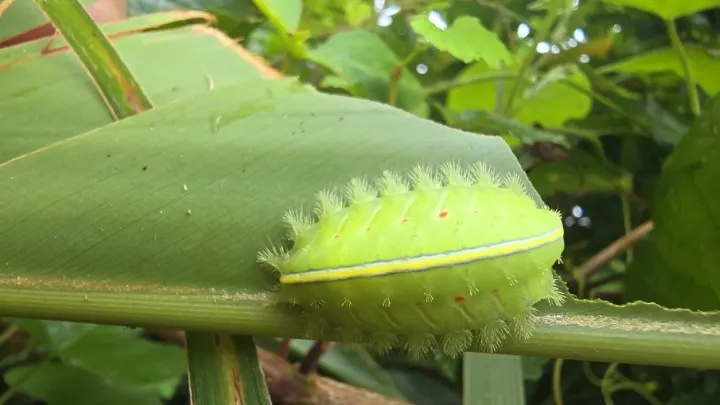
Description
How to identify
The genus Thosea belongs to the Limacodidae family, commonly known as slug moths. Adult moths typically have a robust body covered with dense hairs, often displaying shades of brown or gray, allowing them to blend into tree bark.
The larvae, often referred to as nettle caterpillars, are the most recognizable stage due to their slug-like appearance. They lack distinct thoracic legs and move using a flattened ventral surface that secretes a sticky substance for adhesion.
Many Thosea larvae possess rows of stinging spines or tubercles along their bodies. These spines are equipped with venom glands that can cause painful skin inflammation or stinging reactions upon contact with humans.
Larval coloration is diverse, often featuring vibrant green or brown patterns that provide excellent camouflage against leaves. The head is usually small and retracted beneath the anterior body segments.
Pupation occurs within very hard, seed-like cocoons. These are usually constructed on the underside of leaves or along branches, making them extremely difficult to spot during routine garden inspections.
What it damages
Thosea species are significant pests of tropical agricultural crops. Their host range is extensive, including major commodities like oil palms, coffee trees, cacao, and various fruit trees such as mango and citrus.
Larvae consume leaf tissue aggressively, starting from the epidermis and moving through the entire leaf. This feeding behavior often leads to severe defoliation, which directly impacts the plant's photosynthetic capacity.
In commercial plantations, high infestation levels can drastically reduce crop yield by weakening the plant's overall vitality and ability to produce fruit. Young plants are particularly vulnerable and may die if entirely defoliated.
The feeding sites created by the larvae serve as entry points for secondary infections, including fungal and bacterial pathogens that can cause leaf blight or rot in vulnerable species.
Repeated defoliation by successive generations of Thosea can eventually lead to the decline and death of mature trees, posing a serious economic threat to farmers.
When it appears
The life cycle of Thosea is strongly influenced by climatic conditions, with populations often peaking during high-humidity periods and rainy seasons. Stable temperatures allow for continuous breeding throughout the year.
Females lay eggs in small clusters, typically on the underside of leaves. The duration of the egg stage depends on temperature, followed by several larval instars where the caterpillars grow rapidly and cause most of the damage.
Pupation lasts for several weeks, depending on the environmental conditions. After emerging, the adult moths are nocturnal and prioritize finding mates and suitable host plants for oviposition.
Multiple generations can occur annually in tropical environments, which means that monitoring must be continuous to prevent the buildup of pest density during the growing season.
Understanding the synchronization between the pest's cycle and the phenology of the host crop is essential for determining the most effective timing for interventions.
Signs of infestation
The most prominent sign of an infestation is the presence of skeletonized leaves. Larvae eat the leaf tissue between the veins, leaving behind a lace-like structure of the major leaf skeleton.
Small, pellet-like frass (excrement) found on the leaves below the feeding sites is a reliable indicator that the larvae are active in the upper canopy of the plant.
Discovery of the hardened, spherical cocoons attached to twigs or leaf petioles is a clear sign that a generation has reached the pupal stage, indicating the potential for a new wave of moths soon.
Visible decline in plant vigor, such as yellowing foliage or stunted leaf growth, often accompanies heavy infestations and indicates that the pest has been feeding for some time.
An unexpected stinging sensation when brushing against foliage is a common "human-centered" indicator of a nettle caterpillar infestation, often occurring before visual symptoms are fully realized.
Control measures
Integrated Pest Management (IPM) is the most effective approach for controlling Thosea. This involves combining biological controls, cultural practices, and, when necessary, targeted chemical treatments.
Biological control using entomopathogenic fungi or Bacillus thuringiensis (Bt) is highly effective for younger larval stages while minimizing the impact on non-target beneficial insects.
Encouraging natural predators, such as parasitic wasps and predatory beetles, can help keep Thosea populations below the economic injury level through natural suppression.
If population thresholds are exceeded, targeted applications of systemic or contact insecticides are recommended. It is vital to use narrow-spectrum products to protect pollinators.
- Hand-picking and destroying cocoons and larvae during early infestation stages.
- Using pheromone or light traps to monitor and reduce adult moth populations.
- Maintaining proper orchard hygiene, including pruning and clearing weeds that may harbor larvae.
Taxonomy
- Latin name
- Thosea
- Order
- Lepidoptera (butterflies)
- Family
- Limacodidae
- EPPO code
- THOSSP
Discussion
No discussions yet — be the first.