
Grape leaf skeletonizer
Theresimima
Description
How to identify
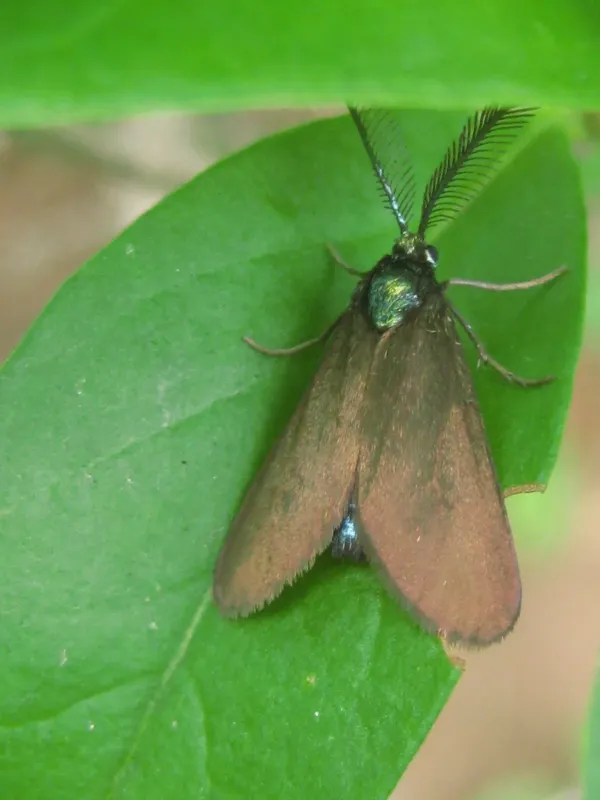
The Grape leaf skeletonizer (Theresimima ampellophaga) is a moth species belonging to the Zygaenidae family. The adult moth has a wingspan of 18–25 mm, with a dark, metallic-black body and wings, making it distinct among vineyard insects.
The larvae progress through several developmental stages. Mature caterpillars are approximately 15 mm long and have a yellowish-green body adorned with black spots and longitudinal stripes, providing excellent camouflage against the vine leaves.
The eggs are small, oval-shaped, and pale yellow. They are typically laid in small clusters on the underside of grapevine leaves, often concentrated along the major veins to provide shelter and proximity to food sources.
Pupation occurs within firm, white silken cocoons. These are often attached to the cracks and crevices of the vine bark, posts, or trellising systems, which allows the insect to overwinter safely in various climatic conditions.
The life cycle encompasses four stages: egg, larva, pupa, and adult. Depending on the latitude and climate, this pest may complete one or two generations per growing season, which dictates the severity of the damage to the vineyard.
What it damages
The primary host of this pest is the cultivated grapevine (Vitis vinifera). The larvae are highly specialized feeders that focus their destructive activities on the leaf tissue of the vines.
Upon hatching, the young larvae begin feeding on the leaf surface, consuming the parenchyma while leaving the veins untouched. This process, known as skeletonizing, results in transparent leaf patterns that eventually wither and turn brown.
Severe infestations can lead to massive defoliation. A reduction in leaf area compromises the plant's ability to perform photosynthesis, which in turn hinders the vine's overall health and the accumulation of sugars in the developing fruit.
Early leaf drop caused by the pest exposes the shoots to excessive sunlight and prevents them from maturing properly. This lack of proper wood maturation reduces the vine's winter hardiness, potentially leading to significant freeze damage.
In addition to foliage, high larval populations may feed on flower buds and young fruit clusters. This direct damage to the reproductive structures can significantly decrease yields and lower the overall quality of the harvest.
When it appears
The emergence of the first generation of adults typically coincides with bud break and the beginning of rapid shoot growth. This generally occurs from late May to early June, depending on local weather patterns.
Larvae appear roughly two weeks after egg-laying. Their most active feeding period is during the summer months of June and July, which is a critical time for canopy development and fruit set in the vineyard.
In warmer climates, a second generation may occur, extending the period of threat throughout the mid-summer. Ongoing monitoring during this time is essential to prevent significant damage to the vine's foliage.
As daylight hours decrease and temperatures drop, the insect enters the pupal stage to overwinter. Identifying their preferred hibernation sites, such as vine trunks and structural supports, is key to managing the next generation.
Using pheromone traps is highly recommended to monitor the adult flight period. This proactive approach allows growers to time their control measures accurately, catching the pest before the larvae become too large and damaging.
Signs of infestation
The most recognizable sign of an infestation is the presence of "windows" or skeletonized spots on the leaves. These areas appear translucent as the green tissue is consumed, leaving only the structural leaf veins.
Scattered dark, granular frass on the leaves below feeding sites is a telltale sign of larval activity. Finding this residue should prompt an immediate inspection of the upper canopy.
Caterpillars are often found on the undersides of the leaves during the day, where they hide from direct sunlight. Careful visual examination of these hidden areas is necessary for early detection.
White, spindle-shaped cocoons hidden within bark crevices or on trellis wires are signs of completed development. These indicate established populations that require targeted intervention for the following season.
General vine decline, characterized by premature yellowing or stunted shoot development, can also serve as an indicator, especially when other diseases have been ruled out by the agronomist.
Control measures
Cultural control starts with winter vineyard maintenance. Scrubbing or peeling off old, loose bark from the trunks eliminates potential overwintering sites for the pupae, effectively reducing the population.
Biological control options, such as Bacillus thuringiensis (Bt), are highly effective against younger larvae while remaining safe for beneficial insects and predators, making them ideal for integrated pest management programs.
Chemical control should be reserved for cases where economic thresholds are exceeded. It is crucial to rotate insecticides with different modes of action to prevent the development of resistance in the pest population.
- Monitor adult moth flights using pheromone lures.
- Remove and destroy infested foliage to reduce larval numbers.
- Apply targeted insecticides when early-stage larvae are present.
- Maintain proper vine canopy management to improve airflow.
Always conduct spray applications during the evening, as this is when the pests are most active on the leaf surfaces. Ensure thorough coverage of the leaf undersides to achieve maximum efficacy with the chosen product.
Taxonomy
- Latin name
- Theresimima
- Order
- Lepidoptera (butterflies)
- Family
- Zygaenidae
- EPPO code
- THEESP
Discussion
No discussions yet — be the first.