
Thaneroclerus
Thaneroclerus
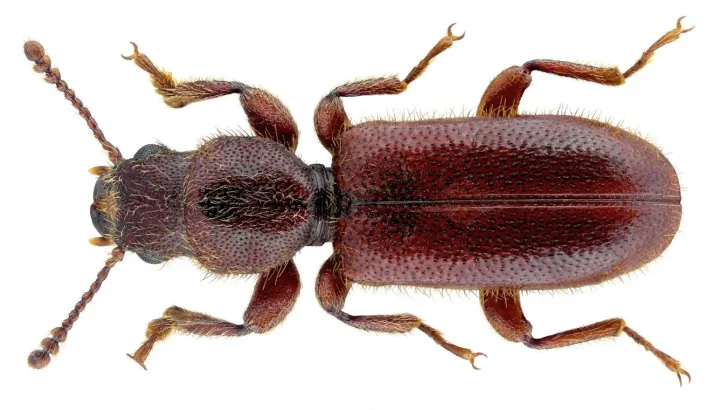
Description
How to identify
Thaneroclerus is a genus of beetles belonging to the family Thanerocleridae. These insects are small, typically ranging from 3 to 5 millimeters in length, with an elongated and somewhat cylindrical body structure.
Adult beetles are generally dark brown or black in color and often exhibit a glossy or metallic appearance. Their morphology includes well-developed mandibles suitable for interacting with the substrates they inhabit, which are typically stored goods.
The life cycle of the Thaneroclerus involves four distinct stages: egg, larva, pupa, and adult. The larvae are active and cryptic, often spending their entire developmental period hidden within the food source.
Thaneroclerus buqueti is the most recognized species within this genus, often found globally in warehouses, grocery stores, and domestic pantries where dried plant materials or cereals are kept.
Proper identification usually requires the assistance of an entomologist, as these beetles share many characteristics with other stored-product beetles, making visual differentiation difficult for non-specialists.
What it damages
Thaneroclerus is known to infest a variety of dried plant products, including cereals, nuts, and medicinal herbs. It is frequently identified as a secondary pest, meaning it prefers goods that have already been colonized by other primary insects.
The damage is primarily caused by the larvae, which bore into the stored goods, consuming the internal parts. This destruction leads to significant loss of mass and reduction in the overall quality of the stored materials.
Infested goods are typically rendered unsalable due to the presence of frass (insect excrement), larval skins, and webbing, which compromise food safety standards for human and animal consumption.
In addition to direct consumption, the feeding activity of these larvae creates ideal micro-environments for the growth of molds and yeasts, which can further accelerate the spoilage of the entire stored lot.
Failure to manage Thaneroclerus populations can result in severe economic losses, especially when high-value commodities like exotic spices or high-quality seeds are involved in the infestation.
Control measures
The primary method for controlling Thaneroclerus is proactive sanitation. Warehouses should be kept free of dust, debris, and spilled product that can serve as breeding grounds for these insects.
Controlling environmental factors such as humidity and temperature can significantly limit the beetle's reproductive success. Maintaining dry and cool storage conditions is a highly effective way to discourage colonization.
Physical barriers, such as using airtight containers and high-quality packaging, are essential for preventing the spread of the beetles from infested batches to clean areas within the facility.
When an infestation is detected, chemical control methods like fumigation may be necessary. Fumigation reaches deep into the stored goods to eliminate all life stages, preventing the population from rebounding.
- Implement regular monitoring using sticky traps and pheromone-based lures.
- Perform deep cleaning of all machinery and storage surfaces between uses.
- Isolate any suspicious or confirmed infested lots immediately upon detection.
- Utilize controlled atmosphere storage to reduce insect activity and survival rates.
Taxonomy
- Latin name
- Thaneroclerus
- Order
- Coleoptera (beetles)
- Family
- Cleridae
- EPPO code
- THACSP
Discussion
No discussions yet — be the first.