
Red-legged ham beetle
Thanasimus rufipes
Description
How to identify
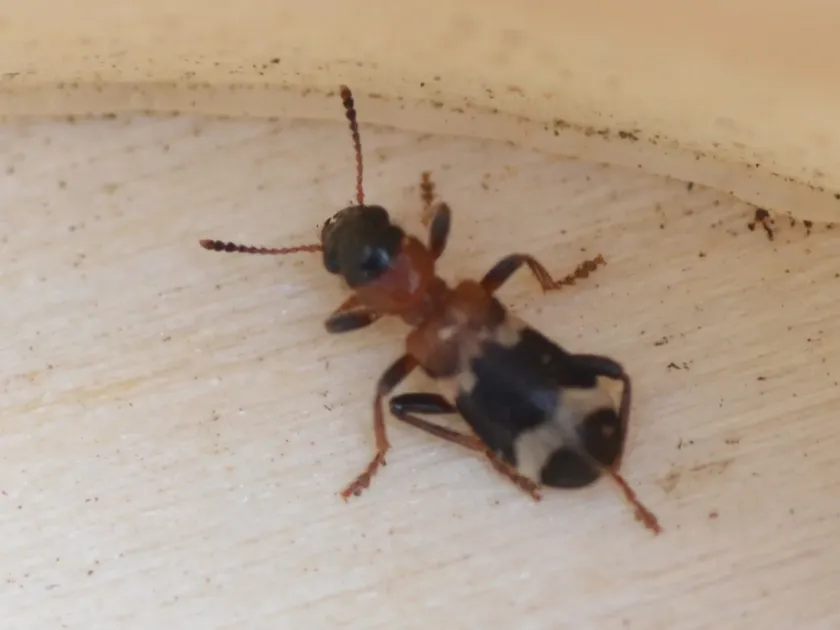
The red-legged ham beetle (Thanasimus rufipes) is a member of the Cleridae family, order Coleoptera. It is a predatory beetle measuring between 7 and 10 mm in length.
The body is elongated with a dark head and pronotum, while the elytra feature distinct transverse light-colored bands characteristic of the species.
Its common name, red-legged ham beetle, is derived from the distinct reddish-brown color of its legs, which serves as a key identification feature.
The insect's body is covered in dense hair, facilitating its movement across bark and interactions with other insects within forest habitats.
The larvae are bright red, making them easily detectable when inspecting the bark or leaf litter of affected coniferous tree species.
What it damages
This beetle primarily affects coniferous trees such as spruce, pine, and fir, especially those already weakened by bark beetle infestations or fungal diseases.
Both adults and larvae penetrate the subcortical space, where they cause mechanical damage to the phloem, further stressing the tree's defensive mechanisms.
While the beetle acts as a predator, high populations can cause secondary damage to the timber, reducing its commercial value during harvest.
Compromised bark becomes vulnerable to secondary infections, which accelerate tree mortality and degrade the overall quality of the wood.
The most significant impact is observed in areas with high bark beetle density, where these beetles aggregate to feed on primary wood pests.
When it appears
Adult activity begins in the spring when beetles emerge from hibernation in the forest floor or deep bark crevices to seek food and mates.
Reproduction and egg-laying are synchronized with the peak flight period of bark beetles, ensuring a steady food source for the developing larvae.
During the summer months, larval development occurs rapidly as they actively patrol tree trunks in search of available prey.
By autumn, the larvae prepare for winter by seeking shelter in the soil or protected bark layers, ensuring their survival throughout the colder season.
The number of generations per year is largely dependent on regional climatic conditions and the length of the growing season.
Signs of infestation
Presence of the pest is often indicated by characteristic larval tunnels under the bark, frequently found alongside damage caused by other wood-boring insects.
Adult beetles can be spotted through visual trunk inspections, as they move quickly across the surface while hunting or searching for mates.
The presence of bark beetle carcasses with distinct signs of predation is a strong indicator of this beetle's activity in the forest stand.
Removing a section of bark on a symptomatic tree will reveal bright red larvae grouped near the tunnels of secondary forest pests.
- Damaged bark showing signs of peeling.
- Presence of bright red larvae under the bark.
- Signs of bark beetle predation by adults.
Control measures
The primary control measure is the timely removal of infested trees through sanitary logging to eliminate food sources and breeding sites.
Strict adherence to forest management practices, including the removal of logging residues, is essential to prevent large-scale population outbreaks.
The use of pheromone traps designed for bark beetle monitoring helps to indirectly regulate the population of these predatory beetles.
In cases of severe infestation, the application of forestry-approved insecticides may be necessary to suppress localized pest populations.
Maintaining balanced forest ecosystems that support natural enemies of the beetles is a critical strategy for long-term forest protection.
Taxonomy
- Latin name
- Thanasimus rufipes
- Order
- Coleoptera (beetles)
- Family
- Cleridae
- EPPO code
- THANRU
Discussion
No discussions yet — be the first.