
Tetyra bipunctata
Tetyra bipunctata
Description
How to identify
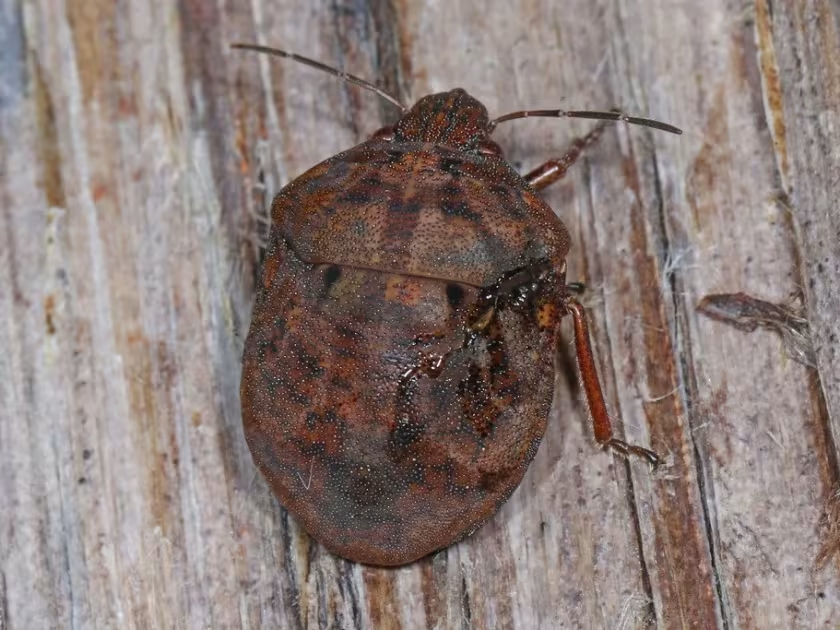
Tetyra bipunctata is a species of shield bug belonging to the family Scutelleridae. The adult insect is characterized by an oval, highly convex body, typically measuring between 10 and 12 millimeters in length.
The coloration of the bug varies from light brown to dark gray, covered with numerous small dark punctures. The head is small and triangular, closely pressed against the pronotum, which features two distinct dark spots, a key identification mark.
The scutellum, a large shield covering the abdomen and wings, is a prominent feature of this species. It gives the bug its robust, armored appearance, distinguishing it from other common plant-feeding insects in grain fields.
Nymphs of this species resemble adults in body shape but lack fully developed wings and are generally smaller. They undergo several molting stages, gradually increasing in size and color intensity as they mature.
Eggs are barrel-shaped and typically laid in small clusters on the leaves or stems of host plants. They are often found in sheltered areas of the plant, where they remain until the young nymphs emerge.
What it damages
Tetyra bipunctata primarily attacks cereal crops, including winter and spring wheat, rye, and barley. It can also be found on various wild grasses that serve as alternative food sources during the off-season.
The pest uses its piercing-sucking mouthparts to feed on plant sap. This activity weakens the plant, retards its growth, and can cause significant physiological stress during the crucial stages of development.
The most severe damage occurs when the bugs feed on developing grain heads. By piercing the glumes, the insects extract nutrients from the kernels, leading to shriveled, lightweight, and low-quality grain.
The insects inject digestive enzymes into the grain during feeding. These enzymes break down gluten proteins, which drastically reduces the baking quality of the flour produced from the infested harvest.
Economic damage is often cumulative, as high populations can lead to widespread crop failure or significantly lower market value for the harvested grain due to poor protein structure and physical damage.
When it appears
Adult bugs overwinter in leaf litter, debris, or grassy areas near fields. They emerge in the spring as soon as temperatures consistently exceed the threshold for their activity, usually around 10-12 degrees Celsius.
Following emergence, they migrate to fields where they feed on available wild grasses before moving onto newly growing cereal crops. This transition period is vital for their survival and reproductive success.
Egg-laying typically occurs in late spring or early summer. The life cycle from egg to adult takes several weeks, with nymphs passing through multiple instar stages before transforming into winged adults.
A new generation of adults usually emerges by mid-to-late summer. They continue to feed actively until autumn, when falling temperatures trigger their search for suitable hibernation sites for the winter.
The life cycle is typically univoltine, meaning there is one generation per year. However, local weather patterns can influence the speed of development and the size of the population during the growing season.
Signs of infestation
Initial signs of infestation include small chlorotic spots or wilting on leaves at the site of the bugs' feeding punctures. Over time, these areas may become necrotic and turn yellow.
The most reliable sign of a significant infestation is the appearance of shriveled, pitted, or discolored grains in the ear. Close inspection often reveals a dark spot at the puncture site on the kernel.
During surveys, sweep netting is the standard method for detection. Finding multiple adults or nymphs per set number of sweeps indicates that the population has reached levels that require management action.
Affected fields may show uneven plant height and general weakness. In severe cases, the grain heads may appear stunted or bleached due to the intensive feeding activity of the bugs on the developing seeds.
Field borders adjacent to wild grasslands or tree lines are often the first areas to show symptoms of infestation, as the bugs frequently move into crops from these nearby reservoirs.
Control measures
Cultural control practices are essential for managing Tetyra bipunctata. This includes the destruction of weeds and volunteer grasses, which act as refuge areas for the bugs outside of the cropping season.
Deep autumn plowing of fields helps to disrupt the hibernation sites of the adults, exposing them to colder temperatures and predators, which significantly reduces the survival rate of the population.
Chemical control should be implemented based on the economic injury level. If scouting confirms high bug density, systemic insecticides can be applied during the grain-filling stage to protect the yield.
Biological control agents, such as egg parasitoids, play a natural role in regulating the bug population. Preserving these natural enemies is a key component of sustainable integrated pest management.
- Crop rotation to break the pest cycle.
- Timely harvesting to minimize exposure time.
- Monitoring fields using standard sweep net techniques.
- Targeted application of insecticides at the ear-filling stage.
Taxonomy
- Latin name
- Tetyra bipunctata
- Order
- Hemiptera (bugs, aphids, leafhoppers)
- Family
- Pentatomidae
- EPPO code
- TETYBI
Discussion
No discussions yet — be the first.