
Tessaratoma
Tessaratoma
Description
How to identify
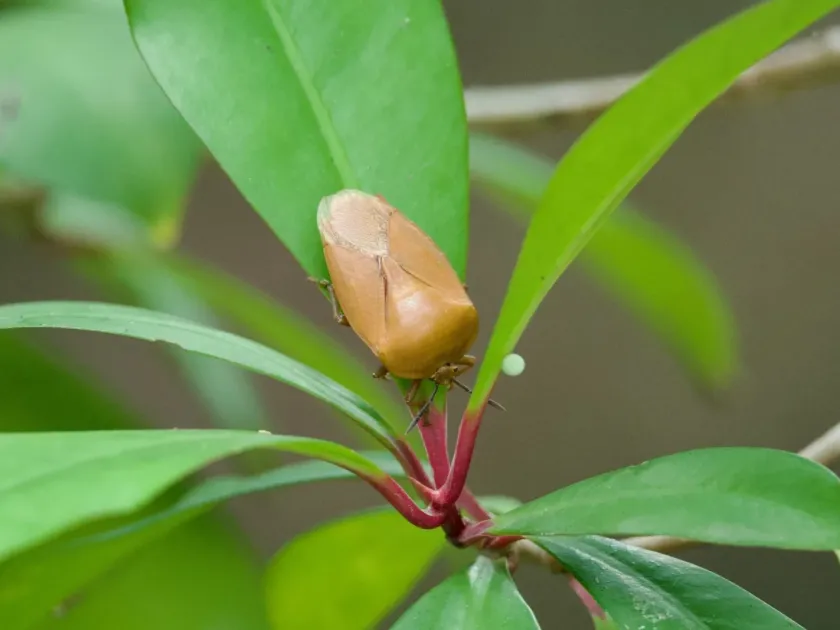
Tessaratoma is a genus of insects belonging to the family Tessaratomidae within the order Hemiptera. These are large bugs, typically measuring 25–30 mm, characterized by their shield-like body shape and colors ranging from reddish-brown to yellowish.
The insect possesses a specialized defense mechanism; when threatened, it emits a pungent, corrosive liquid from glands, which can cause irritation to humans and act as a deterrent against predators.
The life cycle consists of the egg stage, five nymphal instars, and the adult stage. Nymphs in early stages often remain in clusters, while adults are highly mobile and disperse throughout the tree canopy.
Development is heavily influenced by climatic conditions, with tropical and subtropical climates allowing for multiple generations per year, which significantly increases the risk of infestation.
These bugs are specialized phytophagous insects that utilize a piercing-sucking mouthpart to extract sap from the phloem and xylem of woody plant parts.
What it damages
Tessaratoma is primarily known as a major pest of litchi (Litchi chinensis) and longan (Dimocarpus longan), causing severe economic losses in commercial orchards throughout Southeast Asia.
Beyond its primary hosts, the bug can also attack various citrus varieties, mangoes, and other tropical fruit trees, particularly when these are cultivated near infested litchi or longan plantations.
Both adults and nymphs cause damage by feeding on young shoots, flower panicles, and developing fruitlets, extracting essential nutrients and moisture required for plant development.
The most critical impact occurs during the flowering stage, where heavy feeding leads to the premature shedding of panicles, effectively preventing fruit set and destroying the harvest potential.
On young trees, persistent feeding can lead to stunted growth, deformation of new branches, and a weakened immune system, leaving the trees vulnerable to secondary fungal or bacterial pathogens.
Signs of infestation
The most immediate sign of an infestation is the sudden abscission of flower panicles and young fruit, often showing small dark punctures caused by the bug's proboscis.
Leaves and young stems may exhibit localized necrosis and yellowing, resulting from the toxic enzymes in the bug's saliva, which break down plant tissues to facilitate easier feeding.
A distinctive, unpleasant odor often indicates the presence of large colonies of these bugs, which frequently cluster on the undersides of branches or within dense foliage.
The discovery of egg batches, typically laid in neat, geometric patterns on the underside of leaves, is a primary indicator for starting integrated pest management protocols.
Overall decline in tree vigor, characterized by drooping leaves and a lack of new growth during the active vegetative season, serves as a late-stage warning of high population density.
Control measures
Effective management relies on Integrated Pest Management (IPM), with the use of egg parasitoids like Anastatus japonicus being one of the most successful biological control strategies.
Mechanical control, including the manual removal of egg masses and the shaking of trees in the early morning to collect and destroy adults, is highly effective for smaller plots.
Chemical intervention should be strategically timed and targeted, utilizing insecticides that minimize impact on non-target beneficial insects while effectively reducing the bug population.
Systemic insecticides are often preferred for their ability to reach bugs hiding deep within the canopy, provided that strict pre-harvest intervals are maintained to ensure food safety.
- Deploying pheromone-based monitoring traps to detect early outbreaks.
- Canopy pruning to increase airflow and allow better penetration of chemical sprays.
- Conserving local natural enemy populations through reduced pesticide use.
Taxonomy
- Latin name
- Tessaratoma
- Order
- Hemiptera (bugs, aphids, leafhoppers)
- Family
- Pentatomidae
- EPPO code
- TESSSP
Discussion
No discussions yet — be the first.