
Javanese termite
Termes javanicus
Description
How to identify
The Javanese termite (Termes javanicus) is a social insect species belonging to the order Isoptera and the family Termitidae. These insects live in complex colonies characterized by a hierarchical caste system comprising workers, soldiers, and reproductives.
Workers are responsible for foraging and maintaining the colony, possessing light-colored, soft bodies and strong mandibles adapted for wood and cellulose consumption. Soldiers are specialized for defense, featuring highly sclerotized heads and powerful jaws used to repel intruders.
Reproductive individuals are winged during the dispersal phase. Following a nuptial flight, they shed their wings and establish new colonies in the soil or within decaying organic material, where the queen begins egg-laying.
Their entire biological cycle is contained within an elaborate system of galleries and soil tunnels, which provide a stable microclimate and protection against environmental extremes and predators.
While ecologically significant in natural forests as decomposers, in agricultural settings, they act as destructive pests, targeting both living tissues and structural wood components.
What it damages
This species is notorious for damaging various plantation crops, including rubber trees, tea bushes, and coffee plants. It primarily attacks the root systems, leading to nutrient and water transport failure.
Feeding damage to the trunk often causes the tree to weaken structurally, making it susceptible to wind damage and secondary attacks by various fungal and bacterial pathogens.
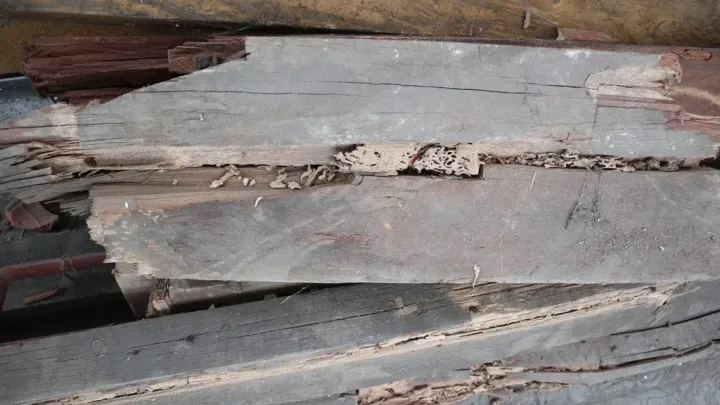
Beyond agricultural crops, Termes javanicus poses a significant threat to agricultural infrastructure, including wooden buildings, storage facilities, and fence posts, which are quickly degraded by their feeding activities.
In high-density infestations, the loss of young saplings can be near total, causing significant economic setbacks and requiring costly replanting efforts in affected regions.
The damage is cumulative; as the colony grows in size, its demand for cellulose increases, leading to a wider reach and more intensive destruction of the surrounding plant life.
Signs of infestation
The most visible indicator of an infestation is the presence of earthen tunnels or shelter tubes running along trunks or foundations, constructed by workers to protect themselves from sunlight.
Sudden wilting of healthy plants, combined with yellowing foliage, is a common sign that the root system has been compromised by termite feeding activity.
External inspection of trees often reveals bark damage, hollow areas, or frass-filled galleries, which clearly indicate the internal presence of a termite population.
During the onset of the rainy season, the swarming of winged reproductives is a strong indicator of a mature colony operating within or near the agricultural area.
Ground-level mounds or localized soil disturbance near the base of susceptible trees can suggest the development of a subterranean nest, indicating a need for immediate intervention.
Control measures
Effective management begins with the establishment of chemical barriers using termiticides in the soil around plantation zones to prevent worker termites from accessing crops.
The use of slow-acting bait stations is a highly recommended strategy, as workers transport the toxicant back to the nest, ensuring the destruction of the entire colony, including the queen.
Cultural practices, such as the systematic removal of stumps, dead wood, and organic debris from the field, are essential to eliminate primary nesting sites and alternative food sources.
Physical barriers, such as the use of gravel or termite-resistant mesh materials at the base of structures and young trees, can significantly inhibit the mobility of the termites.
Biological control agents, particularly entomopathogenic fungi, offer a sustainable alternative, providing long-term suppression of termite populations while minimizing chemical usage in the environment.
Taxonomy
- Latin name
- Termes javanicus
- Family
- Termitidae
- EPPO code
- TERMJA
Discussion
No discussions yet — be the first.