
Meridional termite
Amitermes meridionalis
Description
How to identify
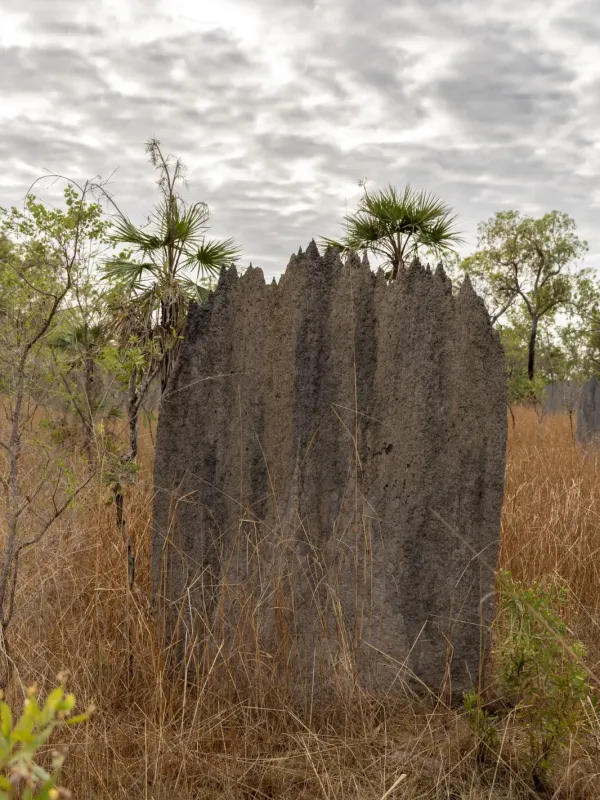
The Meridional termite (Amitermes meridionalis) is a species of the Termitidae family within the order Blattodea. It is globally recognized for constructing wedge-shaped mounds, which are precisely oriented north-to-south to regulate the internal colony temperature.
Workers of this species are wingless and possess light-colored bodies. They are responsible for the daily tasks of foraging and maintaining the complex network of subterranean galleries and mud tubes that protect them from desiccation.
The soldier caste is easily identified by their darker, hardened heads and prominent, powerful mandibles. These soldiers play a crucial role in defending the colony against invaders such as ants, which frequently attempt to breach the mounds.
The life cycle involves egg, nymph, and adult stages. Reproductives, or alates, emerge during the swarming season to establish new colonies. Once they shed their wings, they start building new structures, often deep within the soil or inside decaying wood.
This species is endemic to Northern Australia. Its biology is perfectly adapted to the tropical climate, where seasonal shifts in humidity drive the reproductive cycles and the structural maintenance of their impressive mounds.
What it damages
While the Meridional termite primarily consumes dead plant material, grass, and decaying wood, they can be significant pests in agricultural landscapes. Their foraging habits can pose a threat to various crops and wooden infrastructure.
Damage to living plants typically occurs when termites attack the root system or penetrate the heartwood of trees. This weakens the plant's structural integrity, reduces nutrient uptake, and can lead to severe stress or even plant death over time.
In farming operations, their impact on wooden supports for vines, orchard stakes, and irrigation components is substantial. By consuming cellulose, they compromise the integrity of essential infrastructure, leading to costly equipment replacements.
Once the protective bark or outer layers are damaged by termite feeding, the wounds serve as entry points for secondary pathogens. Fungi and rot-inducing bacteria often exploit these breaches, further accelerating the decline of the affected plants.
- Damage to root systems of perennial orchards.
- Destruction of wooden agricultural supports and fence posts.
- Increased susceptibility to secondary diseases due to bark lesions.
- Economic losses due to structural failures in farm irrigation systems.
Signs of infestation
The most visible sign of their presence is the presence of their iconic wedge-shaped mounds on the landscape. Proximity to these structures indicates a high risk of foraging activity in the surrounding soil.
Mud tubes or earthen galleries on the trunks of trees or along the soil surface are clear evidence of termite movement. These structures are built to provide a safe, moist environment for the termites to travel between the nest and food sources.
Wilting, yellowing of foliage, or stunted growth are often indicators that the root zone or the vascular system of the plant has been compromised by termite tunneling or feeding activity.
A hollow sound when tapping wooden structures, such as fence posts or orchard stakes, suggests that the interior has been excavated by termites. Often, the surface remains intact while the inner core is completely compromised.
Massive swarming events by alates at the start of the wet season are definitive indicators of mature colonies. This period marks a high risk for the colonization of new areas and potential expansion of the pest population.
Control measures
Effective control strategies emphasize mechanical barriers. Ensuring that wooden structures or tree trunks do not come into direct contact with the soil is a primary defense against infestation.
Chemical soil barriers, using targeted insecticides, are utilized around high-value crops to prevent termites from successfully tunneling toward the root zones. Such barriers create a protected zone that discourages foraging activity.
Biological control options include the use of entomopathogenic fungi, such as species of Beauveria. When introduced into the colony, these natural pathogens can spread among the termites, potentially reducing colony strength without chemical contamination.
Sanitation practices play a key role in management. Removing dead wood, debris, and dry plant matter from the agricultural site eliminates the primary food supply, making the area less attractive to expanding termite populations.
Integrated Pest Management (IPM) involves regular monitoring with bait stations. Detecting activity early allows for localized intervention, preventing a small infestation from developing into a systemic problem for the farm.
Taxonomy
- Latin name
- Amitermes meridionalis
- Family
- Termitidae
- EPPO code
- AMITME
Discussion
No discussions yet — be the first.