
Wheeler's desert termite
Amitermes wheeleri
Description
How to identify
Wheeler's desert termite (Amitermes wheeleri) is a member of the family Termitidae within the order Blattodea. This species is a social insect characterized by a subterranean lifestyle, often making it difficult to detect before significant damage occurs.
The worker caste of this species is small with a pale, whitish appearance. Because their exoskeletons are sensitive to UV radiation, they remain almost exclusively within soil galleries, mud tubes, or inside plant tissues to avoid exposure to light and dehydration.
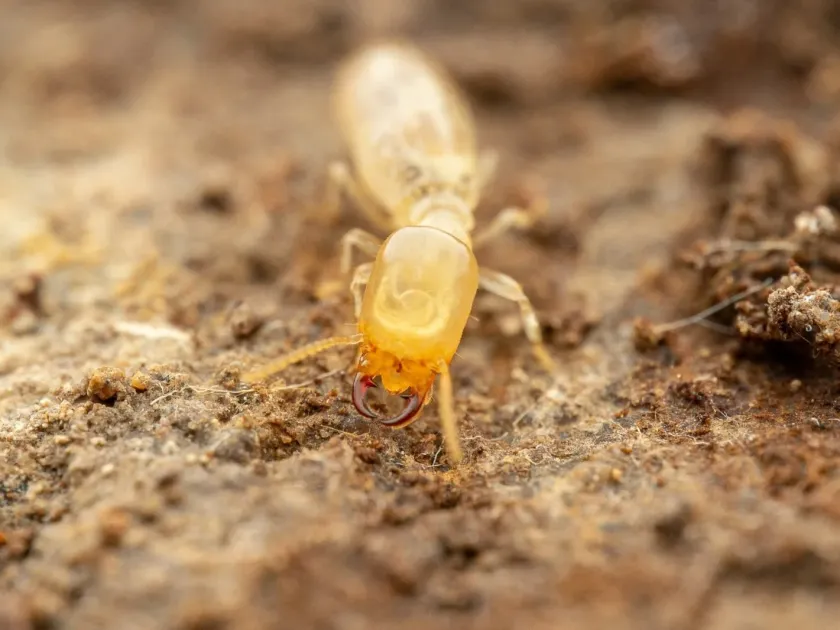
Soldiers of this species possess a distinct head morphology featuring strong, sharp mandibles used for colony defense. Identifying the specific shape and coloration of the soldier head is a primary diagnostic feature for distinguishing Amitermes wheeleri from other local termite species.
Colony reproduction occurs during the nuptial flight, where winged reproductive forms, or alates, emerge from the nest to mate and establish new colonies. Detecting these swarms in agricultural landscapes is a clear indication that a nesting site is active nearby.
Nests are typically subterranean or found within decaying woody substrates. Locating these colonies involves carefully investigating the root zones of infested plants and inspecting soil profiles for signs of intricate, mud-lined tunnel networks.
What it damages
This pest is highly polyphagous, attacking a wide range of desert vegetation and agricultural crops. In arid farming regions, these termites are known to target the underground portions of plants, specifically roots and lower stems.
Wheeler's desert termite presents a threat to various crops, including cereals, cotton, and forage grasses. They consume the plant’s root system, severing the connection between the plant and its water supply, which leads to sudden wilting and eventual death.
By damaging the crown area, termites obstruct the plant's vascular system, rendering the crop incapable of nutrient transport. Affected plants often exhibit signs of drought stress despite adequate soil moisture levels.
Furthermore, termite galleries act as entry points for various soil-borne pathogens, including fungi and bacteria. These secondary infections frequently accelerate the decline of the host plant, resulting in larger, expanding patches of crop failure.
During periods of severe drought, termite foraging intensity increases as they search for alternative water-rich sources. During these times, crop roots become primary targets, leading to significant economic losses in the affected fields.
Signs of infestation
The most visible sign of an infestation is the construction of mud tubes on the stems of plants or across the soil surface. These structures serve as protected pathways that allow termites to forage safely while maintaining a humid microenvironment.
Stunted growth or sudden wilting of plants in isolated patches often signals subterranean termite activity. If such plants are pulled from the soil, the root system often appears hollowed out or completely consumed.
Upon excavating the soil around the base of affected plants, one may find soil-filled galleries or tunnels attached to the root structures. These galleries are cemented together by termite secretions and soil particles.
The presence of small, rapidly moving termites under mulch, crop residues, or decaying wood near the field edges confirms colony activity. Because they are highly secretive, they are rarely seen unless their protective structures are disturbed.
A persistent decline in plant density throughout the growing season, which cannot be attributed to typical agronomic issues like disease or poor fertilization, is a classic indication of established termite colonies.
Control measures
The most effective management strategy involves thorough soil tillage (plowing) before planting. This practice disrupts existing tunnel networks and destroys termite nests, forcing the population to move or causing direct mortality due to environmental exposure.
Sanitation is critical; removing crop residues and unnecessary organic matter from the field limits the food supply for termites. A clean field environment significantly reduces the likelihood of new colonies establishing themselves.
For sensitive crops, the use of insecticidal seed treatments is recommended. This creates a protective zone around the germinating seed and early root system, shielding the plant during its most vulnerable stage of development.
Soil-applied insecticides are effective for large-scale infestations in high-risk areas. Applying granular or liquid formulations can create a chemical barrier that deters worker termites from accessing the roots of the crop.
Integrated Pest Management (IPM) programs should include regular monitoring using cellulose-based bait stations. This allows farmers to detect early signs of termite pressure and apply site-specific interventions before widespread damage occurs.
Taxonomy
- Latin name
- Amitermes wheeleri
- Family
- Termitidae
- EPPO code
- AMITWH
Discussion
No discussions yet — be the first.