
Amitermes
Amitermes
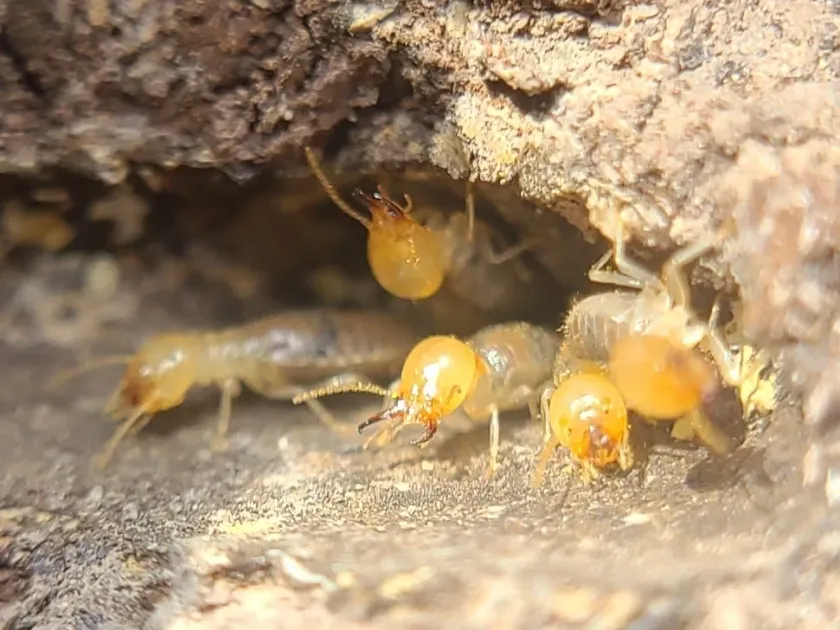
Description
How to identify
The genus Amitermes belongs to the order Isoptera and the family Termitidae. These social insects maintain a complex caste system, including workers, soldiers, and reproductive individuals. Their presence is often cryptic as they operate primarily within the soil or inside plant tissues.
Soldiers of this genus are characterized by specialized mandibles, designed for defense against intruders, primarily ants. Workers are responsible for foraging and constructing extensive subterranean tunnel networks, which they line with soil to maintain necessary humidity levels.
The life cycle of Amitermes involves the dispersal of winged alates during favorable conditions, typically following rainfall. Once a mating pair establishes a new site, they lose their wings and begin the slow process of building a new colony, which can persist for many years.
Morphologically, these termites are sensitive to light and dehydration, forcing them to remain within protected channels. Their nesting habits vary, with some species creating mounds and others building extensive subsurface gallery systems that are difficult to detect without excavation.
The colony structure is highly cooperative, ensuring that even in arid environments, the core area remains stable. Due to their persistent nature and ability to utilize cellulose-based materials, they can be highly resilient in both agricultural and natural settings.
What it damages
Amitermes termites are known to cause significant damage to various crops, particularly in tropical and subtropical regions. They target the root systems of cereal crops like wheat, maize, and sugarcane, causing stunted growth and eventual death of the plants.
In orchards and nurseries, they pose a severe threat to young seedlings and saplings. By feeding on the bark and cambium near the base, they effectively girdle the stem, cutting off nutrient transport and causing the plant to wither abruptly.
Beyond live plants, these termites aggressively consume dead organic matter, including crop residues and mulch. While decomposition is a natural process, their over-activity can deplete essential soil organic matter and reduce the efficiency of fertilizers.
Damaged tissues are frequently susceptible to secondary infections by fungi and bacteria. These pathogens enter the plant through the tunnels created by the termites, often masking the initial cause of the decline and complicating diagnostic efforts.
- Destruction of root systems in field crops
- Girdling and death of young orchard trees
- Consumption of crop residues and mulch
- Increased plant susceptibility to secondary diseases
Signs of infestation
One of the most obvious signs of an Amitermes infestation is the presence of mud tubes or galleries on the surface of plant stems or the soil. These structures allow the termites to forage while staying hidden from sunlight and predators.
Another indicator is the sudden, localized wilting of plants that appear healthy in the morning. When these plants are pulled, it often reveals a lack of root structure or deep, soil-filled cavities at the root-stem junction.
Presence of fine soil particles or excrement packed into the hollowed-out parts of stems and trunks is a classic sign of this genus. If a damaged stem is split open, one can clearly see the characteristic tunnels and the termites themselves.
The swarming of winged alates in the evening during the rainy season serves as a clear warning. If swarms are detected nearby, it indicates that mature colonies are present in the area and have the potential to infest new plantings.
Physical evidence of excavations during field operations, such as plowing, can also identify an active colony. Discovering termite galleries in stumps or buried wood suggests a high local density of these pests that requires immediate attention.
Control measures
Management of Amitermes requires an integrated approach focusing on mechanical disruption and chemical barriers. Deep plowing of fields before planting helps break down subterranean gallery systems and forces colonies to relocate or succumb to environmental stress.
Chemical control involving systemic insecticides is the standard for crop protection. Applying these treatments in the planting row or around the base of trees creates a protective zone that prevents termites from reaching the sensitive root tissues.
The use of slow-acting bait stations is highly effective for long-term population reduction. Because termites share food throughout the colony, the baits are transported back to the nest, allowing the poison to reach the queen and collapse the entire colony.
Cultural practices include the removal of dead wood, stumps, and excessive crop debris from the field. Minimizing the availability of food sources directly reduces the attractiveness of the land for termite colonization.
Biological control agents, particularly entomopathogenic fungi, are increasingly used to suppress termite populations. These natural enemies infect the colony, providing a sustainable and environmentally friendly alternative to heavy synthetic pesticide use.
Taxonomy
- Latin name
- Amitermes
- Family
- Termitidae
- EPPO code
- AMITSP
Discussion
No discussions yet — be the first.