
Florida termite
Amitermes floridensis
Description
How to identify
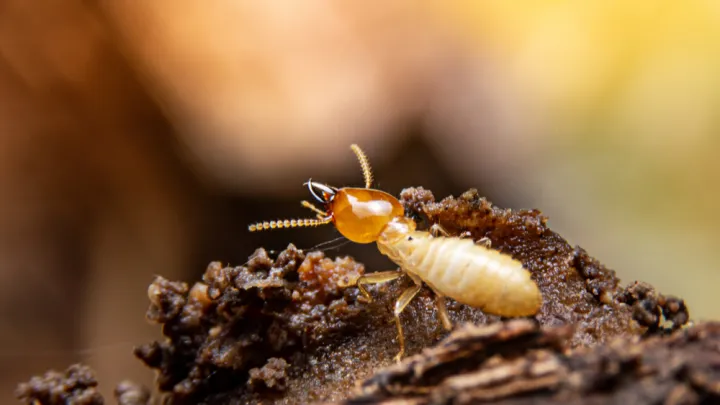
The Florida termite (Amitermes floridensis) belongs to the order Isoptera and the family Termitidae. These insects are social, living in complex colonies with specialized castes including workers, soldiers, and reproductives.
Workers are typically light-colored and soft-bodied, responsible for foraging and nest maintenance. Soldiers possess hardened heads and powerful mandibles, which they use to defend the colony from threats.
These termites are highly sensitive to desiccation and rely on high humidity levels. They frequently construct protective mud tubes to travel between their nests and food sources, remaining hidden from direct sunlight.
The life cycle involves incomplete metamorphosis, with colonies capable of persisting for several years. Reproductive individuals emerge during swarm events to establish new colonies in suitable environments.
The population of a single colony can include thousands of individuals, making them a significant factor in local ecosystem dynamics and a potential threat to cultivated landscapes.
What it damages
The Florida termite primarily damages woody plants, including fruit trees and landscape shrubs. By consuming cellulose, they weaken the structural integrity of the plant and its root system.
Feeding activities often involve tunneling into the heartwood or roots, which disrupts the flow of nutrients and water. This interference leads to stunted growth, wilting, and eventually the death of the plant.
In addition to living plants, these termites pose a threat to wooden garden structures, mulch, and wooden supports. Their ability to switch between decaying wood and healthy plant tissue makes them versatile pests.
Damage caused by termites often serves as an entry point for secondary pathogens like fungi and bacteria. This exacerbates the health decline of the affected plants, leading to premature decay.
High-density infestations can result in the rapid collapse of weakened trees, posing safety risks and significant economic losses for agricultural and horticultural operations.
Signs of infestation
The most distinctive sign of termite activity is the presence of mud tubes or tunnels running along bark, soil, or the base of wooden structures, used to maintain essential humidity.
Small entry or exit holes, often plugged with fecal matter or soil, indicate tunneling activity within the wood. Hollow sounds when tapping on a tree trunk may suggest internal infestation.
Seeing swarming reproductive termites or their discarded wings around the base of trees indicates a mature colony is nearby, requiring immediate inspection of the area.
General symptoms of plant stress, such as yellowing foliage, branch dieback, or sudden loss of vigor in the absence of other common diseases, are potential indicators of termite-induced root damage.
Observing termites under mulch, beneath stones, or inside damp wooden debris is a clear indicator that the species is established and active in the immediate vicinity.
Control measures
Effective management begins with sanitation by removing rotting stumps, dead wood, and debris that could provide nesting sites or food resources for the termite colony.
Installing chemical soil barriers using approved insecticides can create a protective zone that prevents termites from reaching the root systems of valuable crops.
The use of bait stations containing slow-acting active ingredients is an effective strategy, as worker termites transfer the poison throughout the colony, eventually eliminating the nest.
Maintaining strong plant health through proper irrigation, fertilization, and pruning minimizes the susceptibility of trees and shrubs to termite colonization.
In cases of severe infestation, professional pest management services may be required to utilize targeted fumigation or systemic treatments to eradicate the colony safely and effectively.
Taxonomy
- Latin name
- Amitermes floridensis
- Family
- Termitidae
- EPPO code
- AMITFL
Discussion
No discussions yet — be the first.