
Amitermes acutus
Amitermes acutus
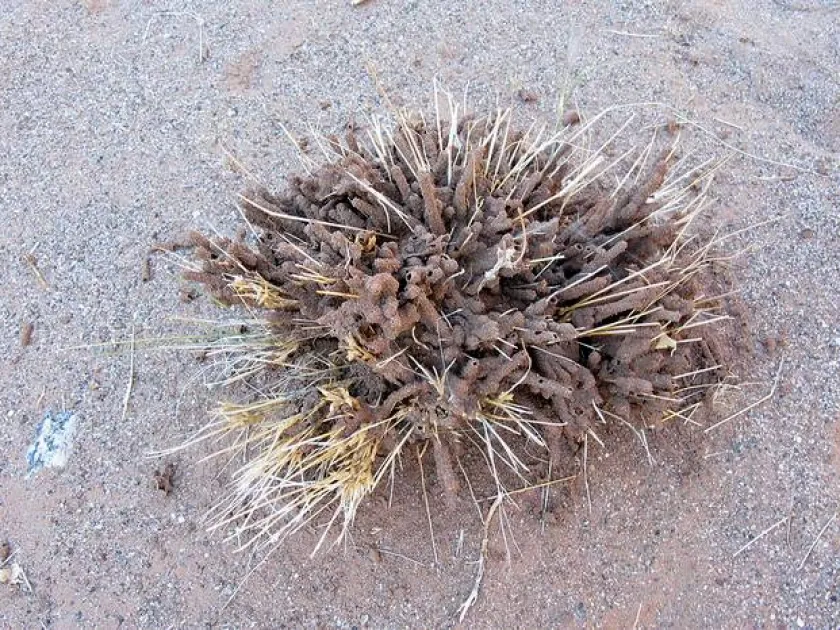
Description
How to identify
Amitermes acutus belongs to the order Isoptera and the family Termitidae. These social insects function within a complex colony structure consisting of different castes.
The worker caste is responsible for foraging and construction, possessing mandibles specialized for processing cellulosic material, which constitutes their primary food source.
Soldiers are characterized by heavily sclerotized heads and sharp mandibles, evolved specifically to protect the colony from predators like ants and other competitive insects.
The colony is governed by a queen and king, who oversee reproduction and population growth, ensuring the survival and expansion of the termite colony within its habitat.
Alates, the reproductive winged form, emerge during swarming seasons to disperse and establish new colonies, which often leads to the infestation of new agricultural fields.
What it damages
As a cellulose feeder, Amitermes acutus targets both dead plant material and living plant tissue, posing a threat to various crops and agricultural assets.
The termites create extensive underground tunnel networks, which they use to access the root systems of crops, causing stunted growth and eventual plant mortality.
Woody crops are particularly susceptible, as the termites consume the cambium layer and internal tissue of stems, weakening the structural integrity of the plant.
In addition to live crops, they are known to attack stored timber, fencing, and wooden infrastructure used on farms, leading to significant economic losses.
Their ability to bypass soil barriers and penetrate roots makes them a persistent threat to irrigated crops, where they may also damage plastic irrigation tubing.
Signs of infestation
The presence of shelter tubes or foraging galleries constructed of soil and fecal matter on the surfaces of stalks or tree trunks is a primary indicator of infestation.
Unexpected wilting and yellowing of plants, even when moisture levels are adequate, often signal root system compromise by subterranean termite activity.
Finding irregular hollows in plant stems, often filled with a characteristic granular "sponge" of frass and soil, indicates internal feeding by termite colonies.
Increased termite presence during soil preparation or tillage, observed as swarms of workers in the earth, is a clear sign of nearby nest activity.
The sighting of winged alates gathering near light sources during specific seasons confirms the presence of mature, reproductive colonies in the surrounding area.
Control measures
Deep tillage and mechanical soil disturbance are effective initial steps to disrupt foraging tunnels and destroy the structural integrity of termite nests.
Chemical control involving systemic soil-applied insecticides or targeted baiting systems is often required to eliminate well-established termite colonies in agricultural fields.
Sanitation practices, such as the removal of stumps, dead wood, and heavy crop residues, are essential to deprive the termites of favorable nesting and food sources.
Biological control using entomopathogenic fungi or nematodes offers a sustainable alternative, helping to reduce colony populations without relying solely on chemical inputs.
Regular monitoring with bait traps can assist in early detection of colony activity, allowing for rapid management intervention before significant crop damage occurs.
Taxonomy
- Latin name
- Amitermes acutus
- Family
- Termitidae
- EPPO code
- AMITAC
Discussion
No discussions yet — be the first.