
Formosan subterranean termite
Termes formosanus
Description
How to identify
The Formosan subterranean termite (Coptotermes formosanus) is a species of termite in the family Rhinotermitidae. Known for its aggressive nature, this insect builds massive, complex subterranean colonies that can grow to include millions of individuals.
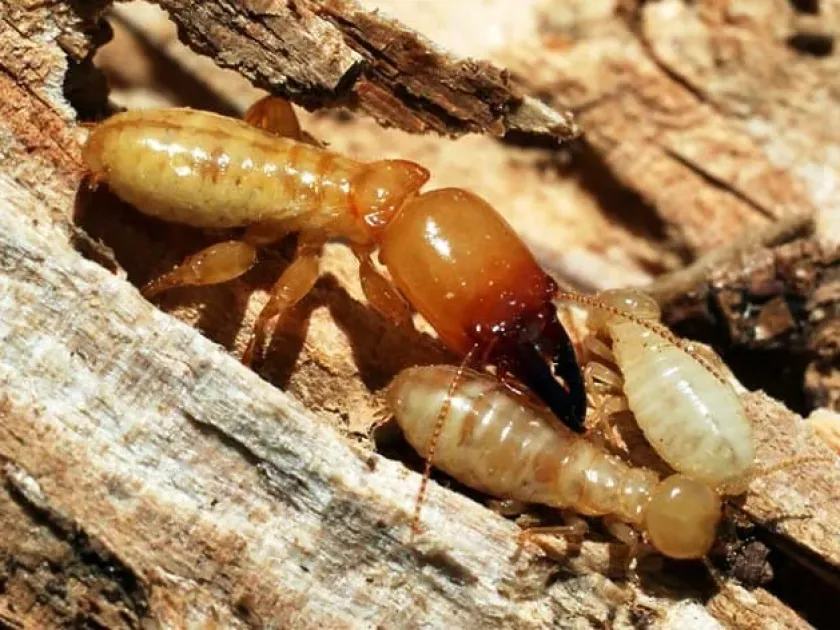
The colony structure includes a queen and king, workers, soldiers, and swarmers (alates). Soldiers are easily identified by their tear-drop shaped heads and their ability to secrete a defensive liquid from a specialized frontal pore when threatened.
Unlike other termite species, they are highly capable of building aerial nests, meaning they can thrive both underground and inside the structure of living trees, provided there is enough moisture to support the colony.
The lifecycle begins with the swarming phase, where alates leave the parent colony to mate and establish new nesting sites. Once a new queen starts laying eggs, the colony begins its slow, hidden expansion throughout the local environment.
Their ability to navigate through soil and build mud tubes over non-cellulose surfaces allows them to reach wood sources that would otherwise be inaccessible, making them a significant agricultural and structural menace.
What it damages
The primary threat posed by Coptotermes formosanus is their voracious consumption of cellulose-based materials. In agriculture, they frequently attack the heartwood of fruit and ornamental trees, often hollowing them out from the inside.
Beyond trees, they can severely damage root systems of various crops, causing stunted growth, yellowing, and sudden plant death. The loss of root integrity often leads to structural failure in woody plants during storm conditions.
Vineyards and orchards are particularly at risk, as the wooden stakes, trellises, and living vines provide ample food sources for these termites. Infestations can result in the collapse of entire support systems for crops.
The damage is compounded by the spread of wood-decaying fungi. As termites burrow, they introduce pathogens that further compromise the plant's vascular health, making it difficult for the plant to recover even after the insects are removed.
Economic losses are immense because the internal damage is often invisible until the tree is structurally compromised or dies. This hidden nature makes Coptotermes formosanus one of the most difficult pests to manage in professional arboriculture.
Signs of infestation
Mud tubes are the most reliable indicator of an infestation. These narrow, dirt-constructed tunnels are used by termites to travel between the soil and their food source while staying protected from dry air and light.
When inspecting trees, check for a hollow sound upon tapping the trunk. If the sound is dull or the wood feels spongy, it suggests that the interior has been significantly compromised by termite activity.
The discovery of swarmers or discarded wings near the base of trees during the spring or summer months is a definitive sign that a large, mature colony is present nearby and is currently active.
The presence of fine wood particles or termite excrement (frass) at the base of a plant is another critical warning sign. This granular material is often left behind as they excavate their galleries within the wood.
Sudden decline or wilting of a previously healthy tree, especially in the absence of obvious leaf disease, is a common signal that root or trunk damage from termites has reached a critical stage.
Control measures
Integrated Pest Management (IPM) is essential for control. Baiting systems are the most effective method, as the slow-acting insecticide is carried back to the colony, ultimately affecting the queen and neutralizing the entire nest.
Soil-applied termiticides can create a protective barrier around valuable orchards or gardens. These chemicals prevent termites from crossing into the treated area to reach the root systems of the plants.
Good sanitation practices are vital. Removing dead wood, old stumps, and organic debris from the vicinity of living trees reduces the number of nesting sites and food sources available to the colony.
Monitoring stations containing cellulose bait should be installed around the perimeter of fields. These help detect the presence of termites early, allowing for targeted treatment before they move into high-value woody vegetation.
For high-value individual trees, professional injection of systemic or contact insecticides into the galleries may be considered, though this requires careful application to ensure environmental safety and plant health.
Taxonomy
- Latin name
- Termes formosanus
- Family
- Termitidae
- EPPO code
- TERMFO
Discussion
No discussions yet — be the first.