
Tenaphalara
Tenaphalara
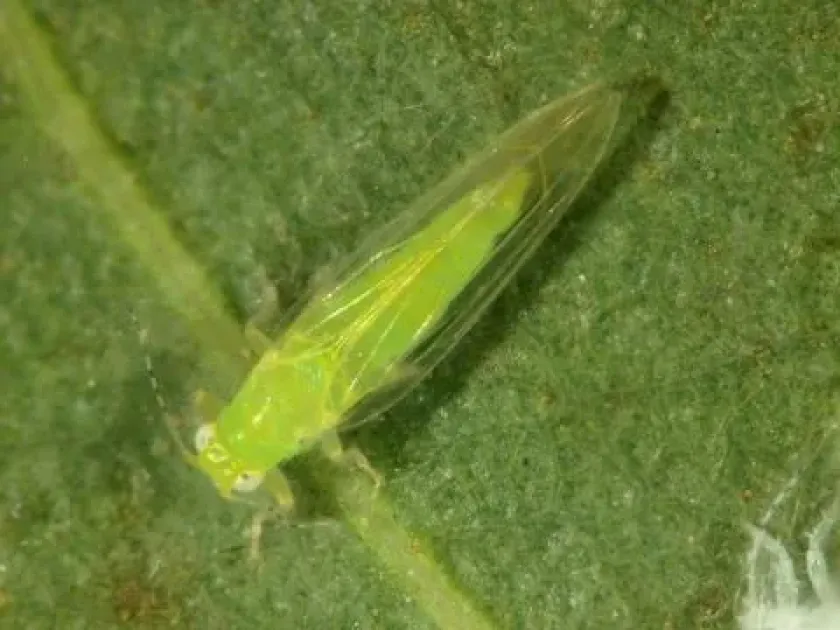
Description
How to identify
Tenaphalara belongs to the Psyllidae family, which is part of the Hemiptera order. These are small, jumping insects often referred to as jumping plant lice, visually resembling miniature cicadas.
Adult specimens possess well-developed hind legs that allow them to perform sudden jumps when threatened. Their coloration is often camouflaging, making them difficult to detect on tree bark or foliage.
The insect's life cycle includes the egg stage, five nymphal stages (instars), and the adult (imago). Nymphs are frequently covered in waxy secretions that protect them from environmental stressors and chemical treatments.
Tenaphalara prefers specific host plants, which determines its distribution range. The life cycle is closely tied to the phenology of the host plant, making this pest difficult to manage during peak vegetation periods.
Sexually mature females deposit eggs directly onto tender plant tissues. Upon hatching, the larvae begin feeding on plant sap, which is the primary cause of the damage they inflict on the host plant.
What it damages
The primary hosts for Tenaphalara are various tree and shrub species, particularly those found in nurseries and young plantations where conditions favor the pest's development.
The pest attacks buds, young shoots, and leaves, extracting cell sap. This leads to significant depletion of the plant's resources and stunts its natural growth and development.
In feeding areas, specific tissue deformations occur, which can often be mistaken for viral infections. Affected areas frequently develop necrosis due to the persistent feeding of the larvae.
Sooty mold often develops on the honeydew secretions left behind by Tenaphalara. This layer further reduces the photosynthetic capacity of the foliage and degrades the aesthetic and commercial quality of the plant.
Severe infestations lead to premature leaf drop and decreased cold hardiness of the trees. During outbreaks, the plant may suffer a total loss of annual growth.
When it appears
Tenaphalara activity begins in early spring, once the average daily air temperature rises above the 10-12 degrees Celsius threshold.
The most significant damage occurs during the bud-break stage and the rapid growth phase of young shoots. During this period, larvae are highly vulnerable to external control measures.
Summer generations are often hidden within the dense canopy, yet the peak population of adults is usually observed in the middle of summer.
In autumn, the insects enter diapause, seeking shelter in bark crevices or under fallen leaf litter. Effective management strategies must be timed according to these seasonal patterns.
During warm and extended autumns, partial development of additional generations can occur, significantly increasing the overwintering pest population density.
Signs of infestation
The first visual sign of Tenaphalara presence is the curling of young leaves and the development of characteristic spots. Often, the foliage becomes wrinkled and discolored.
A sticky residue on the undersides of leaves and on young branches is a clear indicator of larval activity. This honeydew also attracts ants, which can serve as a secondary signal of an infestation.
While inspecting shoots, one may notice small white, fluffy formations resembling cotton—these are the protective waxy secretions of the nymphs.
The presence of a large number of jumping insects when shaking branches provides direct evidence of adult Tenaphalara populations on the plant.
- Deformation of buds and shoots;
- Presence of sooty mold on leaves;
- Sticky honeydew secretions;
- Colonies of larvae in leaf axils.
Control measures
Prevention begins with sound agronomic practices that strengthen plant immunity and make the environment less favorable for massive pest reproduction.
An effective control method involves the use of systemic insecticides at the start of the growing season when larvae are in their most active feeding stage.
Biological control strategies include attracting natural predators such as lacewings, lady beetles, and predatory bugs, which effectively reduce pest numbers.
Cleaning bark and pruning severely damaged shoots during the late autumn or winter period helps to significantly reduce the overwintering pest population.
It is essential to rotate pesticides from different chemical classes to prevent the development of resistance in Tenaphalara populations to standard control agents.
Taxonomy
- Latin name
- Tenaphalara
- Order
- Hemiptera (bugs, aphids, leafhoppers)
- Family
- Carsidaridae
- EPPO code
- TENASP
Discussion
No discussions yet — be the first.