
Macrohomotoma
Macrohomotoma
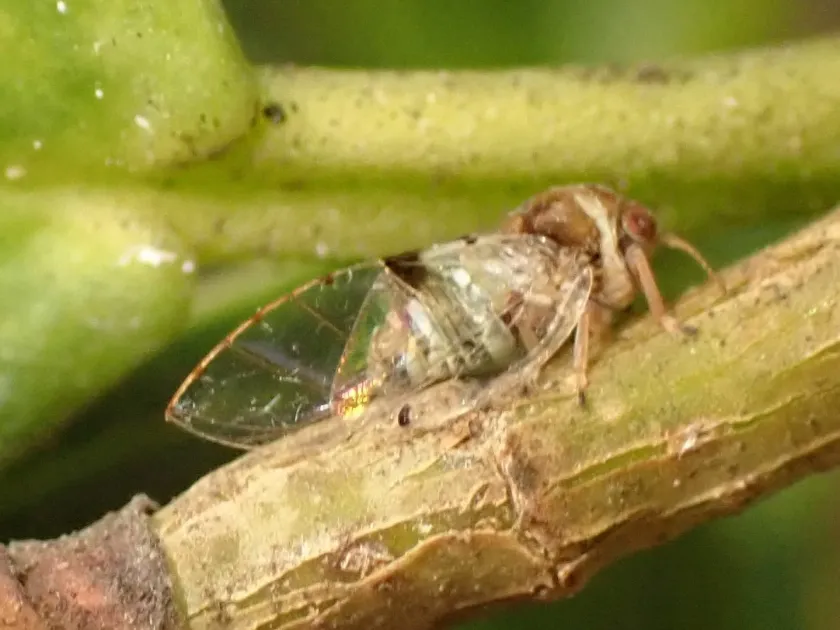
Description
How to identify
Macrohomotoma is a genus of jumping plant lice belonging to the family Psyllidae, order Hemiptera. These insects are well-known pests specifically associated with Ficus species, especially Ficus benjamina.
Adult insects are small, typically brownish, and possess strong hind legs adapted for jumping. They are agile and can fly short distances when disturbed, making them difficult to capture manually.
The immature stages (nymphs) are the primary cause of damage. They are often found clustered on young, developing leaves and are protected by white, waxy secretions that resemble cotton or fuzz.
The life cycle of Macrohomotoma is heavily dependent on the host plant's growth flushes. Eggs are deposited in protected areas, such as tightly folded young leaves and terminal buds.
Development is relatively rapid in warm, protected environments like greenhouses or indoor home settings, where temperatures remain consistently favorable for the insects' reproductive cycle.
What it damages
Macrohomotoma primarily attacks Ficus plants, with a strong preference for tender, growing shoots and expanding leaves. The pests feed by inserting their piercing-sucking mouthparts into the plant tissue.
Feeding disrupts the normal physiological development of the leaves. As a result, new foliage becomes severely curled, distorted, and stunted, significantly reducing the aesthetic value of the plant.
Continuous feeding pressure drains the plant's resources, which can lead to premature leaf drop and the overall weakening of the specimen's vitality.
The excretion of honeydew by the nymphs creates a sticky surface on the leaves, which frequently attracts sooty mold fungi. This black fungus covers the leaf surface, further inhibiting photosynthesis.
If left unmanaged, a heavy infestation can cause a Ficus to stop producing healthy foliage, eventually leading to the decline of the plant's health and vigor.
When it appears
Macrohomotoma is most active during the spring and summer months when Ficus plants undergo periods of vigorous vegetative growth and produce new shoots.
Warm temperatures (20–25°C) are highly conducive to the pest's development. In indoor or greenhouse conditions, this pest can remain active throughout the entire year.
The absence of seasonal dormancy in indoor environments means that Macrohomotoma can continuously breed if the host plants are kept in a state of active growth.
Early spring is a critical time for monitoring, as the first generation emerges. Detecting the presence of these insects early is essential for preventing large-scale outbreaks.
Environmental factors, such as high humidity and poor ventilation, can create microclimates that favor the spread of the psyllids between closely placed plants.
Signs of infestation
The most noticeable symptom is the abnormal curling and deformation of young leaf tips, which often remain tightly rolled up rather than unfurling.
Upon closer inspection of the leaf axils or the underside of the leaves, a white, waxy, cotton-like substance becomes visible, indicating the presence of nymphs.
Sticky honeydew secretions on the leaf surfaces are a clear sign of an active infestation. This substance may feel tacky to the touch and sparkle in the light.
The appearance of black sooty mold on the foliage is a secondary symptom caused by the buildup of honeydew over time, signaling a chronic infestation.
- Distorted, curled new leaves.
- White waxy "fluff" or "fuzz" in leaf axils.
- Sticky honeydew residue on foliage.
- Sooty mold growth on leaves.
- Frequent shedding of immature leaves.
Control measures
Managing a Macrohomotoma infestation starts with isolating the affected plant to prevent the spread of the insects to other houseplants or garden specimens.
Physical removal is a helpful first step. Pruning and disposing of heavily infested, curled shoot tips can significantly reduce the initial population size of the pest.
Systemic insecticides, particularly those containing neonicotinoids like acetamiprid or thiamethoxam, are highly effective as they are absorbed by the plant and kill the nymphs feeding on the sap.
Because eggs are protected and difficult to reach, multiple applications of insecticide are necessary, spaced 7–10 days apart, to ensure the control of emerging nymphs.
Preventative care involves maintaining good plant spacing to ensure proper airflow, regular cleaning of leaves, and prompt inspection of all new growth to catch the pests before they multiply.
Taxonomy
- Latin name
- Macrohomotoma
- Order
- Hemiptera (bugs, aphids, leafhoppers)
- Family
- Carsidaridae
- EPPO code
- MAHOSP
Discussion
No discussions yet — be the first.