
Fig psyllid
Homotoma ficus
Description
How to identify
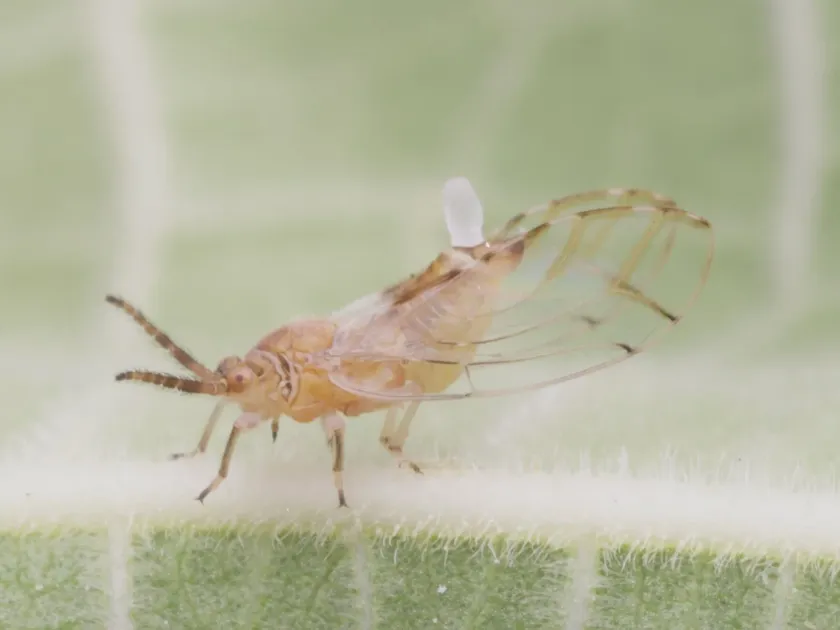
The Fig psyllid (Homotoma ficus) is a small, jumping plant louse belonging to the Psyllidae family. These insects are specialized pests that specifically target Ficus carica (fig trees).
Adult psyllids are typically brownish or greenish-yellow, allowing them to blend perfectly with the foliage of their host plant. They possess strong hind legs designed for jumping when disturbed.
Nymphs, or immature stages, are characterized by their sedentary nature on the underside of leaves. They often produce waxy, thread-like secretions that serve as a protective barrier against external factors.
The life cycle is closely synchronized with the growth of the fig tree. Because they are highly host-specific, psyllids can successfully complete their entire developmental cycle on a single tree.
Identifying the pest requires close observation, as the nymphs tend to cluster along the midribs of the leaves, where they are protected from direct sunlight and predators.
What it damages
The primary damage is caused by both adults and nymphs piercing the plant tissues and extracting sap. This constant draining of resources significantly weakens the fig tree.
Heavy infestations lead to leaf deformation, yellowing (chlorosis), and premature leaf drop. The loss of foliage capacity directly impacts the tree's ability to produce high-quality fruit.
Psyllids excrete a substance known as honeydew. This sticky residue accumulates on leaves and fruit, promoting the growth of sooty mold, which can further impede photosynthesis.
Fruit set can also be severely affected, as the insects may feed on developing buds and young fruit, leading to poor fruit development or reduced yields for the season.
In young or newly planted fig trees, severe damage can stunt overall growth and leave the plant vulnerable to secondary diseases that take advantage of the weakened host.
When it appears
The activity of the Fig psyllid begins with the onset of warmer spring weather. As soon as new fig shoots appear, the insects emerge to begin their feeding and reproductive cycles.
The peak population usually occurs during late spring and throughout the summer months when warm temperatures accelerate the developmental rate of the nymphs.
Multiple generations can occur throughout the growing season. The number of generations is largely dependent on the regional climate, with warmer areas supporting more frequent breeding cycles.
As autumn approaches and temperatures drop, the insects begin to prepare for dormancy. They typically move to sheltered spots, such as crevices in the bark or leaf litter, to overwinter.
Dry and hot summer conditions are often the most conducive to explosive population growth, as these conditions may temporarily reduce the efficacy of natural predators.
Signs of infestation
The most immediate sign of an infestation is the presence of sticky, shiny honeydew on the foliage and younger branches, which often attracts ants to the tree.
The development of a black, powdery-looking layer (sooty mold) on the leaves is a common indicator that the psyllid infestation has been present for some time.
Clustered white, waxy, or woolly masses found along the leaf veins are tell-tale signs of psyllid nymphs actively feeding on the tree's sap.
Distorted, curled, or stunted terminal shoots are often the first sign of physiological stress caused by the insects, indicating that the tree is no longer growing at its optimal pace.
The visual presence of many small, jumping insects when the tree branches are lightly shaken is a definitive indicator of a high-density population requiring immediate control.
Control measures
- Maintain proper tree hygiene by thinning out dense foliage, which ensures better air circulation and reduces the micro-habitats favored by psyllids.
- Prune and destroy heavily infested branches to physically remove large numbers of the pest from the tree.
- Use horticultural oils or insecticidal soaps as a targeted treatment to smother the nymphs without the need for harsh chemical residues.
- Encourage natural predators such as ladybirds (ladybugs) and lacewings in your garden, as they are effective biological controls for psyllid populations.
- Apply systemic insecticides only as a last resort, ensuring that the timing avoids the flowering and fruiting season to protect beneficial pollinators.
Taxonomy
- Latin name
- Homotoma ficus
- Order
- Hemiptera (bugs, aphids, leafhoppers)
- Family
- Carsidaridae
- EPPO code
- HOMTFI
Discussion
No discussions yet — be the first.