
Homotoma
Homotoma
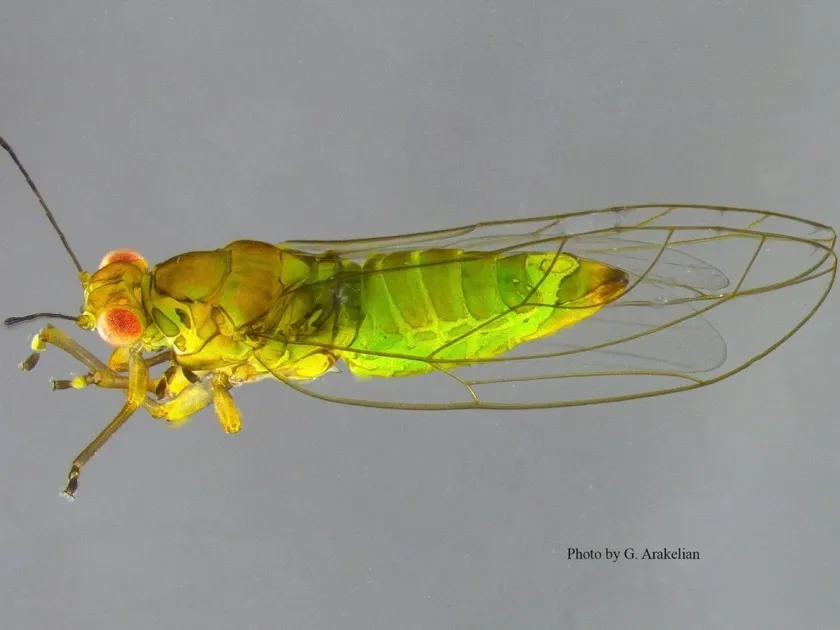
Description
How to identify
Homotoma is a genus of jumping plant lice belonging to the Psyllidae family. These insects are closely related to aphids but are characterized by their strong hind legs adapted for jumping.
Adult Homotoma are small, typically 2 to 4 mm in length. They have a yellowish-brown color, which provides excellent camouflage against the bark and leaves of their host plants, particularly Ficus species.
The nymphs go through several instars and are often covered in white, waxy secretions that act as a protective barrier against environmental threats and some topical pesticides.
The life cycle involves eggs laid in tender plant tissues, followed by nymphal stages that feed on sap, eventually maturing into mobile adults that can fly and jump.
These pests thrive in warm indoor environments like greenhouses and residential homes, where they can reproduce continuously throughout the year if the temperature remains favorable.
What it damages
The primary host for this pest is Ficus benjamina (weeping fig). They specifically target the young, tender leaves and developing apical buds, where the sap flow is most intense.
By piercing plant tissues and extracting sap, Homotoma disrupts the nutrient distribution, which manifests as stunting and severe deformation of the foliage.
The insects excrete a sticky substance known as honeydew. This accumulation on the leaf surfaces attracts opportunistic sooty mold fungi, which coat the plant in a black layer.
This black sooty coating inhibits the plant's ability to perform photosynthesis, leading to leaf drop, reduced vigor, and in extreme cases, the death of the entire plant.
Continuous feeding causes the leaves to curl, twist, and eventually dry out, ruining the aesthetic value of the ornamental plant.
Signs of infestation
Curled, misshapen young leaves at the tips of the branches are the most common early sign of an active Homotoma infestation on Ficus plants.
White waxy debris found on the undersides of leaves or in the crotches of branches is a clear indication that nymphs are present and actively feeding.
Sticky, shiny patches on the upper surface of lower leaves, caused by the honeydew dripping from above, signal a significant infestation level.
The presence of black, soot-like dust on the foliage indicates that the honeydew has already been colonized by sooty mold fungi.
Sudden leaf drop without apparent cause, often starting from the top of the plant, suggests the plant is under stress from persistent sap-sucking activity.
Control measures
The first line of defense is physical removal. Washing the plant thoroughly with a steady stream of water can help dislodge many insects and wash away honeydew deposits.
Systemic insecticides are generally required to manage Homotoma effectively because the insects are protected by waxy secretions and often hide in leaf folds.
Repeated applications of pesticides with different modes of action are recommended to prevent the development of resistance and to ensure that new generations hatching from eggs are eliminated.
Maintaining proper plant hygiene, including the removal of heavily infested or necrotic branches, helps reduce the overall pest population density.
- Use systemic insecticides (neonicotinoids).
- Isolate affected plants immediately.
- Prune and discard severely damaged parts.
- Monitor plants weekly for waxy deposits.
Taxonomy
- Latin name
- Homotoma
- Order
- Hemiptera (bugs, aphids, leafhoppers)
- Family
- Carsidaridae
- EPPO code
- HOMTSP
Discussion
No discussions yet — be the first.