
Hibiscus harlequin bug
Tectocoris
Description
How to identify
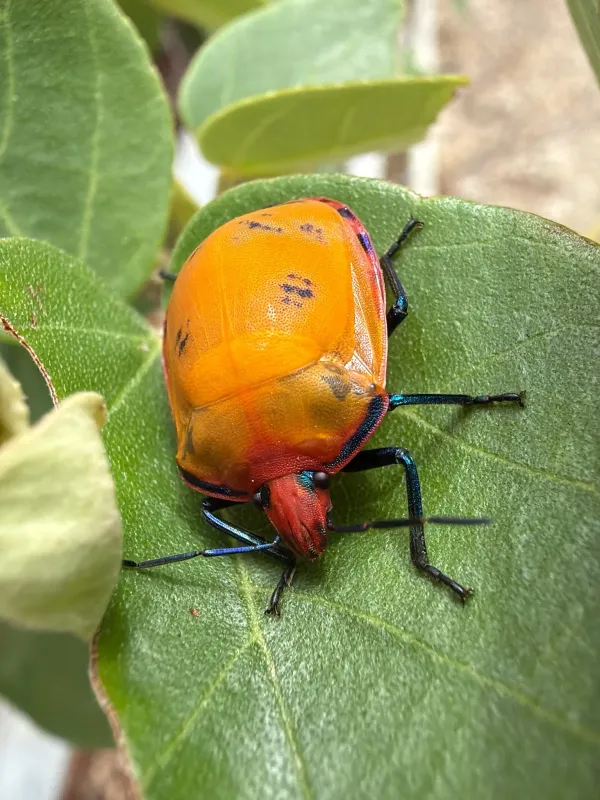
The Hibiscus Harlequin Bug, scientifically known as Tectocoris diophthalmus, belongs to the family Scutelleridae, commonly referred to as jewel bugs or shield-backed bugs. These insects are easily recognized by their vivid, warning coloration, which typically ranges from bright orange to deep red with striking black or metallic blue markings.
Adults reach approximately 15 to 20 millimeters in length and possess a classic shield-like body shape. Their exoskeleton often has a high-gloss finish, making them stand out against the green foliage of their host plants.
The nymphs go through several developmental stages, or instars, and their appearance changes significantly as they mature. Early instars may look quite different from adults, often showing darker or banded patterns.
A notable behavioral trait of this species is maternal care; the female will often remain over her clutch of eggs until they hatch, providing protection against minor predators and environmental stressors.
Native to tropical and subtropical regions, these bugs thrive in warm, humid climates where their preferred host plants are abundant throughout the year.
What it damages
The primary hosts for Tectocoris diophthalmus are members of the Malvaceae family, with the hibiscus being a favorite target. They are also known to infest cotton, okra, and various wild mallow species found in garden environments.
Both adults and nymphs feed by piercing the plant tissue with their needle-like mouthparts to extract sap. This feeding process drains the plant of essential nutrients and disrupts the flow of water and photosynthates.
Heavy feeding on young shoots, floral buds, and developing seed pods causes significant stress to the plant, often resulting in stunted growth and weakened structural integrity.
One of the most noticeable impacts of their activity is the premature drop of flower buds, which prevents the plant from flowering properly and can lead to a complete loss of blooms in a garden setting.
The wounds created by the bug's mouthparts can serve as entry points for pathogens, potentially leading to secondary infections by bacteria or fungi that further damage the plant tissue.
When it appears
The activity of the Hibiscus Harlequin Bug is heavily influenced by temperature, with peak activity occurring during the warmer spring and summer months.
In warm climates, the bug can undergo multiple generations per year, allowing the population to grow rapidly if left unchecked. Development from egg to adult takes several weeks, depending on ambient temperatures.
Overwintering typically occurs in the adult stage. The bugs seek shelter in protected areas such as leaf litter, bark crevices, or garden debris to survive cooler periods.
As soon as temperatures rise in the spring, the overwintered adults emerge to feed on fresh foliage and begin the mating process to start the new season's cycle.
The highest levels of infestation are usually observed in mid-summer, coinciding with the peak vegetative growth and budding phases of the host plants.
Signs of infestation
The most obvious sign of an infestation is the presence of the colorful adults and nymphs clustering on the stems and leaves of the host plants. They are rarely solitary and often feed in groups.
Plants will show signs of general decline, including wilting, yellowing of the leaves, and drooping of young shoot tips due to the withdrawal of sap.
- Microscopic necrotic spots on leaves where the bugs have pierced the tissue.
- Deformed or twisted new leaf growth.
- Premature bud drop and failure of the plant to produce flowers.
- Presence of visible fecal spotting on leaves and stems.
- Egg clusters, which are usually laid in tight, geometric patterns on the stems.
If you observe small, vibrant insects moving in groups on your hibiscus bushes, it is a clear indicator that the bugs are using the plant for both nutrition and reproduction.
In advanced cases, the plant may appear significantly thinned, with branches losing their vitality, indicating that the sap-sucking has persisted over a long period.
Control measures
Early detection is the most effective management strategy. Regularly checking the undersides of leaves and the junctions of stems during the growing season can help catch an infestation early.
For smaller gardens, manual removal is highly effective. You can knock the bugs into a bucket of soapy water, which prevents them from flying away and quickly neutralizes the threat.
Encouraging natural predators, such as birds or predatory insects that occupy the garden ecosystem, can help keep the bug population below damaging thresholds naturally.
In cases of severe infestation where other methods fail, insecticidal soap or botanical-based pesticides can be applied, ensuring thorough coverage of both the upper and lower leaf surfaces.
Good garden hygiene, such as removing dead plant material and controlling mallow-family weeds nearby, reduces the availability of overwintering sites and limits the local population success.
Taxonomy
- Latin name
- Tectocoris
- Order
- Hemiptera (bugs, aphids, leafhoppers)
- Family
- Scutelleridae
- EPPO code
- TECTSP
Discussion
No discussions yet — be the first.