
Coleotichus
Coleotichus
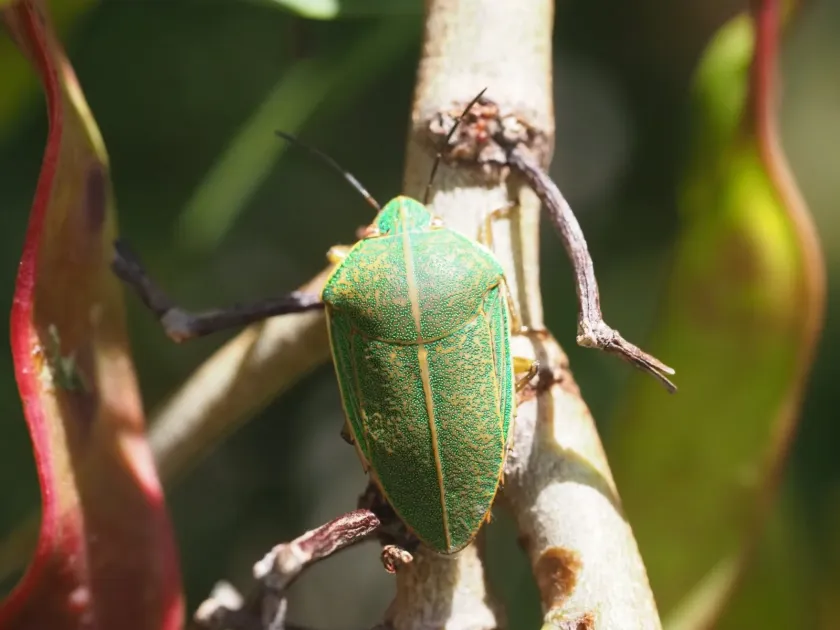
Description
How to identify
Coleotichus is a genus of insects belonging to the family Scutelleridae, commonly known as shield bugs or jewel bugs. These insects are distinguished by their oval-shaped bodies and a large scutellum that covers the entire abdomen.
Adult insects typically measure between 8 to 15 millimeters in length. Their coloration can be quite vibrant, often featuring metallic hues, stripes, or complex geometric patterns that aid in camouflage.
The life cycle follows a hemimetabolous pattern, meaning the nymphs resemble miniature versions of the adults but lack fully developed wings and reproductive organs.
They are primarily diurnal and thrive in environments with sufficient vegetation, where they can find both shelter and consistent sources of food throughout the growing season.
Their mouthparts are modified into a long, slender rostrum, which is specialized for piercing plant tissues and extracting sap, which is the primary source of their nutrition.
##damage##Coleotichus species cause damage to plants by piercing stems, leaves, and reproductive organs to feed on internal fluids. This disrupts the plant's ability to transport water and nutrients effectively.
The crops most frequently affected include various legumes and specific grass species. Feeding sites often show signs of chlorosis, necrosis, and localized tissue collapse.
As the insects feed, they inject saliva into the plant, which contains enzymes that can cause significant physiological stress, leading to stunted growth or total plant failure.
In cases of heavy infestation, the damage to fruits or grains is particularly severe, resulting in shriveled, poor-quality produce that may be unfit for market sale.
Agricultural losses occur not only from direct tissue damage but also through the increased susceptibility of damaged plants to secondary fungal or bacterial infections.
When it appears
The activity of Coleotichus is highly dependent on regional climate conditions. Adults overwinter in protected areas, such as leaf litter, soil crevices, or under dense weed cover.
As temperatures rise during the spring months, the bugs emerge from dormancy to feed on early vegetation and prepare for their reproductive cycle.
The peak feeding and reproduction activity typically aligns with the mid-summer phase of crop development, creating a risk for developing plant tissues.
Generational overlap is common in warmer climates, meaning multiple life stages can be found on a single plant simultaneously during the height of the summer.
With the onset of cooler autumn weather, the population gradually decreases as the adults move towards their overwintering sites to survive the winter season.
Signs of infestation
Initial signs of a Coleotichus infestation are often small, pale lesions on the leaves where the insects have inserted their mouthparts to extract sap.
As the infestation progresses, leaves may begin to curl, turn yellow, or show brown, withered margins due to the loss of cell integrity.
Distorted flower buds or malformed developing fruits are common symptoms in crops that are particularly sensitive to sap-sucking pests during the flowering phase.
Scouting for the pests involves checking the underside of leaves or using sweep nets to monitor population densities across different sections of the field.
- Chlorotic spots on leaves
- Withered or deformed shoots
- Premature flower drop
- Reduced yield quality in grains and legumes
Control measures
Crop rotation is one of the most effective cultural controls, as it disrupts the life cycle of the pest by moving susceptible crops away from overwintering areas.
Effective weed management is crucial because many weed species act as bridge hosts that allow the population to build up before moving to the main crop.
Chemical control via selective insecticides may be necessary if the pest population exceeds established economic thresholds, ensuring the application is timed to hit the nymph stages.
Integrated Pest Management (IPM) practices encourage the use of biological control agents and pheromone traps to suppress populations without relying solely on broad-spectrum chemicals.
Regular monitoring of field edges and early detection of localized clusters can prevent the spread of the pest across larger areas, saving labor and input costs.
Taxonomy
- Latin name
- Coleotichus
- Order
- Hemiptera (bugs, aphids, leafhoppers)
- Family
- Scutelleridae
- EPPO code
- COLTSP
Discussion
No discussions yet — be the first.