
Tarsostenus
Tarsostenus
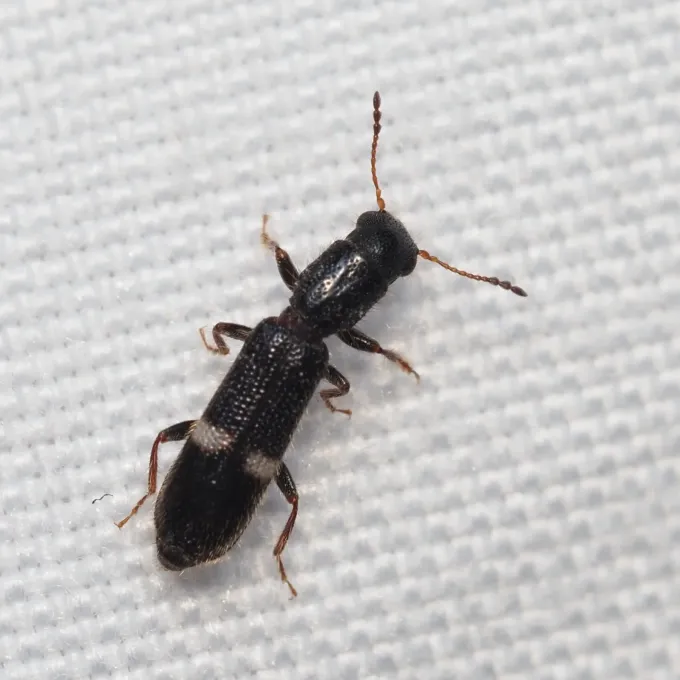
Description
How to identify
Tarsostenus is a genus of beetles belonging to the Cleridae family, commonly known as checkered beetles, within the order Coleoptera.
These insects are generally characterized by an elongated body shape and often possess vibrant or distinct patterns, typical for many clerids.
Their life cycle is frequently associated with other wood-boring insects, as Tarsostenus species often develop within the galleries created by primary pests.
Morphological identification of adult Tarsostenus beetles requires the use of specialized keys, as they are often small and possess subtle diagnostic traits.
They are considered specialized insects that have adapted to survive in environments populated by other wood-infesting beetle larvae.
What it damages
The damage caused by Tarsostenus is primarily observed in stored timber, lumber yards, and furniture that has been previously infested by primary borers.
Larvae contribute to the degradation of wood by excavating additional tunnels and expanding existing galleries created by other species.
The structural integrity of the timber is compromised, leading to significant economic losses for the forestry and woodworking industries.
Infestation manifests as deeper and more extensive tunneling, which can render finished wooden products completely unusable.
Because the damage is cumulative, the combination of primary borers and Tarsostenus leads to rapid deterioration of wooden assets.
When it appears
Adult activity of Tarsostenus usually peaks during warmer months when environmental conditions favor mating and dispersal flights.
In temperature-controlled environments, such as warehouses or heated buildings, the life cycle may occur continuously without seasonal interruptions.
Developmental rates are strictly regulated by ambient temperature and the moisture content within the infested wooden material.
Emergence of adults from the wood typically occurs in late spring or summer, which is a critical time for monitoring and inspection.
Fluctuations in climate and warehouse management can alter the emergence patterns, making the pest presence unpredictable.
Signs of infestation
The presence of exit holes on the surface of wood, often similar to those of other borers, is the primary indicator of infestation.
Accumulation of fine wood dust or frass near wooden surfaces indicates active boring activity by larvae inside the material.
Presence of primary wood-boring beetle species often acts as a precursor sign, signaling an environment suitable for Tarsostenus colonization.
Detailed visual inspections of internal structures, if possible, reveal complex networks of tunnels that indicate significant damage.
Finding dead adult specimens or larval remains during routine warehouse audits confirms the presence of this specific pest.
Control measures
Maintaining low wood moisture content and ensuring proper ventilation are the most effective preventive measures against Tarsostenus infestation.
Fumigation of infested warehouses is a standard practice to eliminate larvae and adults from deep within the wood structures.
Removing and destroying severely infested wood sections helps in lowering the pest pressure and prevents the spread to adjacent stacks.
Applying deep-penetrating insecticide wood treatments provides a chemical barrier that deters both primary pests and their associates like Tarsostenus.
Implementing strict quarantine protocols for imported timber ensures that infested batches do not enter clean manufacturing or storage areas.
Taxonomy
- Latin name
- Tarsostenus
- Order
- Coleoptera (beetles)
- Family
- Cleridae
- EPPO code
- TASTSP
Discussion
No discussions yet — be the first.