
Taeniopoda auricornis
Taeniopoda auricornis
Description
How to identify
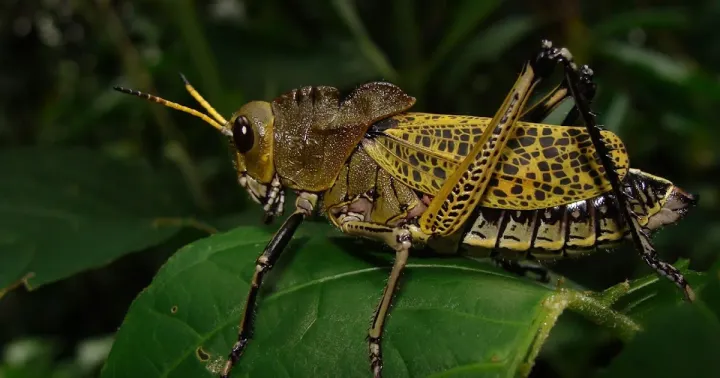
Taeniopoda auricornis is a species of grasshopper belonging to the family Acrididae within the order Orthoptera. This insect is known for its relatively large size and distinctive, warning coloration, which indicates its unpalatability to predators.
The adults are robust, characterized by strong hind legs adapted for jumping and well-developed wings for movement. Their appearance often includes vibrant patterns that serve as aposematic signals in their natural habitat.
The life cycle involves three primary stages: egg, nymph, and adult. Females typically lay eggs in the soil, encased in protective pods that safeguard the developing embryos against environmental stressors.
Nymphs undergo several molting stages, increasing in size and gradually developing wing pads until they emerge as fully formed adults capable of reproduction and long-distance flight.
These insects thrive in warm and arid environments, making them particularly active during the hotter months when the vegetation is lush and suitable for their rapid development.
What it damages
As a generalist herbivore, Taeniopoda auricornis poses a significant threat to a wide range of plants. It feeds indiscriminately on grasses, herbs, and numerous agricultural crops.
High-risk targets include grain fields, vegetable gardens, and various fruit-bearing crops. Their voracious appetite allows them to cause substantial economic losses within a very short timeframe.
Both nymphs and adults utilize their powerful, chewing mouthparts to consume foliage, stems, and fruits, which effectively compromises the overall health and vigor of the plants.
In addition to direct tissue loss, feeding damage can create entry points for secondary pathogens, such as bacteria and fungi, leading to further decay of the affected agricultural produce.
In severe infestation events, entire fields may be defoliated, leaving only the structural remnants of plants and leading to the total loss of marketable harvest for the grower.
Signs of infestation
The most evident sign of an infestation is the presence of irregular, ragged holes in leaf blades, a direct result of the grasshoppers' intense feeding activity on the plants.
Early warning signs include gnawed leaf margins that progress toward complete skeletonization of the foliage if the population density is high enough to warrant rapid destruction.
Fecal pellets (frass) found scattered on the ground beneath infested plants are a reliable indicator of recent or ongoing feeding by large populations of nymphs or adults.
Direct sightings of the grasshoppers are common, especially in sunny weather, as they are highly active and will jump away abruptly when approached or disturbed by human presence.
Wilting and premature leaf drop often accompany major infestations, as the structural integrity of the plant is destroyed by the continuous consumption of essential green tissues.
Control measures
Effective management strategies include the application of registered insecticides that target the nymphal stages, which are generally more susceptible to chemical treatments than mature adults.
Cultural practices, such as mechanical tilling or plowing of fallow land, are highly effective in destroying egg pods buried in the soil, thereby reducing the subsequent generation.
Biological control using entomopathogenic fungi or protecting natural predators, such as certain birds and predatory insects, can help maintain population levels below the economic injury threshold.
Monitoring the boundaries of fields for early signs of migration is crucial, as preventing the entry of grasshoppers into a field is far easier than treating an established outbreak.
Maintaining clean agricultural plots by removing weeds and tall grasses significantly reduces the available harbor and food supply for the insects, discouraging them from settling in the area.
Taxonomy
- Latin name
- Taeniopoda auricornis
- Order
- Orthoptera (locusts)
- Family
- Acrididae
- EPPO code
- TAEPAU
Discussion
No discussions yet — be the first.