
Taeniopoda
Taeniopoda
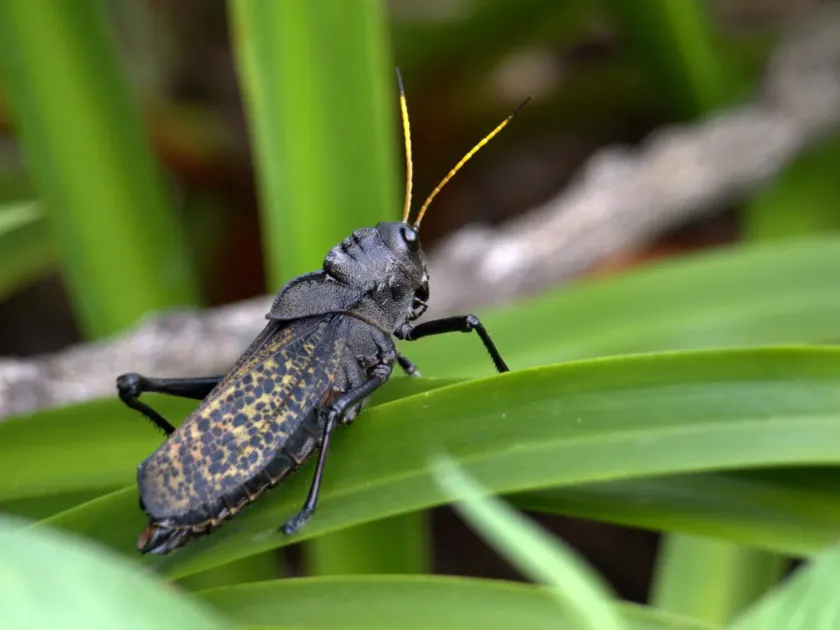
Description
How to identify
The genus Taeniopoda belongs to the family Acrididae (short-horned grasshoppers) within the order Orthoptera. These are large, robust insects often characterized by vivid warning colors, such as black with yellow, red, or orange patterns, which serve to deter predators.
Adults possess strong hind legs and well-developed wings, allowing for significant mobility within and between agricultural fields. Their body structure is adapted to a terrestrial lifestyle, typical of many grasshopper species.
Nymphs resemble smaller versions of the adults but lack functional wings. Throughout their lifecycle, they molt several times, gradually increasing in size and developing more intense pigmentation patterns.
Unlike some migratory locust species, Taeniopoda often exhibit solitary or low-density group behavior, yet their sheer size and high consumption rates make them formidable pests.
They are primarily native to Mexico and Central America, where they have adapted to thrive in both wild habitats and agricultural ecosystems, often exploiting the abundant food supply provided by crops.
What it damages
These insects are generalist herbivores (polyphagous) that feed on a diverse array of plant materials, including various crop species, ornamental plants, and native vegetation.
In agricultural settings, they frequently attack crops such as maize, legumes, and various leafy vegetables, consuming both foliage and tender shoots with significant efficiency.
By feeding on wild shrubs and grasses, they also play a role in natural ecosystems, but their transition to cultivated fields often results in localized but severe economic damage.
Heavy infestations can lead to complete defoliation, which severely hampers the photosynthetic capacity of the plants, ultimately reducing yield and overall plant vigor.
Beyond leaf consumption, they may damage stems, flowers, and developing fruits, potentially leaving the plants vulnerable to secondary fungal or bacterial pathogens.
Signs of infestation
The primary symptom of a Taeniopoda infestation is large, ragged feeding patterns on leaves, often starting from the margins or creating large holes in the leaf blades.
Significant accumulations of frass (droppings) on the soil surface beneath the plants are a clear indication of a large population actively feeding in the area.
The visual presence of these large, colorfully marked insects on leaves and stems during daylight hours is often the most direct method of confirmation.
Chewed stems and stripped branches are common signs in advanced stages of infestation, posing a direct threat to the survival of young seedlings and the productivity of mature plants.
Audible chirping or stridulation sounds during warm periods of the day can also serve as an indicator of an active population inhabiting the fields.
Control measures
Effective management of Taeniopoda requires an integrated pest management (IPM) strategy that combines cultural, mechanical, and chemical approaches.
Maintaining weed-free field margins is a critical cultural practice, as these areas often serve as initial breeding grounds and food sources for early-stage nymphs.
- Application of appropriate insecticides targeting nymphal stages to prevent maturation.
- Manual collection and removal of individuals on small-scale plots or garden settings.
- Use of perimeter barriers or trap crops to limit the migration of grasshoppers into sensitive fields.
Biological control agents, including entomopathogenic fungi and specific bacteria, can be highly effective under the right environmental conditions, providing a sustainable alternative to broad-spectrum pesticides.
Regular field scouting is essential to identify early outbreaks, allowing for localized treatments that minimize chemical usage while maintaining crop safety and productivity.
Taxonomy
- Latin name
- Taeniopoda
- Order
- Orthoptera (locusts)
- Family
- Acrididae
- EPPO code
- TAEPSP
Discussion
No discussions yet — be the first.