
Tachardiella larreae
Tachardiella larreae
Description
How to identify
Tachardiella larreae is a species belonging to the family Kerriidae, which falls under the superfamily of scale insects. This species is known as a natural producer of lac, but in agronomy, it is often viewed as a specific plant pest.
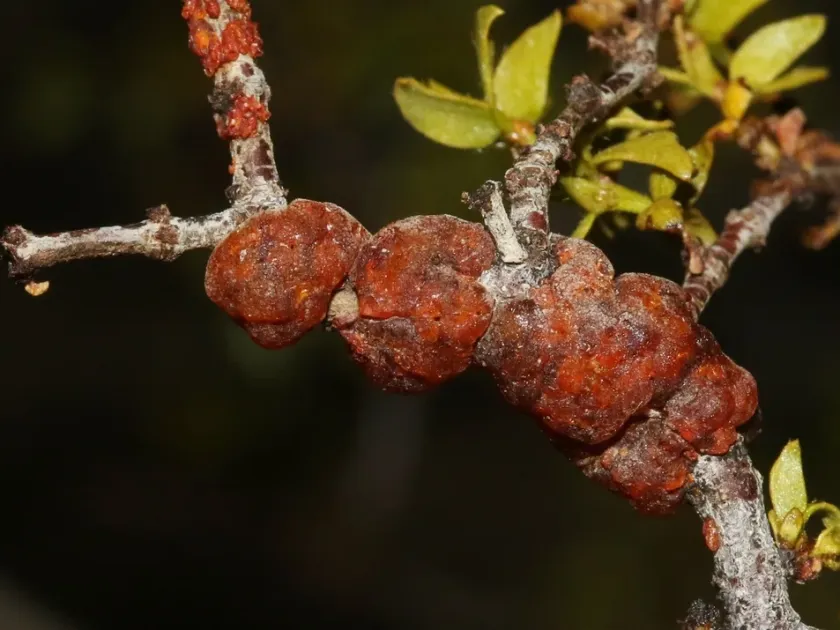
The insect is characterized by a small body that is securely hidden under a durable protective shield made of waxy secretions. Adult females are almost immobile, maintaining a sedentary lifestyle by attaching themselves firmly to the host plant's bark.
The color of these protective structures ranges from dark brown to reddish, allowing the pest to camouflage effectively against the bark. Males are rarely encountered and possess wings, which are necessary for finding females during the mating season.
For accurate identification, microscopic analysis of the crawlers (larvae) is often required, as this is the only mobile stage capable of dispersing across the plant.
This species is a typical inhabitant of arid regions, where its development is closely linked to the specific ecological niches of local flora.
What it damages
The primary food source for Tachardiella larreae is the creosote bush (Larrea tridentata), from which the species name is derived.
The damage is caused by the insect sucking sap from young shoots and branches, which gradually leads to a decline in the plant's overall health and vigor.
During mass infestations, the pest can cause premature leaf drop and deformation of new growth, significantly weakening the plant's immune system.
In commercial or ornamental settings involving Zygophyllaceae species, the infestation can result in loss of aesthetic value and reduced plant longevity.
Weakened plants become increasingly susceptible to secondary infections, including sooty mold, which thrives on the waxy secretions left behind by the insects.
Signs of infestation
The first sign of infestation is the appearance of characteristic waxy growths on branches and trunks, which resemble tree resin or hardened lacquer in texture.
The presence of abundant sticky residue on the surface of shoots indicates active feeding by colonies, which often promotes the development of sooty mold.
Gradual dieback of terminal shoots and localized discoloration of the bark where the insects are attached are classic symptoms of severe damage.
Early leaf abscission during the summer months is frequently a signal that the infestation has reached a critical level and has disrupted the plant's sap flow.
Upon closer inspection with a magnifying glass, one can identify tiny openings or bumps that serve as shelters for developing larvae.
Control measures
Controlling Tachardiella larreae is challenging due to the dense waxy shield that protects the insect from most contact insecticides.
The best results are achieved using systemic insecticides, which are absorbed into the plant's sap, allowing them to affect the pest from within.
Timing is critical; treatments are most effective during the crawler stage, as the larvae have not yet formed their protective waxy layer and are highly susceptible to chemicals.
For small-scale or ornamental plant management, mechanical removal of the waxy growths followed by spot treatment with alcohol or horticultural oil solutions is recommended.
Prevention involves maintaining optimal irrigation and creating a favorable environment for natural predators, such as predatory lady beetles and parasitic wasps.
Taxonomy
- Latin name
- Tachardiella larreae
- Order
- Hemiptera (bugs, aphids, leafhoppers)
- Family
- Kerriidae
- EPPO code
- TACALA
Discussion
No discussions yet — be the first.