
Quince scale
Tachardiella cydoniae
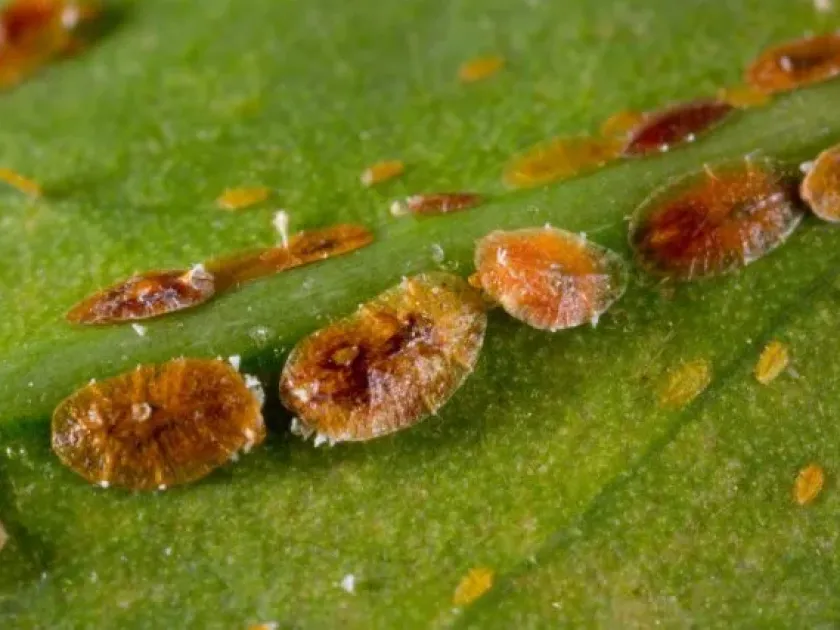
Description
How to identify
Quince scale (Tachardiella cydoniae) is a member of the Coccidae family, within the order Hemiptera. These insects are characterized by a protective, convex shell that is fused to their body, providing a tough defense against environmental stressors.
Adult females are sessile, meaning they remain fixed in one spot on the plant bark once they reach maturity. They are specialized feeders that thrive by extracting phloem sap from the host tree.
The life cycle involves an egg stage, a mobile larval stage known as a "crawler," and an adult stage. The crawler phase is the only period when the insect is not shielded by a hardened shell.
Identifying the pest can be difficult because their shells often mimic the color and texture of the tree bark, allowing them to remain undetected until the infestation becomes quite severe.
Unlike true scales, where the shield can be lifted, the scale of this species is an integral part of their chitinous armor, making them highly resilient to many topical treatments.
What it damages
While the name suggests a preference for quince, this pest also attacks a wide range of fruit-bearing trees, including apple, pear, and various ornamental species within the Rosaceae family.
By constantly feeding on plant sap, these insects divert essential nutrients away from the tree. This process systematically weakens the tree, resulting in stunted growth and poor health.
The drain on resources often causes significant loss of vigor, making the trees more susceptible to secondary stressors such as harsh weather, drought, and other opportunistic pathogens.
Heavy infestations lead to leaf chlorosis, premature fruit drop, and a decrease in total crop yield, which can have serious economic implications for commercial orchards.
If left unmanaged, the damage to the bark and phloem can cause localized necrosis, leading to the dieback of entire branches and, in extreme cases, the death of the tree.
When it appears
Spring marks the beginning of their activity as rising temperatures trigger the feeding of overwintering females and the initiation of egg production under their protective covers.
The emergence of crawlers typically aligns with the tree's flowering and early foliage development. Monitoring during this window is crucial for successful pest management programs.
During the summer months, the crawlers settle into their permanent positions on the branches, molting and developing their characteristic hard shells as they prepare for the coming cycle.
As autumn arrives, the adult females settle into a state of dormancy to endure the winter months. They remain securely attached to the bark throughout the cold season.
The number of generations per year is often determined by regional climate conditions, with warmer climates potentially supporting multiple overlapping generations of the scale.
Signs of infestation
The primary visual indicator is the presence of small, rounded bumps on the bark that appear as anomalous growths, often clustered along the underside of branches.
A sticky substance known as "honeydew" is frequently secreted by the insects. This sugary residue covers leaves and bark, creating a breeding ground for sooty mold fungi.
The appearance of black, sooty patches on the bark and foliage is a reliable sign of a significant infestation, as these fungi grow directly on the insects' excrement.
- Yellowing of leaves in late spring or summer.
- Reduced vigor and shorter annual branch growth.
- Cracking of the bark in areas densely populated by colonies.
Close inspection of the tree canopy often reveals localized thinning and branch dieback in areas where scale colonies are most established.
Control measures
Chemical control is most effective when targeted at the crawler stage, as these young insects lack the hardened shell that protects the adult population from insecticides.
Integrated pest management (IPM) strategies, including the pruning and immediate disposal of heavily infested branches, help to drastically reduce the pest population in the orchard.
Dormant oil sprays applied in late winter or early spring can be very effective, as they coat the bark and suffocate the overwintering scales before the growing season begins.
Promoting tree health through proper fertilization and watering can improve the tree's natural resilience, helping it recover faster from the stress caused by scale feeding.
Biological control methods involve encouraging the presence of natural predators, such as ladybird beetles and lacewings, which can act as a natural check on scale insect numbers.
Taxonomy
- Latin name
- Tachardiella cydoniae
- Order
- Hemiptera (bugs, aphids, leafhoppers)
- Family
- Kerriidae
- EPPO code
- TACACY
Discussion
No discussions yet — be the first.