
Tachardiella
Tachardiella
Description
How to identify
Tachardiella is a genus of scale insects within the family Kerridae, commonly known for their role in producing natural resins, including shellac-like substances.
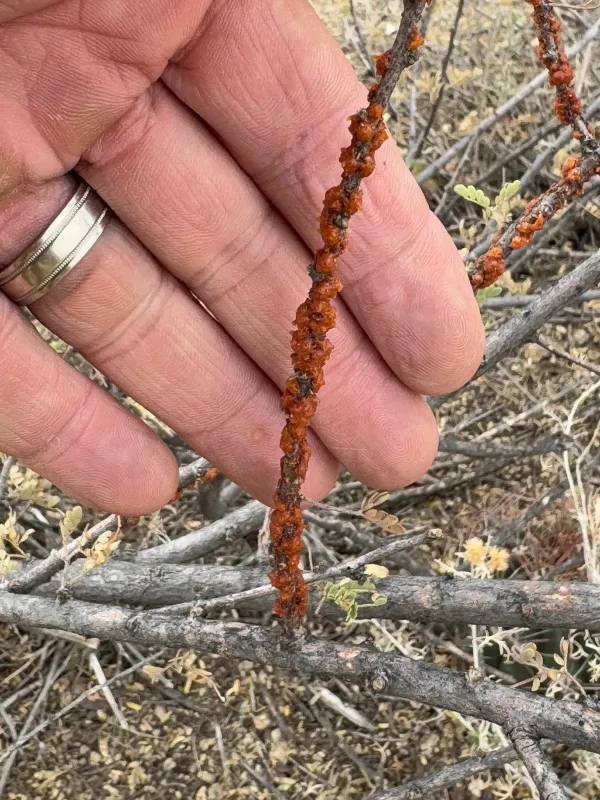
These insects are characterized by a sedentary lifestyle, where females are permanently attached to the bark of host plants, protected by a hard, waxy, or resinous test (shell).
The mobile stage of the insect is represented by the crawler, a minute larva that actively disperses to find a suitable feeding site on the plant’s twigs or branches.
Adult females are typically globular or flattened, possessing a highly specialized anatomy for siphoning sap from the plant's vascular system.
Males are significantly different, often appearing as tiny, winged insects that do not feed but exist primarily for the purpose of reproduction.
What it damages
Tachardiella pests primarily affect woody plants, including various species of shrubs and trees found in both wild and cultivated landscapes.
By constantly extracting sap from the branches and twigs, they deprive the plant of essential nutrients and energy required for healthy growth and development.
Severe infestations can lead to a significant decline in plant vigor, manifested by stunted growth, branch dieback, and increased susceptibility to environmental stress.
The feeding process creates entry points for secondary pathogens, such as fungi and bacteria, which can further complicate the plant's health status.
In ornamental settings, the presence of these insects and their associated secretions significantly degrades the aesthetic value of the plants.
When it appears
In warmer climates, the development of Tachardiella can be continuous throughout the year, with overlapping generations making control more challenging.
Crawler emergence typically aligns with the onset of the growing season or periods of elevated humidity, which are ideal for their dispersal and establishment.
In greenhouse or indoor environments, the lack of distinct seasonal changes often leads to constant pest pressure, requiring persistent monitoring.
The speed of the life cycle is highly sensitive to ambient temperature; warmer conditions drastically shorten the time required for development.
Management strategies should be timed to hit the crawler stage, as they are the most vulnerable to chemical and physical control measures.
Signs of infestation
The most prominent sign of infestation is the presence of hard, resinous bumps or scales adhering firmly to the stems and branches of the host.
Honeydew, a sticky secretion produced by the insects, often coats the leaves and branches beneath the colonies, creating a shiny or tacky appearance.
Sooty mold frequently grows on the honeydew deposits, resulting in a distinct black, powdery coating that covers the affected foliage and bark.
Visible decline in the plant, such as chlorosis (yellowing of leaves), premature leaf drop, and twig desiccation, are strong indicators of a heavy infestation.
- Hard, shell-like bumps on the bark.
- Sticky honeydew residues on leaves.
- Black sooty mold covering plant parts.
- Gradual drying and wilting of terminal shoots.
Control measures
Integrated pest management (IPM) for Tachardiella includes frequent inspection of new plant material to prevent the introduction of the pest into the area.
Mechanical removal, such as pruning away severely infested branches, is often the first line of defense to reduce the immediate population density.
Systemic insecticides are highly effective as they are translocated through the plant tissues, providing long-lasting protection against feeding scales.
Horticultural oils work by smothering the insects and their eggs, effectively blocking their respiration without the need for toxic residues.
Maintaining optimal plant health through proper irrigation and fertilization ensures that the plant has the vitality to withstand and recover from pest attacks.
Taxonomy
- Latin name
- Tachardiella
- Order
- Hemiptera (bugs, aphids, leafhoppers)
- Family
- Kerriidae
- EPPO code
- TACASP
Discussion
No discussions yet — be the first.