
Black-striped pipefish
Syngnathus abaster
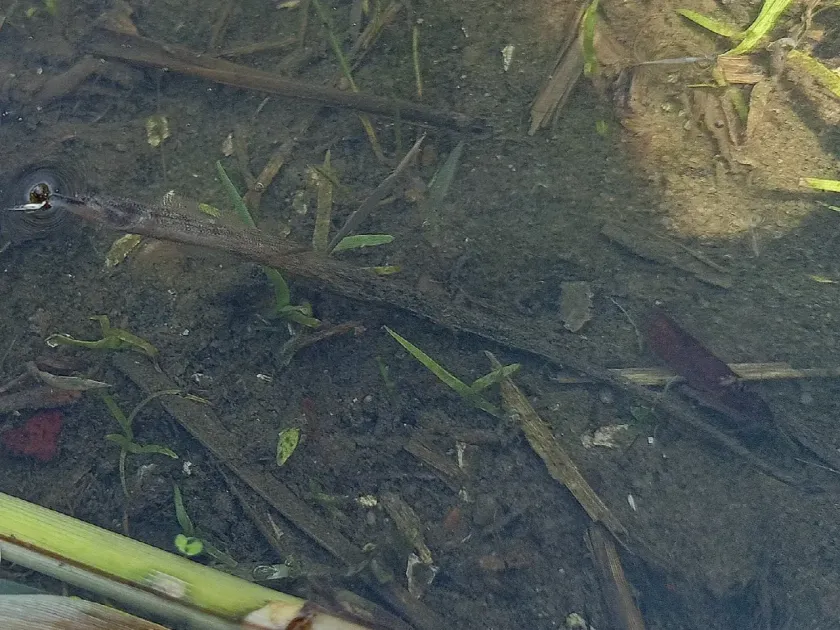
Description
How to identify
The black-striped pipefish, scientifically known as Syngnathus abaster, belongs to the Syngnathiformes order and the Syngnathidae family.
These fish are easily recognized by their elongated, thin bodies covered with bony plates and their characteristic long, tubular snouts adapted for suction feeding.
They represent a unique biological object in agricultural water management because they are highly adapted to brackish and stagnant freshwater environments.
The male of this species carries the fertilized eggs in a brood pouch, a unique reproductive trait that contributes to its high survival rate in stable habitats.
Their presence in irrigation networks often indicates well-established aquatic plant cover, which is essential for their nesting and protection.
What it damages
Although not a direct pest to terrestrial crops, Syngnathus abaster causes significant operational damage to agricultural irrigation infrastructure.
They contribute to the clogging of fine-mesh filters in pumping stations, as their slender bodies easily get trapped alongside organic debris.
By consuming large amounts of zooplankton, they disrupt the natural balance in farm ponds, which can negatively affect the health of fish used for integrated aquaculture.
They compete for space and food with beneficial aquatic organisms that help maintain water quality in irrigation canals.
Mass reproduction of these fish can lead to a decrease in water flow efficiency, increasing maintenance costs and requiring frequent cleaning of irrigation systems.
When it appears
The population activity of the black-striped pipefish peaks during the spring and summer months, corresponding with the main irrigation season.
Spawning occurs throughout the warmer months, making late spring the period of the highest density of the species in shallow irrigation ditches.
During the peak of summer, they remain active in the vegetation, contributing to the blockage of irrigation flow when water levels decrease.
As temperatures drop in autumn, the fish migrate to deeper, more protected areas of the water system, reducing their immediate impact on infrastructure.
The life cycle of the pipefish is perfectly synchronized with the seasonal growth of submerged aquatic weeds, facilitating their wide distribution in channel networks.
Signs of infestation
The most common sign of infestation is the frequent entrapment of thin, needle-like fish in water intake screens and pump maintenance filters.
Dense clusters of these fish can often be seen among aquatic plants when water flow is reduced during routine maintenance of irrigation canals.
A noticeable decline in water clarity and plankton diversity in stagnant sections of the farm water system is often linked to their feeding activity.
The presence of predators, such as larger fish or water birds, focusing on specific segments of the canal suggests a high density of pipefish beneath the surface.
Frequent mechanical blockages of irrigation nozzles or small-diameter distribution pipes by organic matter mixed with juvenile fish are clear indicators.
Control measures
Effective management focuses on limiting the suitable habitats by conducting regular mechanical clearing of aquatic vegetation in canals.
Installing properly sized fish screens at the intake point is the most reliable way to prevent the fish from entering the distribution system.
Improving water circulation velocity in irrigation channels makes the environment less attractive for the sedentary behavior of the pipefish.
- Scheduled vegetation removal and weed control.
- Installation of anti-fish fine mesh intake screens.
- Maintaining optimal water flow to prevent colonization.
Integrated water management that prioritizes cleanliness and flow maintenance is the most sustainable approach to controlling the black-striped pipefish population.
Taxonomy
- Latin name
- Syngnathus abaster
- Family
- Syngnathidae
- EPPO code
- SYGNAB
Discussion
No discussions yet — be the first.