
Snake pipefish
Entelurus aequoreus
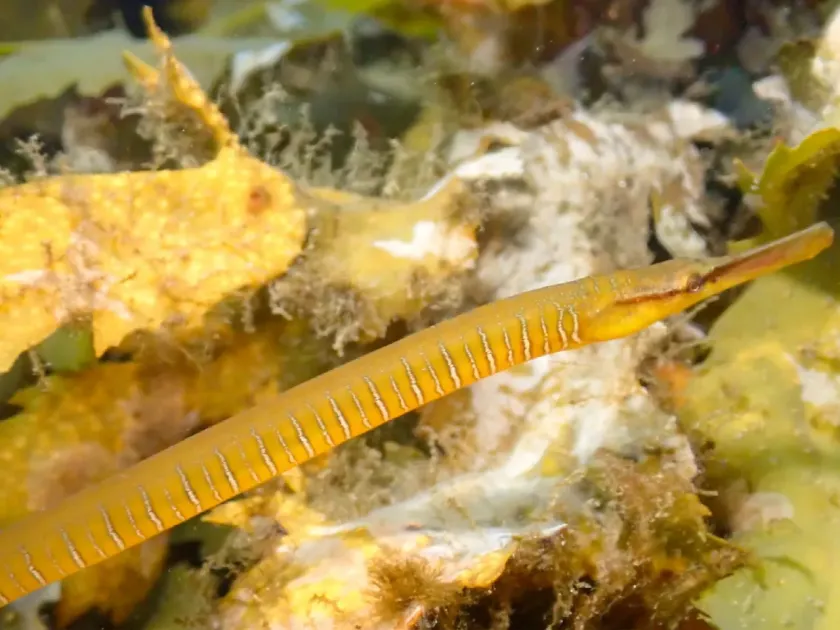
Description
How to identify
The snake pipefish (Entelurus aequoreus) belongs to the Syngnathidae family, order Syngnathiformes. It is a strictly marine species inhabiting the waters of the North-East Atlantic.
Physically, the fish has an elongated, eel-like body covered with bony plates. It resembles a piece of seagrass or seaweed, which often leads to confusion when found washed ashore.
It is an obligate aquatic organism that cannot survive in terrestrial or freshwater environments. Therefore, it cannot interact with soil or crop plants in any way.
Biologically, the snake pipefish is a predator of small planktonic crustaceans. It lacks any mouthparts or digestive enzymes required to process plant tissues.
In the context of agricultural science, the species holds no status as a pest or a threat to crops, as its biological niche is completely separated from farming.
What it damages
The snake pipefish causes zero damage to any agricultural crops. It does not feed on roots, foliage, flowers, or fruits of any cultivated plant species.
As it is a marine fish, it has no presence in greenhouses, orchards, or fields. The concept of crop loss attributed to this organism is scientifically impossible.
There are no known reports of this species interfering with agricultural processes. It does not carry plant diseases nor does it affect plant development.
Any perceived interaction between this fish and agricultural fields is purely incidental, such as the fish being washed up by storms near coastal farms.
Agronomically, the snake pipefish is harmless. It poses no risk to productivity, yield quality, or the economic stability of farming operations.
Control measures
No protection measures are necessary for the snake pipefish. It is not an agricultural pest, and no control protocols exist or are required for this species.
Applying pesticides or any other crop protection chemicals targeting this fish would be environmentally harmful and entirely ineffective regarding agricultural goals.
Farm management should focus on identifying genuine threats to crop health rather than wasting resources on harmless marine biodiversity.
If encountered near coastal plots, no intervention is needed. The fish is part of the local marine ecosystem and poses no danger to land-based agricultural systems.
Proper education and identification are the only "control" measures recommended to ensure that farmers do not misidentify marine fauna as agricultural pests.
Taxonomy
- Latin name
- Entelurus aequoreus
- Family
- Syngnathidae
- EPPO code
- ETLRAE
Discussion
No discussions yet — be the first.