
Seahorse
Hippocampus
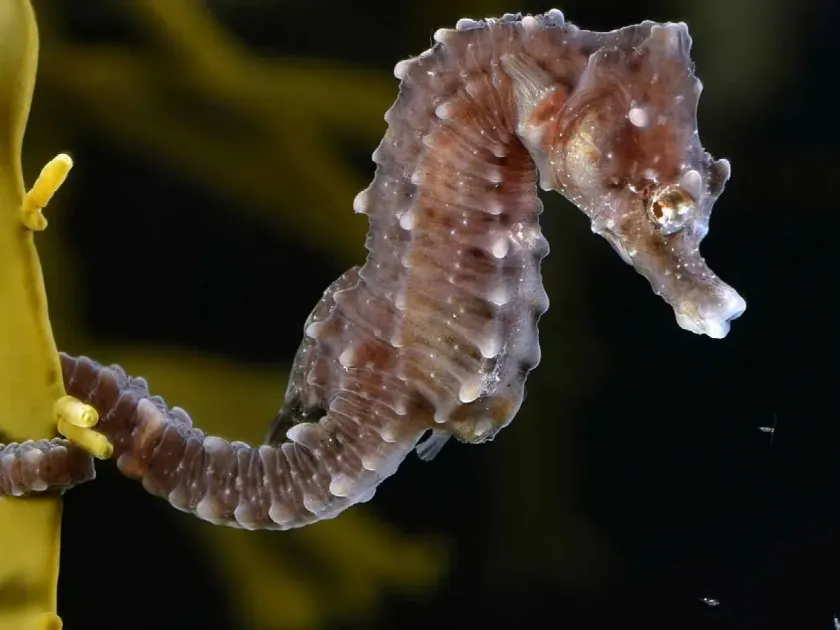
Description
How to identify
The seahorse (genus Hippocampus) belongs to the family Syngnathidae and the order Syngnathiformes. They are exclusively marine fish found in ocean waters.
These organisms are not phytophagous and have no biological connection to insects or pests that damage field crops or greenhouse plants.
Seahorses possess unique anatomical features such as external bony plates, a prehensile tail, and gills, which are strictly adapted for an aquatic lifestyle.
They are tethered to seagrasses or corals in marine environments and cannot exist, let alone thrive, in terrestrial agricultural habitats.
From an agronomical perspective, seahorses are not pests and are biologically incapable of interacting with agricultural ecosystems.
What it damages
Seahorses do not cause any damage to agricultural, horticultural, or ornamental plants as they do not consume plant matter.
As carnivores, they feed exclusively on small crustaceans, such as copepods and shrimp, which exist within their specific aquatic environment.
The mouth anatomy of Hippocampus species is evolved for suction feeding on microscopic prey, not for chewing or damaging plant tissues.
There is no economic or biological impact on crop production caused by seahorses, as their habitat and diet do not overlap with farming.
Consequently, they are never listed in pest control databases or agricultural field guides as harmful agents to crops.
Control measures
No plant protection measures or chemical control strategies are implemented against seahorses, as they pose zero risk to agricultural land.
Many seahorse species are actually protected by international laws and conservation efforts due to their declining populations in the wild.
Applying pesticides or any agricultural chemicals near water sources where seahorses live would be harmful to the environment and the animals themselves.
Farmers and agronomists do not need to monitor for these organisms, as they are not part of the pest spectrum affecting modern agriculture.
Distinguishing between marine fauna and agricultural pests is essential for effective farm management and responsible environmental stewardship.
Taxonomy
- Latin name
- Hippocampus
- Family
- Syngnathidae
- EPPO code
- HPPCSP
Discussion
No discussions yet — be the first.