
Entelurus
Entelurus
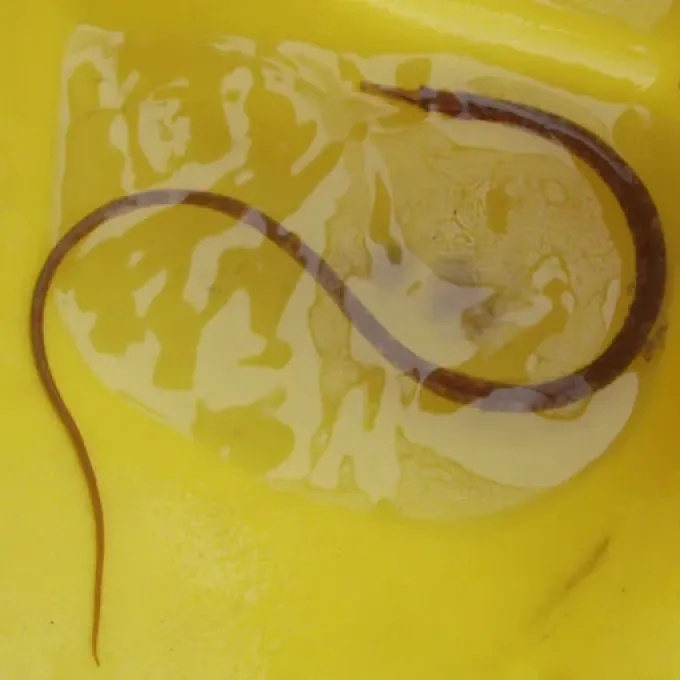
Description
How to identify
The genus Entelurus belongs to the family Syngnathidae and is biologically classified as a marine fish, specifically a type of pipefish. In agronomic contexts, it is not a plant pest; references to it as such are typically the result of identification errors or misinterpretations.
The elongated, needle-like shape of these organisms can lead to confusion with plant-parasitic nematodes in field observations. However, morphologically and phylogenetically, they have no capacity to interact with or damage terrestrial plant life.
Accurate identification in the field requires professional knowledge. When small, worm-like organisms are found, it is crucial to perform a microscopic analysis to differentiate between harmless environmental organisms and actual soil-borne pests.
Agronomists must verify that organisms spotted on crops are indeed phytophagous before considering any treatment. In the case of Entelurus, its natural habitat is strictly aquatic, making it impossible for it to inhabit agricultural soil environments.
Consulting official taxonomic databases ensures that pest management decisions are based on correct biological facts, preventing the unnecessary application of chemicals for non-existent threats.
What it damages
Entelurus does not cause any damage to agricultural crops. It lacks the specialized mouthparts required to penetrate plant cells and feed on plant nutrients, which are characteristic of true agricultural pests.
Real threats to crops, such as nematodes, cause significant economic damage by destroying root systems and disrupting nutrient uptake. These pests exhibit symptoms like chlorosis, stunted growth, and sudden wilting of plant tops.
It is important to focus crop monitoring efforts on organisms that are documented agricultural threats. Misidentifying marine species as pests can lead to severe environmental damage and economic waste due to incorrect pesticide use.
Healthy crops typically show signs of stress only when challenged by actual pathogens or pests. If no signs of structural damage to the roots or stems are observed, the presence of unrelated organisms should not trigger chemical intervention.
Distinguishing between benign biological entities and destructive pests is a fundamental skill for modern integrated pest management (IPM) practices.
Control measures
No control measures are required for Entelurus as it is not a pest. Any attempt to control this organism with pesticides is biologically baseless and ecologically harmful.
Effective crop protection involves a robust IPM strategy. This includes crop rotation, which is highly effective against genuine soil-borne pests like nematodes, by breaking their life cycles and reducing population density.
Field management should prioritize soil health and the use of certified, clean seeds to prevent the introduction of actual harmful organisms. Healthy soil biology suppresses many potential pests naturally.
If suspicious organisms are present, the recommended action is to send samples to a certified phytosanitary laboratory for testing. Only confirmed results should guide management strategies.
Investing in training for field staff on pest identification will prevent common errors and ensure that interventions are targeted, efficient, and environmentally responsible.
Taxonomy
- Latin name
- Entelurus
- Family
- Syngnathidae
- EPPO code
- ETLRSP
Discussion
No discussions yet — be the first.