
Long-snouted seahorse
Hippocampus ramulosus
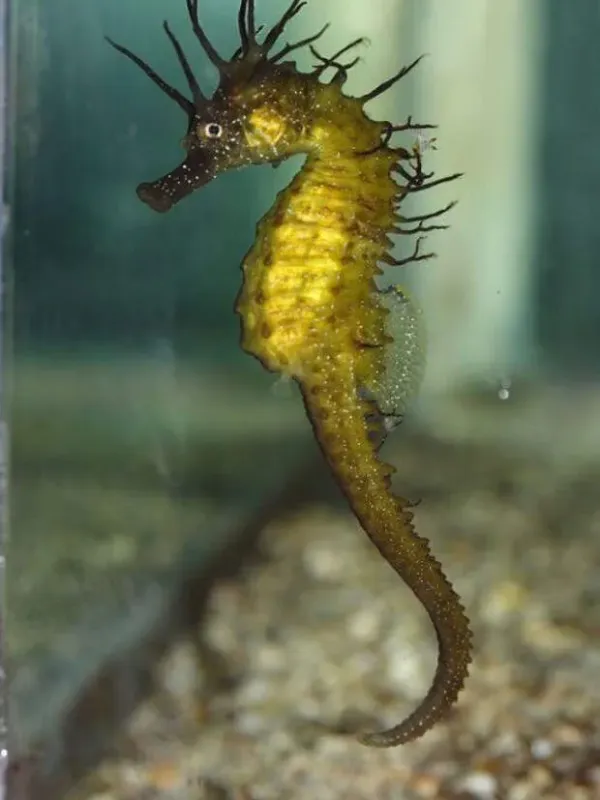
Description
How to identify
The Long-snouted seahorse (Hippocampus ramulosus) is a marine fish species belonging to the order Syngnathiformes and the family Syngnathidae.
The species is easily identified by its unique morphology, featuring a bony armored body and a head positioned at a right angle to the body.
They often possess filamentous skin appendages that help them blend into their surroundings, particularly among seagrass meadows.
Their prehensile tail allows them to anchor themselves to marine vegetation, providing stability against water currents in their habitat.
The ability to change color serves as a camouflage strategy, making these creatures highly elusive in their natural environment.
What it damages
It must be clearly stated that the Long-snouted seahorse is not a plant pest and poses no threat to agriculture or any land-based crops.
As an exclusively marine organism, it has no interaction with agricultural systems, greenhouses, or garden plants.
There is absolutely no evidence of this fish damaging cultivated crops, as their diet consists primarily of small aquatic crustaceans.
Misclassifying this species as a pest is scientifically incorrect and does not reflect its biological role as a harmless marine inhabitant.
Agricultural professionals should note that seahorses are part of marine biodiversity and have no impact on crop health or production.
When it appears
The activity patterns of the Long-snouted seahorse are strictly governed by marine water temperatures and seasonal oceanic cycles.
Breeding typically occurs during the warmer months, when temperatures in coastal regions are ideal for larval development.
During colder winter periods, these seahorses may migrate to deeper, more thermally stable waters to ensure their survival.
Their seasonal distribution is independent of terrestrial farming cycles, planting seasons, or vegetation growth periods.
Observation of these fish is generally restricted to marine biological research rather than agricultural monitoring programs.
Control measures
No control measures are needed or recommended for the Long-snouted seahorse, as it is a protected species in many parts of its range.
Efforts should focus on environmental conservation to prevent the destruction of seagrass habitats where these animals reside.
Water quality monitoring is essential, as chemical runoff from coastal areas can be detrimental to delicate marine ecosystems.
Protecting the natural balance of marine life is a shared responsibility that does not involve pest management techniques.
Agricultural runoff management remains important not to control this species, but to maintain the overall health of coastal waters.
Taxonomy
- Latin name
- Hippocampus ramulosus
- Family
- Syngnathidae
- EPPO code
- HPPCRA
Discussion
No discussions yet — be the first.