
Swammerdamia caesiella
Swammerdamia caesiella
Description
How to identify
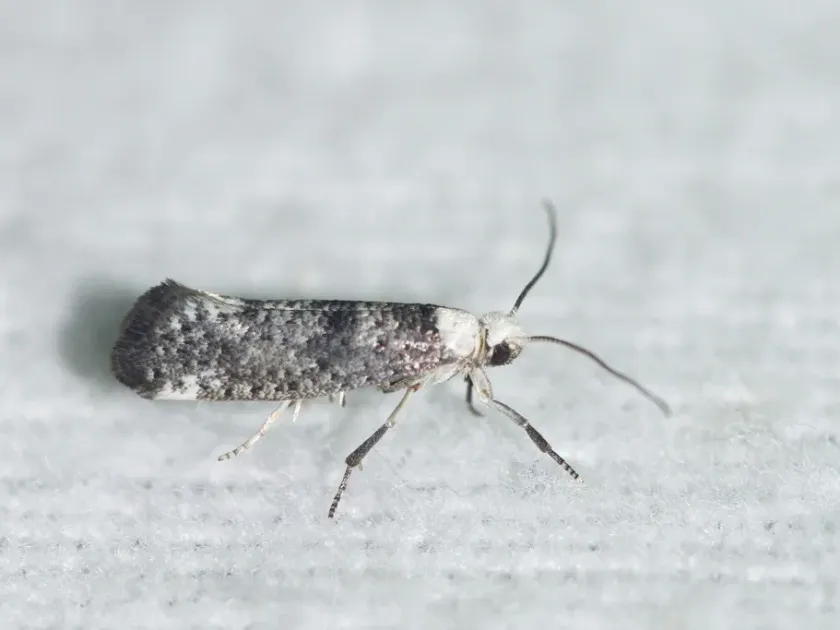
Swammerdamia caesiella is a small moth belonging to the Yponomeutidae family, commonly known as ermine moths. The adult moth has a wingspan of approximately 10–12 mm. Its forewings are greyish-brown with a distinct metallic luster and small dark markings, allowing it to camouflage perfectly against tree bark.
These moths are primarily nocturnal and crepuscular, meaning they are most active during the night and dusk. During the day, they remain stationary on branches, becoming virtually invisible to the untrained eye due to their cryptic coloration.
The life cycle of this species is highly dependent on regional climate. Typically, it completes one or two generations per year. The insect overwinters as a pupa or larva inside dense, silk-like cocoons located in bark crevices or twig forks.
Spring emergence is triggered by rising temperatures. As soon as the host plants show signs of vegetative growth, the moths or active larvae start their cycle. Because of their small size, they often go unnoticed until damage to the leaves becomes severe.
Specialists identify these pests using pheromone traps or by analyzing the specific architecture of the silk nests they construct. Accurate identification is key to choosing the correct timing for control measures.
What it damages
The larvae of Swammerdamia caesiella primarily feed on plants from the Rosaceae family, most notably Hawthorn and various fruit trees such as apple. The damage is concentrated on the leaf tissue, which is vital for the plant's photosynthetic capacity.
Young larvae initially skeletonize the leaves, consuming the tissue between the veins. As they grow, they move on to more extensive feeding, often eating almost the entire leaf blade and leaving only the skeleton and petiole behind.
A heavy infestation leads to widespread defoliation, which severely stresses the tree. This loss of foliage reduces the plant's ability to store carbohydrates, negatively impacting next year's fruit production and overall vigor.
Stunted growth is a common consequence for young orchards. When the trees are continuously attacked by these larvae, the structural development of the branches is hampered, leading to a distorted canopy and weakened wood.
Secondary infections often follow pest damage. Open wounds on leaves and stems created by the larvae provide entry points for pathogens, potentially leading to bacterial or fungal infections that further damage the tree's health.
When it appears
Adult activity begins in mid-spring, coinciding with bud burst and early leaf development. Mating occurs shortly after emergence, and females lay eggs on the young foliage, which will serve as the primary food source for the hatching larvae.
The peak feeding period occurs from late spring to early summer. During this time, the larvae grow rapidly, and the demand for nutrition is at its highest, leading to the most visible damage on the trees.
Pupation typically occurs in early summer. Larvae spin protective cocoons, often inside the leaves they have webbed together. This stage lasts for several weeks before the next generation of moths emerges, if conditions allow.
As autumn approaches, the final generation of larvae prepares for hibernation. They seek out protected spots such as bark fissures or debris under the tree, where they remain in diapause until the following spring.
Monitoring should be continuous throughout the growing season. Early detection during the pre-flowering stage is the most effective way to prevent the population from reaching levels that require intensive intervention.
Signs of infestation
The most prominent sign of infestation is the presence of silk webs connecting leaves into small nests. Within these nests, one can often find larvae, their frass, and signs of leaf tissue consumption.
Damaged leaves will show characteristic patterns: irregular holes, skeletonized areas where only veins remain, and yellowing or browning of the tissue. If left unchecked, these nests can spread across the entire canopy.
In winter, a close inspection of the tree trunks and branches may reveal the presence of small, dense cocoons. Finding these is a clear indicator of a resident population that will emerge once spring temperatures rise.
If adult moths are seen flying in the evenings, it serves as an immediate warning of an active reproductive phase. This is the optimal time to assess whether control measures are necessary to protect the upcoming fruit set.
Tree appearance changes when infestation is high; the canopy may appear sparse or thin. Persistent web formation on young terminal growth is a diagnostic indicator specifically associated with this species.
Control measures
Mechanical control involves the pruning and destruction of infested shoots and webbed nests. This method is highly effective for smaller orchards or home gardens if performed before the larvae have fully dispersed.
Biological control agents, particularly formulations containing Bacillus thuringiensis, are highly effective against young larvae. These products target the pest specifically while preserving beneficial predatory insects.
Chemical control should be reserved for cases where the economic threshold is exceeded. Registered insecticides should be applied according to local guidelines, ensuring proper rotation to manage the risk of insecticide resistance.
Maintaining orchard hygiene is essential. Clearing away leaf litter and debris reduces the available overwintering sites, naturally lowering the population pressure in the spring.
- Installing nesting boxes to support birds that naturally feed on the larvae.
- Using pheromone traps for population monitoring and mating disruption.
- Ensuring proper irrigation and fertilization to promote tree resilience.
- Regular canopy inspections in June to remove remaining nests manually.
Taxonomy
- Latin name
- Swammerdamia caesiella
- Order
- Lepidoptera (butterflies)
- Family
- Yponomeutidae
- EPPO code
- SWAMCA
Discussion
No discussions yet — be the first.