
Swammerdamia
Swammerdamia
Description
How to identify
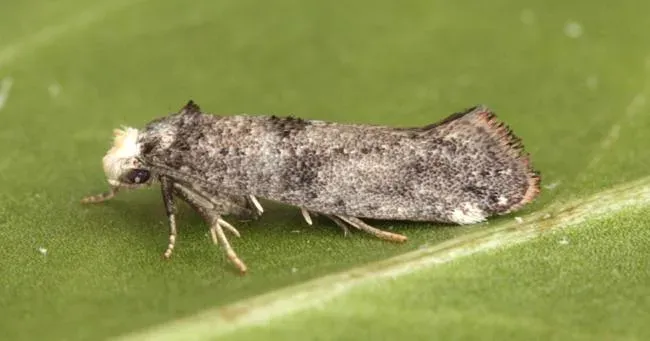
Swammerdamia is a genus of small moths belonging to the family Yponomeutidae, commonly known as ermine moths. The adults have slender bodies and silver-gray or brownish wings, often featuring subtle dark patterns that provide effective camouflage.
The larvae, or caterpillars, are typically yellowish-green or brown with distinct pale longitudinal stripes. They lead a cryptic life, often concealed within silken webs they construct on host plants.
These insects belong to the order Lepidoptera. Their life cycle is intrinsically linked to woody plants within the Rosaceae family, where they complete their development.
Pupation occurs within characteristic spindle-shaped cocoons, which are often covered with a fine white silken mesh, helping them blend into the bark of the host trees.
A key identifying feature is their nest-building behavior; the larvae utilize silk to create protective environments that facilitate their feeding and survival during the early stages.
What it damages
Swammerdamia primarily affects fruit-bearing trees. Apple and pear trees are common hosts, as well as woody ornamental shrubs like hawthorn and mountain ash.
The larvae feed on the foliage, skeletonizing leaves or consuming them entirely, leaving only the primary veins. This process reduces the photosynthetic capacity of the tree.
Heavy infestations can significantly stress the trees, leading to poor fruit development, reduced yields, and an overall decline in the tree's health during the growing season.
Severe defoliation caused by these pests can trigger premature leaf drop, which impairs the tree's ability to store energy for winter, thereby reducing its cold hardiness.
In nurseries, young saplings are particularly vulnerable; an attack can lead to stunted growth and poor structural development, affecting the quality of the planting material.
When it appears
The life cycle of Swammerdamia is geared towards the spring and summer months. They typically overwinter as young larvae or pupae tucked away in bark crevices.
Activity begins in early spring, coinciding with bud burst. The larvae emerge and begin feeding on young foliage and emerging blossom clusters, which are highly susceptible during this time.
The flight of the first generation of adults usually occurs in early summer, followed by mating and egg-laying on the undersides of leaves of the host plants.
Depending on local climatic conditions and ambient temperatures, multiple generations can occur within a single growing season, potentially increasing the damage pressure.
As autumn approaches, the insect population gradually enters diapause, preparing for the dormant winter phase while sheltered in crevices or protected plant parts.
Signs of infestation
The first signs of an infestation include the appearance of delicate silken webs, which the larvae use to pull leaves together or create protective tunnels along stems.
Visible feeding damage, such as small window-like patches or irregular holes in the leaf surface, indicates the presence of larvae actively feeding in the canopy.
Close inspection of branches and crotches often reveals clusters of pupal cocoons, which are a strong indicator of the pest's presence and potential future generations.
Heavy infestation leads to a scorched appearance of affected twigs, as the larvae strip away the epidermis and tissue of the leaves, causing the foliage to wither and brown.
Attraction of moths to light sources during evening hours in or near the orchard can serve as a non-specific indicator of the pest population density in the area.
Control measures
Mechanical control involves the manual removal and destruction of silken nests during the early season, as well as cleaning the bark to remove overwintering pupae.
Biological control relies on encouraging natural predators and parasitoids, such as ichneumon wasps, which can help keep the pest population below economically damaging levels.
Systemic insecticides may be used during the green-tip stage or immediately post-bloom if monitoring indicates that the population threshold has been exceeded.
- Utilizing pheromone traps to monitor adult moth activity.
- Pruning infested shoots to reduce larval populations.
- Applying microbial-based bio-pesticides during the larval hatch period.
It is crucial to maintain spatial isolation of orchards from abandoned or neglected sites, which often act as reservoirs for these and other similar pest species.
Taxonomy
- Latin name
- Swammerdamia
- Order
- Lepidoptera (butterflies)
- Family
- Yponomeutidae
- EPPO code
- SWAMSP
Discussion
No discussions yet — be the first.