
Anchor stink bug
Stiretrus anchorago
Description
How to identify
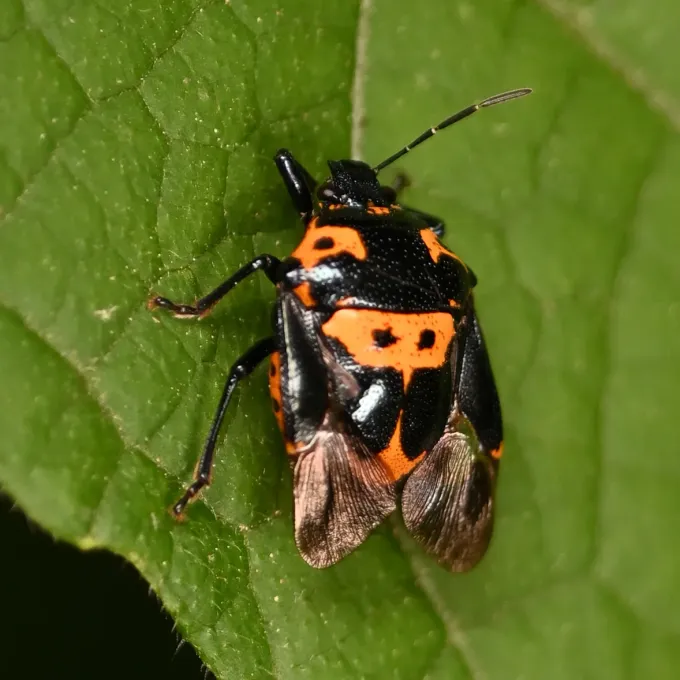
The Anchor stink bug (Stiretrus anchorago) is a member of the Pentatomidae family. Its common name is derived from the distinctive anchor-shaped marking on its scutellum, which provides a key identification feature for this species.
Adults exhibit a characteristic shield-shaped body, typically measuring 7 to 10 millimeters in length. Their coloration is highly variable, often featuring a combination of black, cream, and red or orange patterns that serve as a warning to potential predators.
The life cycle involves five nymphal stages. As they progress through these stages, the nymphs grow larger and their coloration shifts, making them recognizable as they mature toward the adult phase.
While primarily a predatory species that feeds on other insects, Stiretrus anchorago can occasionally exhibit phytophagous behavior, especially when prey populations are low, leading it to feed on plant juices.
These bugs are often observed resting on foliage or stems. When disturbed, they emit a pungent odor from their thoracic scent glands, a common defense mechanism among shield bugs.
What it damages
Damage occurs when the population density of these bugs becomes high, forcing them to supplement their diet with plant tissues. This can lead to noticeable injury to various garden and field crops.
Major host plants include solanaceous crops like tomatoes, eggplants, and potatoes, as well as various legumes and beans. In some cases, they may also target herbaceous plants found along field borders.
The bugs use their piercing-sucking mouthparts to penetrate plant tissues. They inject saliva containing digestive enzymes, which liquifies the plant cells, allowing the insect to ingest the nutrients.
The feeding sites typically appear as chlorotic spots that eventually turn necrotic. This damage impairs the plant's ability to photosynthesize and can lead to the wilting of terminal shoots and leaves.
Severe infestations can stunt plant growth and reduce overall yield. Furthermore, the punctures can serve as entry points for secondary bacterial or fungal pathogens, increasing the level of damage.
When it appears
The Anchor stink bug overwinters as an adult, typically seeking refuge in sheltered locations such as leaf litter, under bark, or within the upper layer of soil to survive winter temperatures.
Emergence from overwintering sites occurs in the spring when temperatures rise consistently above 10-12 degrees Celsius, signaling the start of the primary growing season.
The species can produce multiple generations annually. The rate of development is heavily influenced by ambient temperature and the availability of both prey and plant host moisture.
Populations tend to reach their peak during mid-to-late summer, coinciding with the reproductive stages of many crops. This is when the impact of both nymphs and adults is most visible in the fields.
As daylight duration decreases and temperatures drop in the autumn, the bugs initiate their search for overwintering sites, gradually moving out of the cropping areas.
Signs of infestation
Visible signs of infestation include small, pale or yellow spots on leaves at the feeding sites. These spots represent areas where the plant tissue has been damaged by the bug's proboscis.
Clusters of eggs are often found on the underside of leaves. These eggs are laid in neat, rhythmic rows, which is a telltale sign for farmers identifying the presence of the bug in their fields.
Small groups of nymphs can often be spotted near the egg mass shortly after hatching. Their communal behavior makes them relatively easy to detect during routine scouting missions.
Evidence of growth is marked by the presence of exuviae (cast-off skins) left behind after each molt. These light-colored shells are frequently attached to leaves or stems.
Generalized wilting or stunted growth patterns, especially on the top of the plant or fruit-bearing branches, suggest that feeding activity has significantly drained the plant of its resources.
Control measures
Cultural control practices, such as clearing weeds and crop residues, are essential to remove overwintering sites and reduce the starting population for the next season.
Biological control using natural enemies, such as parasitic wasps that target the eggs of stink bugs, can be highly effective in maintaining population levels below the economic injury threshold.
Chemical intervention should be considered a last resort. If insecticide application is necessary, products should be chosen to target the nymphs while minimizing impact on beneficial predatory insects.
Crop rotation is a vital component of integrated pest management. By alternating crops that are less attractive to the bug, farmers can break the life cycle and prevent population buildup.
Frequent field scouting and the use of monitoring tools, such as sticky traps or visual inspections, allow for early intervention, preventing the need for large-scale chemical treatments.
Taxonomy
- Latin name
- Stiretrus anchorago
- Order
- Hemiptera (bugs, aphids, leafhoppers)
- Family
- Pentatomidae
- EPPO code
- STIRAN
Discussion
No discussions yet — be the first.