
Stethophyma
Stethophyma
Description
How to identify
Stethophyma is a genus of insects belonging to the order Orthoptera and the family Acrididae, commonly known as short-horned grasshoppers.
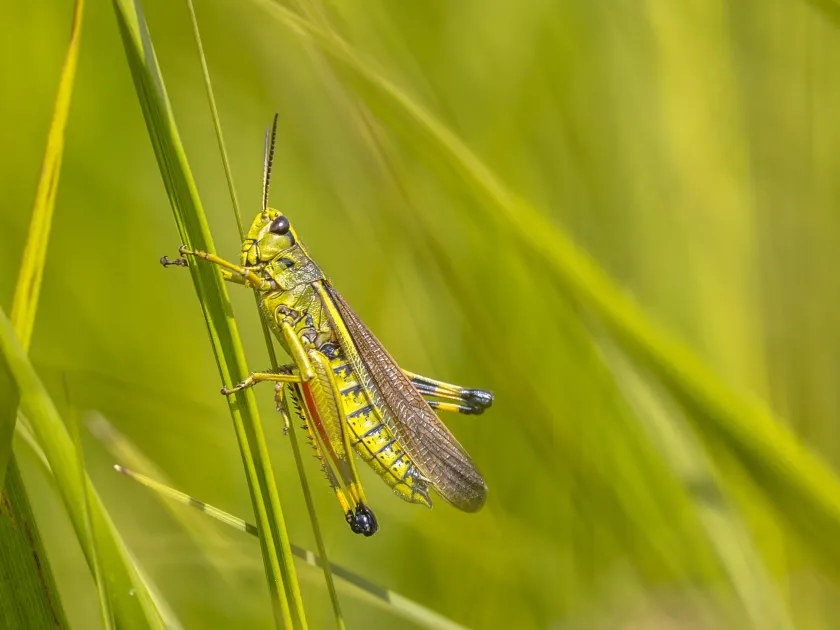
These insects are characterized by a robust, somewhat elongated body, often featuring a protective coloration in shades of green, olive, or brown to blend with vegetation.
They possess well-developed, powerful hind legs adapted for jumping, which is their primary mode of escape when they feel threatened by predators or agricultural machinery.
Adult specimens can be identified by the specific shape of the pronotum and the unique venation patterns on their tegmina, which are essential diagnostic traits.
The females are generally larger than the males and are equipped with a specialized ovipositor designed to deposit eggs in moist soil or damp plant matter.
What it damages
Stethophyma primarily targets cereal crops, including wheat, barley, and oats, alongside various meadow grasses that serve as an alternative food source.
These insects prefer habitats with high humidity, making low-lying areas, field margins, and land near irrigation ditches the most vulnerable points in agricultural landscapes.
Both adults and nymphs feed on foliage by chewing the edges of leaves, which leads to significant tissue loss and impairs the plant's ability to perform photosynthesis.
Under heavy infestation, the damage extends beyond leaves, as grasshoppers may consume the stem and inflorescences, directly reducing the potential grain yield.
Such damage not only lowers the quantity of the harvest but also weakens the plants, making them more susceptible to subsequent diseases and environmental stress.
When it appears
The life cycle of Stethophyma is strictly dependent on soil moisture, as eggs require specific environmental conditions to survive the winter and hatch successfully.
Nymphs typically emerge in the spring, coinciding with the rapid growth of succulent grasses and cereal crops that provide the necessary nutrition for development.
The insect undergoes several molting stages, gradually maturing while increasing its food intake and expanding its range across the fields as the summer progresses.
Adult activity peaks during the mid-to-late summer months, representing the most critical period for crop protection efforts and field monitoring.
As autumn approaches, the life cycle concludes with mating and egg-laying, ensuring that the next generation remains safely in the soil throughout the winter months.
Signs of infestation
Visible signs of Stethophyma presence include jagged, bitten edges on leaves, which are characteristic of grasshopper feeding patterns in cereal crops.
A quick inspection of the field, especially during the cooler hours of the morning or evening, usually reveals the presence of jumping insects disturbed by movement.
One can also observe piles of frass (excrement) on the ground under the plants, which serves as a definitive indicator of a high-density population.
Infestation usually begins at the edges of the field near water sources or dense weeds, where the population density remains significantly higher than in the interior.
- irregular feeding damage on leaf margins;
- noticeable jumping activity in the field;
- presence of fecal pellets near the base of plants;
- localized thinning of crop density due to intense feeding.
Control measures
Effective management begins with mechanical practices such as deep tillage, which disrupts the egg-laying sites and buries the eggs, preventing their successful hatching.
Controlling weeds along field boundaries and drainage ditches is critical, as these areas often act as primary reservoirs for grasshopper populations.
If the population exceeds the economic threshold, the application of chemical insecticides should be targeted during the early nymphal stages to maximize efficacy.
Monitoring is key; scout the field edges and low-lying spots regularly to identify potential outbreaks before the insects reach the adult stage and start flying.
Maintaining a balanced ecosystem that encourages natural predators, such as insectivorous birds and parasitic wasps, can help keep population levels in check over time.
Taxonomy
- Latin name
- Stethophyma
- Order
- Orthoptera (locusts)
- Family
- Acrididae
- EPPO code
- STTPSP
Discussion
No discussions yet — be the first.