
Stenohippus
Stenohippus
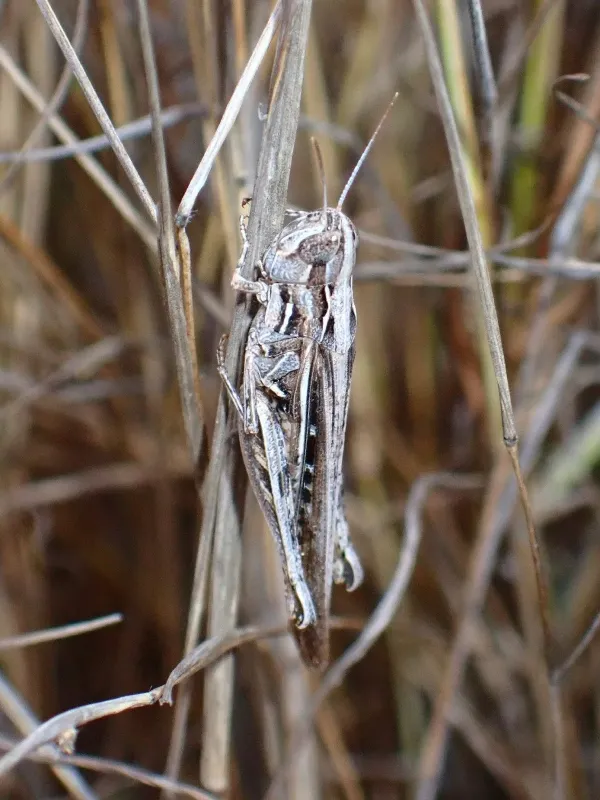
Description
How to identify
Stenohippus is a genus of grasshoppers belonging to the family Acrididae. These insects are well-adapted to life in grassland and crop field environments, featuring powerful hind legs for jumping and wings for dispersal.
The morphology of Stenohippus typically includes a slender body shape with protective coloration, which acts as camouflage against dried stalks or green foliage. Their size ranges from small to medium within the family context.
They possess chewing mouthparts designed to feed on various plant tissues. The nymphs undergo several molts, gradually increasing in size and developing wing pads before reaching the adult stage.
Identification often requires careful inspection of the pronotum and wing venation. Because they are often found alongside other grasshopper species, precise identification is vital for successful pest management.
These grasshoppers are highly active during warm, sunny days. Their ability to switch between walking and flying makes them efficient colonizers of agricultural fields during the growing season.
What it damages
Stenohippus primarily causes damage to cereal crops such as wheat, barley, and oats. Both nymphs and adults consume leaves, stems, and reproductive parts like ears and panicles.
Feeding damage is characterized by ragged leaf edges. In cases of high population density, the insects can strip leaves entirely, severely reducing the photosynthetic capacity of the plants.
By consuming the reproductive structures of grain crops, the pest directly reduces the total yield and quality of the harvest. This may result in lower test weights and reduced seed viability.
Pastures and forage grasses are also significant targets for this insect. Repeated feeding by large swarms can lead to the degradation of grazing lands, favoring the growth of less nutritious weeds.
The damage often starts in localized patches or along field margins where the insects first migrate from uncultivated areas, eventually spreading inwards as the population grows.
When it appears
The life cycle of Stenohippus revolves around seasonal temperature shifts. Overwintering occurs in the egg stage, with eggs deposited in soil egg pods designed to survive harsh winters.
Nymphs emerge in the spring once soil temperatures reach appropriate levels. This initial stage is crucial for population expansion and is often the best time for early intervention.
Adults typically emerge mid-summer and remain active until early autumn. This is the period of greatest feeding intensity and reproduction, leading to the deposition of eggs for the next generation.
The number of generations depends on the regional climate. In warmer climates, the cycle is faster, sometimes leading to multiple waves of activity, while cooler regions generally see one generation per year.
Effective monitoring must align with these seasonal milestones. Understanding the local phenology of the pest is key to timing insecticide applications for maximum efficacy.
Signs of infestation
The first signs of infestation include partially eaten leaves with notched or uneven edges. Early instar nymphs can be difficult to spot, but their feeding patterns are soon noticeable.
Increased grasshopper activity, seen as sudden jumping or flying when walking through the field, is a primary indicator of a significant infestation that requires professional attention.
Presence of frass (insect excrement) on leaves and on the ground indicates active feeding areas. This is often more visible in the early morning before the insects become highly mobile.
If ears of corn or wheat appear stripped or damaged, it suggests that the population has reached high levels, as grasshoppers usually prefer leaves before moving to reproductive structures.
Look for localized bare patches in the field. These patches often expand as the grasshopper population feeds and moves collectively, leaving behind obvious evidence of defoliation.
Control measures
Integrated pest management (IPM) is essential for controlling Stenohippus. This includes the timely application of insecticides when populations exceed established economic thresholds.
Tillage practices, specifically deep plowing after harvest, are highly effective. This physical disruption kills the overwintering eggs in the soil, significantly reducing the next season's population.
Maintaining clean field borders and managing weeds along roadsides and fences help eliminate primary breeding grounds, preventing the migration of insects into the crops.
Biological control agents, such as specific fungal pathogens, can be used in certain conditions to manage outbreaks without relying solely on chemical broad-spectrum insecticides.
Regular field scouting and the use of economic threshold data are critical. Farmers should monitor their fields consistently to ensure that control measures are implemented precisely when they are most effective.
Taxonomy
- Latin name
- Stenohippus
- Order
- Orthoptera (locusts)
- Family
- Acrididae
- EPPO code
- STHPSP
Discussion
No discussions yet — be the first.