
Stenobothrus stigmaticus
Stenobothrus stigmaticus
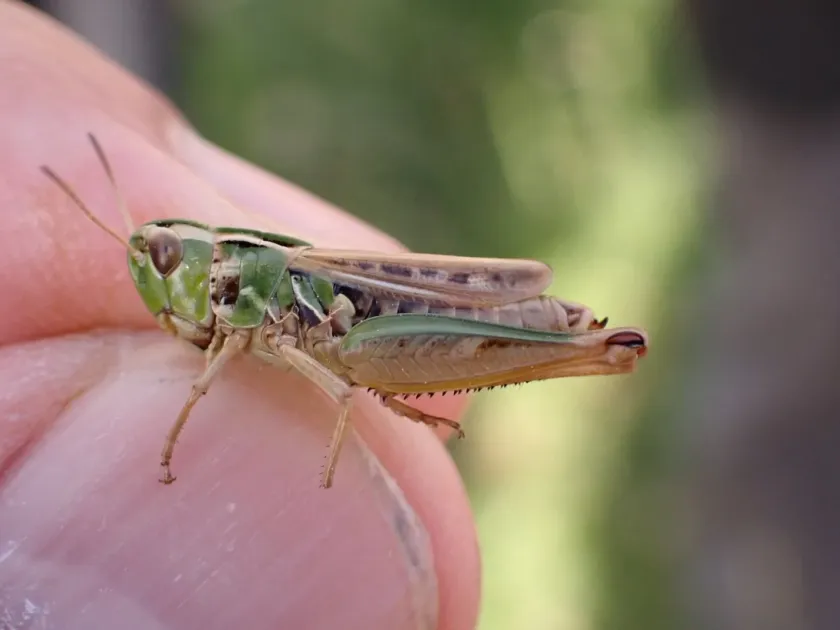
Description
How to identify
Stenobothrus stigmaticus is a species of grasshopper belonging to the family Acrididae, often found in grasslands and agricultural fields.
The adult insect typically measures between 13 and 20 mm, with a body coloration that can vary from green to brown, providing excellent camouflage.
A key identification feature is the shape of the pronotal lateral keels, which are curved in the prozona, resembling an X-shape when viewed from above.
Both males and females are winged, with the wings usually extending beyond the abdomen, allowing them to travel long distances in search of food.
The characteristic sound produced by males is a valuable indicator for identifying the presence of this species in fields during the breeding season.
What it damages
This species acts as a polyphagous pest, meaning it feeds on a wide range of plants, with a strong preference for various cereal crops and grasses.
It causes significant damage by feeding on leaves and stems, leading to reduced photosynthesis and weakened plant development in early growth stages.
In pastures and rangelands, heavy infestations result in substantial biomass loss, which directly impacts forage availability for livestock.
The pest is capable of stripping leaves from young seedlings, which can lead to crop failure if the density of the population remains unchecked.
General crop productivity is lowered, and plants damaged by this grasshopper become more susceptible to secondary environmental stresses or pathogens.
When it appears
The life cycle of Stenobothrus stigmaticus involves one generation per year, with the egg stage serving as the primary way the species survives the winter.
Eggs are deposited in the soil in protective capsules called egg pods, which are buried just below the surface to ensure their survival during cold months.
Nymphs emerge in late spring or early summer, following the rise in soil temperature, and immediately begin feeding on tender vegetation.
The insect progresses through five nymphal stages, growing in size and increasing its food consumption rate before reaching the adult stage.
By mid-to-late summer, adults become prominent and focus on reproduction, with females laying their eggs in the soil as the season draws to a close.
Signs of infestation
Signs of an infestation include irregularly chewed leaf edges and patches of thinner canopy where the grasshopper population has been feeding.
Direct observation is possible during warm, sunny days when the insects are most active and can be seen jumping or flying upon disturbance.
The presence of grasshopper frass on the soil surface near host plants serves as a clear indication of high feeding activity within a specific area.
Visible damage to crop edges, which often serve as starting points for migration, suggests that the pest is moving from surrounding areas into the fields.
A noticeable decrease in green foliage density, combined with the presence of jumping insects, confirms the need for a pest population survey.
Control measures
Cultural control measures, such as deep tillage, can effectively destroy egg pods by disrupting the soil surface and exposing eggs to environmental factors.
Maintaining clean field margins by mowing weeds helps reduce the reservoir of potential pest populations that might migrate into the main crop.
Chemical insecticides should be applied selectively based on the economic threshold to ensure effective control while minimizing harm to beneficial insects.
Biological control methods, including the protection of natural predators like birds and parasitic wasps, play a crucial role in long-term population management.
- Systematic monitoring using sweep nets.
- Crop rotation to break the life cycle.
- Timely irrigation to support plant recovery.
Taxonomy
- Latin name
- Stenobothrus stigmaticus
- Order
- Orthoptera (locusts)
- Family
- Acrididae
- EPPO code
- STNBST
Discussion
No discussions yet — be the first.