
Stenobothrus rubicundulus
Stenobothrus rubicundulus
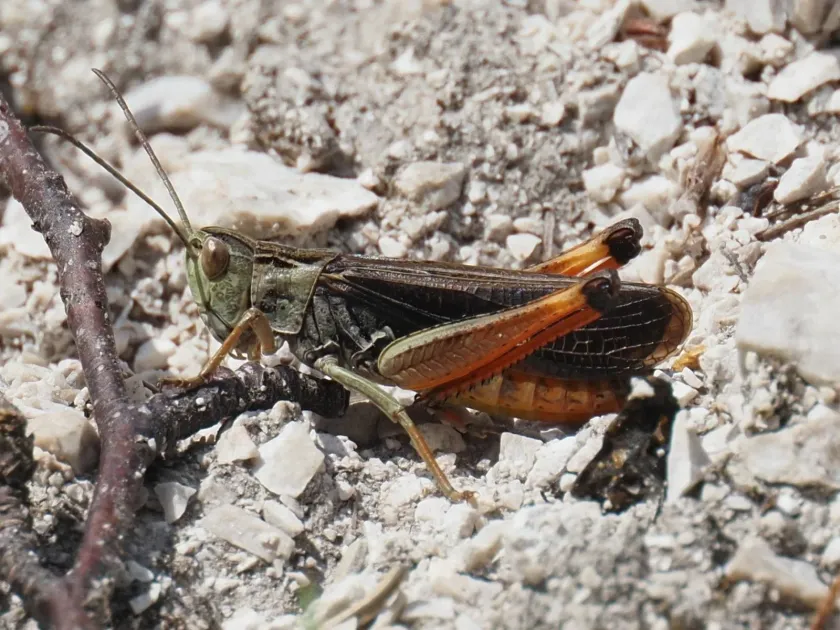
Description
How to identify
Stenobothrus rubicundulus belongs to the family Acrididae and is a common species of grasshopper found in various habitats, particularly in open fields and meadows.
Adult insects are characterized by their slender body, specialized jumping hind legs, and long wings, which allow them to move quickly across the landscape.
The species exhibits sexual dimorphism in behavior; males are known for their distinct stridulation produced by rubbing their hind legs against their wings.
The life cycle involves egg, nymph, and adult stages. Eggs are deposited in soil and are highly resilient to cold winter temperatures, ensuring survival.
Nymphs resemble smaller adults and go through several instars, increasing in size and developing wings as they mature through the growing season.
What it damages
This grasshopper species is a polyphagous pest, meaning it feeds on a wide range of plants, often posing a threat to cereal grains and forage crops.
Major crops affected include wheat, barley, oats, and various grasses, where the insects feed on foliage, potentially causing significant yield losses.
Damage typically appears as ragged, irregular edges on leaf blades, which can escalate to complete defoliation if pest populations are left unchecked.
During extreme drought conditions, these insects become more aggressive, migrating from wild vegetation to cultivated fields in search of succulent plant tissue.
Significant economic damage occurs when the pest density exceeds critical thresholds, leading to stunted plant growth and reduced grain filling capacity.
When it appears
Egg hatching usually occurs in late spring as soil temperatures rise, marking the beginning of the nymph development phase in agricultural areas.
The peak activity for adult grasshoppers is observed during the summer months, particularly in July and August, when conditions are warm and dry.
Adults are most mobile during the day, actively searching for food and mates, while their numbers tend to decrease as autumn temperatures start to fall.
The life cycle is generally univoltine, but localized microclimates can influence the timing of development stages within a given agricultural region.
As the season nears its end, mating and oviposition take place, with females laying egg pods in soil to survive the winter and start the cycle anew.
Signs of infestation
The most common sign of an infestation is the visible feeding damage on leaves, often accompanied by the presence of grasshoppers in the field.
Large numbers of jumping insects moving away when entering a field are a clear indicator that the population density has reached an actionable level.
The characteristic sound of stridulation during hot, calm days is a reliable acoustic indicator of the presence of adult populations within the field edges.
The presence of grasshopper frass on the soil surface under the crop canopy can indicate high levels of feeding activity and localized hotspots.
Reduced crop vigor and overall thinning of the stand in specific areas are often the consequences of prolonged feeding by this pest species.
Control measures
Integrated pest management strategies are essential to keep Stenobothrus rubicundulus populations below the economic injury level.
- Tillage practices that disturb and destroy egg pods in the soil.
- Control of weeds in field margins to reduce favorable breeding habitats.
- Monitoring pest populations through systematic field inspections.
- Targeted insecticide applications during early nymph stages.
Chemical control is most effective when targeted at early instar nymphs, which are less mobile and more susceptible to control measures.
Promoting a healthy environment for natural predators, such as birds and parasitic insects, can also help regulate grasshopper populations naturally.
Taxonomy
- Latin name
- Stenobothrus rubicundulus
- Order
- Orthoptera (locusts)
- Family
- Acrididae
- EPPO code
- STNBRU
Discussion
No discussions yet — be the first.