
Spotted grasshopper
Stenobothrus nigromaculatus
Description
How to identify
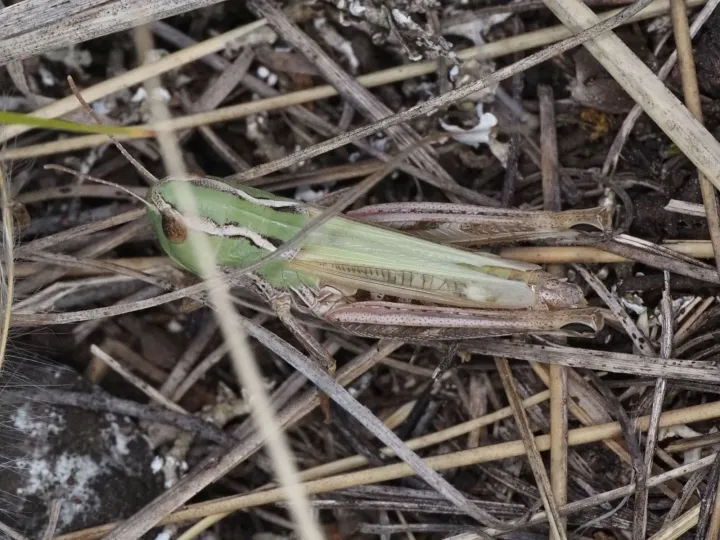
The spotted grasshopper Stenobothrus nigromaculatus is a species of grasshopper belonging to the Acrididae family. It is widely distributed across open grasslands and often invades adjacent agricultural fields.
These insects are characterized by a camouflage coloration that varies from green to brown, allowing them to blend seamlessly with the surrounding vegetation. The distinctive dark spots on the forewings provide the species with its common name.
Biological development involves a gradual metamorphosis, transitioning through several nymphal stages before reaching the adult stage. Eggs are laid in the soil in protective clusters called pods, ensuring survival through harsh winters.
The species prefers dry, sunny environments, which are ideal for their reproduction. They are highly mobile, often migrating between habitats in response to changes in food availability or climatic conditions.
Morphological identification focuses on the specific venation patterns and the structure of the pronotum, which distinguish Stenobothrus nigromaculatus from other closely related grasshopper species.
What it damages
As a polyphagous insect, the spotted grasshopper primarily targets plants within the Poaceae (grass) family. In agricultural settings, it frequently causes damage to various cereal crops and pastures.
Feeding behavior involves consuming both leaves and stems. Intense grazing by large populations can lead to complete defoliation, which severely restricts the plant's ability to undergo photosynthesis.
Early-season damage is particularly critical as it impacts the tillering phase of cereals. Stunted growth and reduced vegetative biomass are common consequences of heavy infestation in young crops.
During the grain-filling stage, the grasshoppers often feed on the developing heads, leading to significant yield losses. This not only reduces the quantity of the harvest but also diminishes the quality of the grain.
Wounds caused by feeding provide entry points for secondary pathogens, such as fungi and bacteria, which can exacerbate the damage and lead to further decline in crop health.
When it appears
The life cycle begins with egg hatching in the spring, triggered by the warming of the soil surface. This period marks the start of the nymphal development phase.
During the summer, the insects pass through several nymphal instars, with their growth rate largely determined by ambient temperature and local humidity levels. High temperatures often accelerate development.
Adults typically emerge by mid-summer, reaching their peak activity levels. During this time, they are most voracious and are prone to moving from wild vegetation into cultivated grain fields.
Late summer and early autumn represent the mating and oviposition period. Females deposit eggs into the ground, where they remain dormant until the following spring, completing the annual cycle.
The population presence is relatively short-lived within a single year, yet its intensity during the growth season requires careful observation and timely management actions.
Signs of infestation
Visual identification of infestation is primarily based on the characteristic ragged appearance of the foliage. Leaves often display uneven, chewed edges where the grasshoppers have fed.
A notable sign of an active infestation is the sudden movement of grasshoppers as they leap away when approached or disturbed by machinery. This behavior helps in assessing the severity of the population.
The presence of frass (excrement) on leaves and soil surface is a clear indicator of sustained feeding activity. High concentrations of frass correlate with higher population densities.
Increased transparency or thinning of the crop stand, due to significant loss of leaf area, serves as a visual symptom of advanced infestation that requires immediate attention.
Using a standard sweep net sampling method allows farmers and agronomists to quantify the population density and determine if the economic injury level has been exceeded.
Control measures
Cultural control practices are fundamental in managing the spotted grasshopper. Deep autumn plowing is highly effective, as it destroys the egg pods by exposing them to frost and desiccation.
Managing weeds along field margins and fallow lands is essential to reduce the reservoir areas where grasshoppers multiply before moving into cultivated crops.
Chemical control involving approved insecticides is the primary response when economic thresholds are met. Systematic application targeting nymphal stages can prevent large-scale crop damage.
Biological controls, including the protection of natural predators like birds, beetles, and spiders, contribute to maintaining lower population levels and should be integrated into the management plan.
Regular monitoring of field edges and early detection of infestations allow for localized control measures, which minimizes the need for widespread pesticide use and supports sustainable farming.
Taxonomy
- Latin name
- Stenobothrus nigromaculatus
- Order
- Orthoptera (locusts)
- Family
- Acrididae
- EPPO code
- STNBNI
Discussion
No discussions yet — be the first.