
Stenobothrus
Stenobothrus
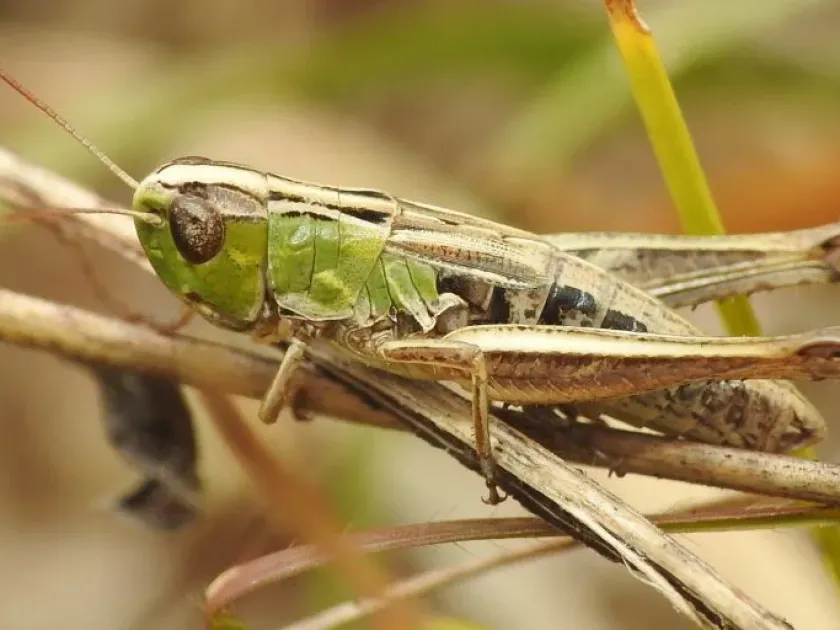
Description
How to identify
Stenobothrus is a genus of grasshoppers belonging to the family Acrididae. They are commonly found in meadows, pastures, and agricultural lands, frequently feeding on various grass species.
Adult insects typically measure between 15 and 25 mm in length. Their coloration ranges from brownish to greenish, which provides excellent camouflage within the canopy of vegetation, making them difficult to detect.
The most distinctive morphological feature of this genus is the shape of their antennae, which are thickened towards the tip. This diagnostic trait helps differentiate them from other Orthoptera species.
They possess strong jumping hind legs and well-developed wings, allowing for rapid movement across fields. This mobility enables them to relocate quickly if their primary food source becomes scarce.
The lifecycle begins with eggs laid in egg pods buried in the soil. These pods serve as the overwintering stage, ensuring the species can survive harsh winter conditions until spring temperatures return.
What it damages
These insects are polyphagous, meaning they feed on a variety of plants, though they show a marked preference for cereal crops like wheat, barley, and oats. They are also common pests in managed grasslands.
Damage is caused by the chewing of leaves, which can lead to significant defoliation. In severe cases, particularly with high population densities, they can destroy entire seedling stands, causing patchy crop emergence.
During the grain-filling stage, Stenobothrus may feed on the developing heads of the plants. This directly impacts the plant's ability to store energy, leading to lower grain weight and reduced overall yield.
The economic impact of these grasshoppers is most severe in drought-prone areas. When wild grasses dry up, the populations migrate to greener, irrigated agricultural crops, leading to intense localized outbreaks.
Crop loss assessment should be conducted regularly to determine if the population density warrants the application of corrective measures to protect the potential harvest.
When it appears
Stenobothrus species typically complete one generation per year. Egg hatching occurs in spring, usually following the first period of sustained warmth that triggers early plant growth.
Nymphal development takes place over several weeks, during which the grasshoppers pass through multiple instars. They are most active and hungry during late spring and early summer as they grow.
Adults emerge in mid-summer. This period is marked by increased dispersal as they look for optimal breeding grounds and food sources throughout the agricultural landscape.
Mating and oviposition occur in late summer or early autumn. Females deposit their egg pods in firm, compact soil, often along field borders, where they will remain dormant until the following season.
The insect population declines as temperatures drop in autumn. The cycle is maintained through the dormant egg stage, which remains safely hidden beneath the soil surface throughout the winter.
Signs of infestation
The first signs of infestation are ragged, irregular feeding marks on the leaf edges. Unlike some pests that leave only veins behind, Stenobothrus consumes the leaf tissue unevenly, leaving a serrated appearance.
A high density of jumping insects in the field is a primary indicator of an infestation. A "rippling" effect can often be seen in the crop canopy as the grasshoppers jump when disturbed by human activity or machinery.
Localized patches of extreme defoliation, often starting from field margins and moving inwards, indicate the presence of a growing nymphal population.
In the later stages of the season, look for damage to the grain heads, which may appear chewed or stripped of their protective glumes, resulting in unfilled or "blank" kernels.
Early morning monitoring is the most effective way to spot the insects, as they are less active and more visible on the stems of the plants before the sun fully warms the environment.
Control measures
Effective management begins with cultural practices, such as deep autumn tillage. This process buries or crushes egg pods, preventing successful hatching in the spring by exposing them to frost and predators.
Controlling weeds along fence lines, ditches, and road verges is crucial. These areas act as breeding reservoirs, and keeping them clean helps limit the initial population density before it reaches the crop.
Chemical control is most effective when applied early in the season, targeting young nymphs. This ensures that the population is managed before it develops into more mobile and destructive adults.
Biological controls, such as the use of entomopathogenic fungi, offer a promising alternative in integrated pest management programs, providing effective suppression with less impact on non-target species.
- Regular field scouting;
- Cultural practices like tillage;
- Border-focused pesticide application;
- Encouraging natural predators like birds and spiders.
Taxonomy
- Latin name
- Stenobothrus
- Order
- Orthoptera (locusts)
- Family
- Acrididae
- EPPO code
- STNBSP
Discussion
No discussions yet — be the first.