

Tarsonemid mite
Steneotarsonemus muehlei
Description
How to identify
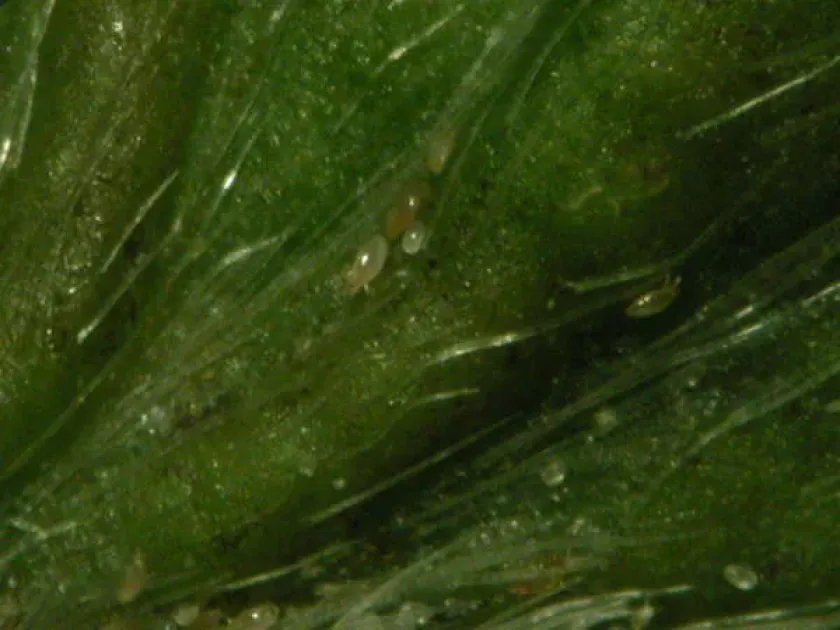
The Steneotarsonemus muehlei mite belongs to the Tarsonemidae family, within the order Trombidiformes. These are microscopic pests that are extremely difficult to identify without the use of a magnifying glass or microscope.
These mites have a specialized body structure that allows them to thrive in the tight, humid micro-environments found within the leaf sheaths and stem bases of various cereal crops.
The life cycle of the mite progresses through several stages: egg, larva, nymph, and adult. Under favorable conditions, particularly high humidity, the developmental cycle is quite rapid.
They are mobile enough to spread between plants in dense stands. Because they feed on internal tissues, they are protected from many environmental factors and common insecticide sprays.
The reproductive strategy of this species involves producing multiple generations in a single season, leading to potential population explosions if left unchecked during the growing phase.
What it damages
This mite species predominantly targets cereal crops, including wheat and barley, as well as various wild grass species. It is considered a significant pest in intensive agricultural systems.
The damage is caused by the mites piercing the plant cells and extracting sap. This leads to nutrient depletion in the growing points, which stunts the overall development of the cereal plant.
Signs of infestation
Signs of infestation include distorted, twisted, and discolored leaves, which often appear stunted compared to healthy plants. In many cases, the growth of the central shoot is severely restricted.
Necrotic patches or chlorotic streaks may appear at the site of feeding. If the infestation occurs early, the plant may fail to produce a healthy head, leading to significant yield reduction.
When inspecting the plants, the presence of these mites in the leaf axils is often accompanied by a general lack of vigor in the crop stand, making it appear thinner and uneven.
Control measures
Effective management begins with strict crop rotation practices. Avoiding the planting of susceptible cereals in fields with a history of infestation is a primary preventive measure.
Controlling weeds in and around the field edges is crucial, as many wild grasses act as alternate hosts, keeping the mite population alive during the off-season.
Chemical control involving acaricides is required when infestation levels exceed economic thresholds. It is vital to ensure good canopy penetration when applying chemical treatments.
Balanced fertilization is essential. While healthy plants are generally more resilient, excessive nitrogen application can create overly lush, succulent growth that is highly attractive to mites.
Regular scouting using magnifying tools during the early growth stages is the most effective way to catch outbreaks. Early detection allows for timely intervention before the mites spread throughout the entire crop.
Content graph
Connections · Tarsonemid mite
Most often together:
Marketplace
Products · 1
Biology
Taxonomy
- Latin name
- Steneotarsonemus muehlei
- Order
- Mites
- Family
- Tarsonemidae
- EPPO code
- TARSMU
Community
Discussion
No discussions yet — be the first.