
Cyclamen mite
Phytonemus
Description
How to identify
The cyclamen mite (Phytonemus pallidus fragariae) belongs to the Tarsonemidae family and is a significant threat to strawberry production globally. These pests are microscopic, reaching only 0.2 mm in length, making them invisible to the naked eye.
These mites are translucent, ranging in color from pale yellow to light brown. Their life cycle is highly temperature-dependent, with rapid development occurring in warm and humid microclimates within the strawberry crown.
They prefer to reside in the unopened leaves of the strawberry crown, where the relative humidity remains high and they are protected from direct environmental stressors.
In optimal conditions, a single generation can be completed in about two weeks. This high rate of reproduction allows the population to expand rapidly during the growing season.
Adult females survive the winter by hibernating within the protective foliage at the base of the strawberry plant, remaining ready to emerge and feed as soon as spring temperatures rise.
What it damages
Strawberries are the primary host for this mite species. The pest feeds by piercing plant tissue and sucking cellular contents, particularly from developing leaf buds.
This feeding activity causes severe metabolic disruption within the plant. As the leaves expand, the damaged tissue cannot develop properly, leading to distortion and stunted growth.
The mites also feed on the developing flower buds. This results in deformed blossoms and fruits that are shriveled, small, and often fail to reach maturity.
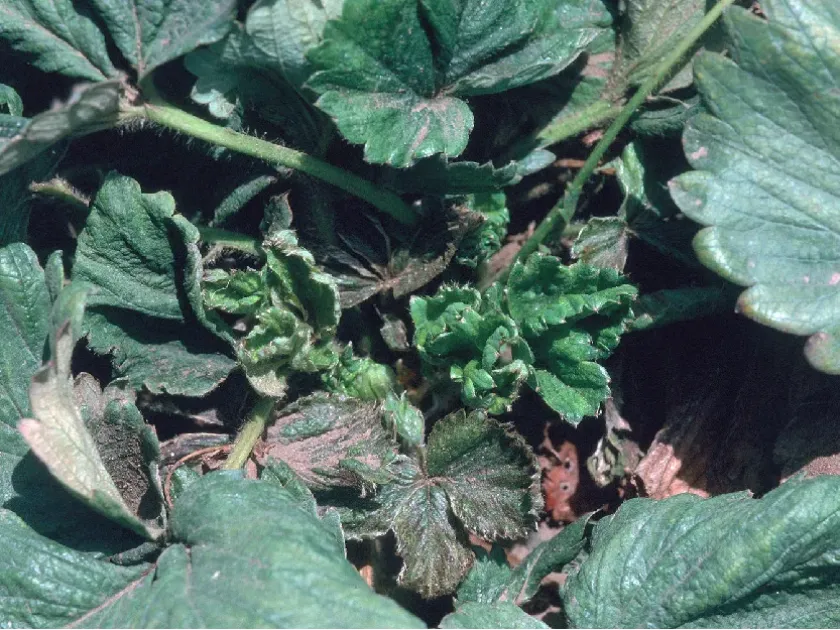
Heavy infestations lead to a condition known as "bronzing," where the leaves turn a dull, reddish-brown color, and the entire plant loses its vigor and vitality.
Chronic infestation results in significant yield reduction, shortened productive lifespan of the strawberry patch, and decreased cold hardiness of the plants.
Signs of infestation
The most distinctive symptom is the severe crinkling and stunting of new leaves in the center of the plant, which often take on an oily or leathery appearance.
Affected plants become increasingly compact, with shortened leaf stalks (petioles) and a crowded appearance that is uncharacteristic of the variety.
Flower stalks often become distorted and shortened. The fruits produced on these plants are typically small, misshapen, and may dry up prematurely.
Localized patches of weakened or stunted plants within a strawberry field are a strong indicator of mite colonization and require immediate investigation.
In severe cases, the apical meristem may die completely, leading to the collapse of the plant and poor survival through the winter months.
Control measures
Integrated Pest Management (IPM) is essential for controlling cyclamen mites, starting with the selection of clean, certified planting stock.
Hot water treatment (soaking dormant plants in water at 45°C for 15 minutes) is a highly effective non-chemical method to sanitize young strawberry crowns before planting.
When chemical intervention is required, growers should utilize specific miticides that are effective against tarsonemid mites, ensuring complete coverage of the plant crown.
- Focus spray applications during early spring and immediately after the harvest season.
- Practice rigorous sanitation by removing and destroying heavily infested plants.
- Improve field airflow by maintaining proper spacing and managing weed growth around the patch.
Always rotate chemical groups to prevent the development of pesticide resistance in mite populations and ensure long-term sustainability of the control program.
Taxonomy
- Latin name
- Phytonemus
- Order
- Mites
- Family
- Tarsonemidae
- EPPO code
- PHTNSP
Discussion
No discussions yet — be the first.