
Tarsonemid mite
Hemitarsonemus waitei
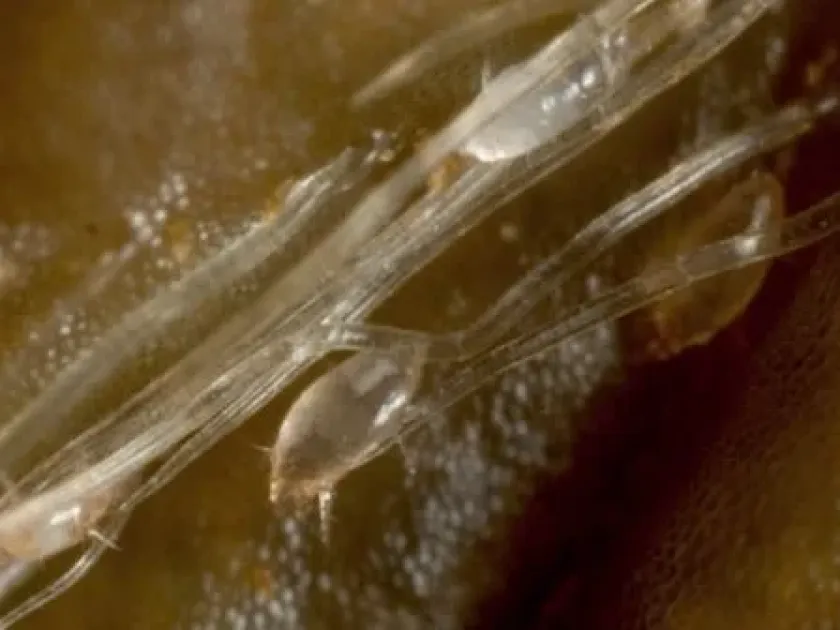
Description
How to identify
The tarsonemid mite (Hemitarsonemus waitei) is a member of the Tarsonemidae family within the Trombidiformes order. These pests are extremely small, typically measuring only 0.2 to 0.3 millimeters in length. Due to their microscopic size and translucent appearance, they are virtually invisible to the naked eye, often remaining unnoticed until significant plant damage has already occurred.
The biological cycle of this mite is characterized by rapid development, especially in warm and humid environments. Female mites lay eggs in sheltered areas of the plant, such as leaf folds, buds, or growing tips. The transition from egg through larval stages to adulthood is quick, facilitating the production of multiple overlapping generations during a single growing season.
In greenhouses, these mites thrive due to controlled moisture levels and the absence of natural predators. Their ability to remain within plant tissues provides them with a refuge from many external environmental factors, making them difficult to manage without targeted integrated pest management strategies.
Dispersal primarily occurs via wind currents or the movement of infested plant material. Because they occupy the most tender parts of the plant, they are easily spread during cultural practices like pruning or harvesting if sanitation protocols are not strictly followed by growers.
Their feeding mechanism involves puncturing individual plant cells to extract contents. Unlike spider mites, they do not produce visible webs, which complicates early detection. Regular scouting using magnification is the only reliable way to confirm the presence of these mites before physical symptoms become severe.
What it damages
This mite attacks a wide variety of plants, including fruit trees, strawberries, and ornamental crops. It focuses its feeding on the meristematic tissues of the plant, which are responsible for active growth, leading to immediate physiological stress and significant loss of biomass and yield.
Signs of infestation
Infested plants exhibit characteristic growth abnormalities such as stunted stems, twisted and brittle foliage, and darkened, glossy leaf surfaces. In extreme cases, the growing tips may die completely, leading to excessive branching or the formation of "witches' brooms" which severely hampers the plant's structural development and productivity.
Control measures
Effective management requires a combination of strict sanitation and the use of acaricides with systemic activity. Because the mites hide deep within buds and leaf crevices, contact-only insecticides are often ineffective, necessitating chemicals that are absorbed by the plant and reach the pest through feeding.
- Use of certified pest-free starter materials and transplants.
- Implementation of biological controls, such as predatory phytoseiid mites.
- Strict adherence to quarantine measures when introducing new plant stock.
- Timely pruning and destruction of infested plant parts to reduce population density.
- Regular cleaning of tools to prevent cross-contamination between crop areas.
Taxonomy
- Latin name
- Hemitarsonemus waitei
- Order
- Mites
- Family
- Tarsonemidae
- EPPO code
- HEMTWA
Discussion
No discussions yet — be the first.