
Staurorhectus longicornis
Staurorhectus longicornis
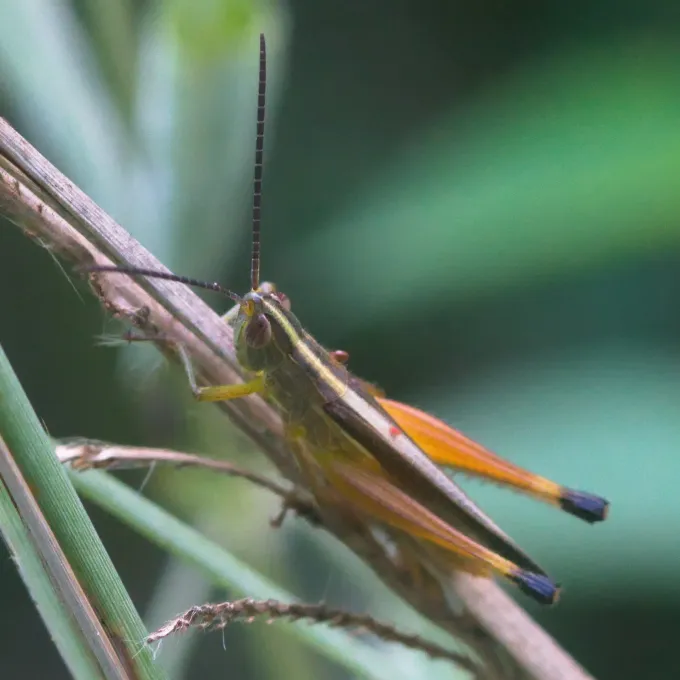
Description
How to identify
Staurorhectus longicornis is a species of grasshopper belonging to the order Orthoptera and the family Acrididae. This insect exhibits typical morphological traits of the family, such as robust hind jumping legs and well-developed auditory organs.
A distinctive feature of this species is its relatively long antennae, which is reflected in its scientific name. Adults typically display cryptic coloration, ranging from grayish-brown to greenish shades, which allows them to blend effectively into dry or green vegetation.
The pest's life cycle involves incomplete metamorphosis, progressing through egg, nymph, and adult stages. Females deposit eggs in the soil, forming egg pods that protect the offspring from harsh environmental conditions during the winter months.
Nymphal development involves several instars, during which the insects feed actively and grow, gradually increasing in size and attaining the characteristics of sexually mature individuals. They are most vulnerable to natural enemies and insecticide applications during this phase.
Population dynamics of the species depend directly on climatic conditions: dry and hot seasons facilitate more intense reproduction and development, which can lead to localized population outbreaks in agricultural areas.
What it damages
The primary hosts for this pest include cereal crops such as wheat, barley, maize, and sorghum. The insect possesses chewing mouthparts, which enable it to consume leaf blades efficiently.
When population densities are high, the pest can cause significant damage to pastures and wild grasses, which are also included in its diet. Under conditions of food scarcity, it may shift to the young seedlings of other agricultural crops.
The most substantial damage occurs during the periods of mass nymph emergence, when they congregate in specific areas of the field. During this time, they can destroy a significant portion of the green biomass in a very short period.
Damage caused by adults is generally less catastrophic than that of the nymphs; however, when adult populations are high, they can lead to severe defoliation and subsequent reduction in plant productivity.
Ultimately, a mass outbreak of this species leads to reduced cereal yields, inhibited plant growth, and weakened plant immunity, making crops more susceptible to secondary fungal and viral infections.
Signs of infestation
The primary sign of infestation is the presence of ragged or eaten leaf edges in cereal crops. Nymphs often leave characteristic holes or completely destroy the leaf blade, leaving only the tougher veins intact.
The presence of the insects is easily detected visually while walking through the field; as a person or machinery approaches, the grasshoppers jump en masse, creating a characteristic rustling sound and a visual effect of the canopy "moving."
In the early stages of nymph development, high concentrations can be found on specific plots, often along the edges of fields or near unplowed roadsides where the hatching from egg pods took place.
A reduction in plant density in crops without visible signs of root system diseases often indicates the activity of these pests as they actively graze on young shoots.
Additionally, an indirect sign is the presence of frass (excrement) on the leaves and stems of plants, appearing as small dark granules, as well as stem damage that may lead to lodging.
Control measures
To control the population of this pest, regular monitoring of fields is recommended, especially during the spring and summer, starting from the phase of mass nymph hatching from the egg pods.
An effective agrotechnical method is deep autumn plowing, which destroys the egg pods and brings them to the surface, where they perish due to cold exposure or become prey for natural predators.
Chemical control involves the use of broad-spectrum insecticides, such as pyrethroids or organophosphates, during periods when the nymphs are in their earlier instars.
It is important to practice crop rotation and eliminate weed vegetation on field boundaries and adjacent areas, which serve as reservoirs for grasshoppers during the off-season.
Biological control methods include the use of entomopathogenic fungi or natural predators; however, these show the best results only when used in an integrated approach alongside preventive measures.
Taxonomy
- Latin name
- Staurorhectus longicornis
- Order
- Orthoptera (locusts)
- Family
- Acrididae
- EPPO code
- STRHLC
Discussion
No discussions yet — be the first.