
Staurorhectus
Staurorhectus
Description
How to identify
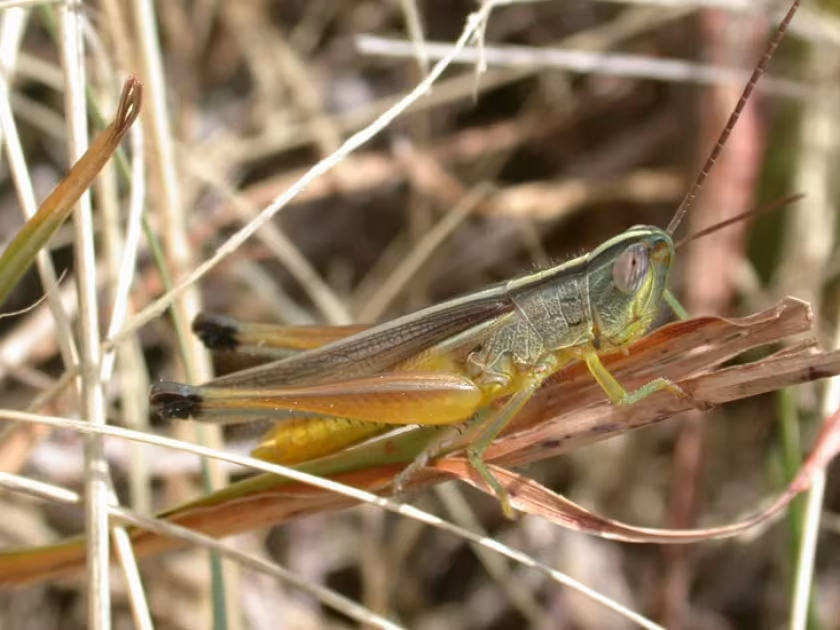
Staurorhectus is a genus belonging to the order Orthoptera and the family Acrididae. These insects are well-adapted to grassland and steppe ecosystems, often flourishing in arid regions.
Morphologically, they possess robust jumping legs, specialized mouthparts for foliage consumption, and camouflage coloration that allows them to remain inconspicuous within vegetation.
The life cycle of the Staurorhectus consists of incomplete metamorphosis, progressing through egg, nymph, and adult stages. This developmental path is highly dependent on environmental temperature and humidity.
Entomological identification focuses on the structure of the pronotum, wing venation patterns, and male genital morphology, which are essential for distinguishing this genus from other grasshopper species.
These pests are most active during warm daylight hours, which is when they conduct their primary foraging activities, impacting the growth and health of surrounding plant life.
What it damages
Staurorhectus species are polyphagous, with a primary preference for various grass species (Poaceae), including major agricultural cereal crops like wheat, barley, and oats.
Damage is characterized by the systematic consumption of leaf tissue and stems. In high-density populations, these insects can cause severe defoliation, significantly reducing the photosynthetic capacity of the crops.
Beyond cereals, they frequently infest pastures and forage fields, directly competing with livestock for nutritional biomass and degrading the quality of grazing lands.
The impact is often cumulative; as the insects feed, they weaken the host plant, making it more susceptible to environmental stressors and secondary pathogens.
In cases of food scarcity, they may expand their host range to include other non-grass species, posing a broader threat to agricultural diversification and economic stability.
Signs of infestation
The primary symptom of infestation is the characteristic "ragged" or "notched" appearance of leaf edges, caused by the insects feeding from the perimeter of the leaves inward.
Field observation reveals high activity of jumping insects, particularly along field margins and near fallow areas, where the population density is usually highest during the early stages of an outbreak.
The presence of fecal pellets (frass) on the soil surface or caught in the leaf axils provides definitive evidence of ongoing feeding activity by the pest population.
Increased yellowing and premature desiccation of plant foliage are common consequences of widespread feeding, often leading to a visible thinning of the crop stand.
In cases of extreme infestation, localized patches of bare ground or completely skeletonized stems appear in the field, indicating the need for immediate intervention.
Control measures
Cultural control is the first line of defense; deep plowing of fields post-harvest destroys egg pods buried in the soil, effectively reducing the emergence of the next generation.
Maintaining clean field borders and eliminating weeds in adjacent uncultivated areas is crucial, as these areas often serve as primary breeding and refuge sites for the insects.
Chemical control is required when monitoring indicates that population density has exceeded the economic threshold. Targeted use of contact and stomach-action insecticides is recommended.
Encouraging biological control by preserving natural enemies, such as insectivorous birds and parasitic wasps, can help mitigate population surges in a more sustainable way.
Regular scouting using sweep nets and quadrat sampling allows farmers to map out hotspots and apply precise treatments, ensuring that crop protection remains cost-effective and environmentally conscious.
Taxonomy
- Latin name
- Staurorhectus
- Order
- Orthoptera (locusts)
- Family
- Acrididae
- EPPO code
- STRHSP
Discussion
No discussions yet — be the first.