
Stathmopoda trissorhitza
Stathmopoda trissorhitza
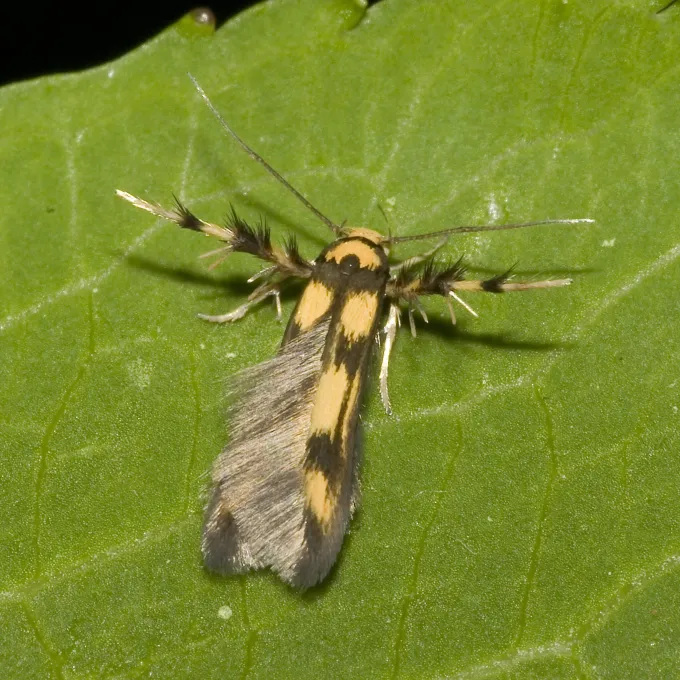
Description
How to identify
Stathmopoda trissorhitza is a moth species belonging to the family Stathmopodidae. These insects are characterized by their narrow wings and a distinctive behavior of lifting their hind legs while at rest, which serves as a key morphological marker for field identification.
The life cycle of this species comprises egg, larval, pupal, and adult stages. The larvae are specialized feeders that typically develop within reproductive plant organs, making their lifecycle synchronized with the fruiting periods of their host plants.
Identifying this pest in the field requires close inspection of fruit development stages. As the moth is primarily nocturnal, adults are rarely observed during the day, making pheromone-based trapping the most effective method for presence monitoring.
The larval stage is the primary focus for control strategies. The morphology of the larvae is adapted for borers, allowing them to penetrate plant tissues efficiently and remain protected from external environmental factors or some contact pesticides.
Ecological studies indicate that Stathmopoda trissorhitza has high reproductive potential under favorable climatic conditions. This requires constant vigilance from growers during the critical growth phases of susceptible host crops.
What it damages
The primary economic damage caused by Stathmopoda trissorhitza is associated with the larval feeding on developing fruits and ovaries. By tunneling into the fruit flesh, the larvae destroy internal tissues, leading to immediate fruit drop or significant reduction in yield quality.
Feeding activity often results in the premature senescence of the fruit. In addition to direct tissue consumption, the damage creates entry points for secondary pathogens, such as fungi and bacteria, which can cause internal decay of the crop.
Commercial producers often face severe sorting losses because damaged fruit, even if still on the tree, fails to meet market standards due to visible exit holes, discoloration, and structural deformation caused by larval galleries.
In high-density populations, the moth can inflict substantial losses on fruit production. The lack of visible external signs during the initial stage of larval infestation often results in delayed detection, which complicates control measures.
Understanding the host-plant interactions is essential. The pest can transition between different fruit varieties if they are available in the landscape, maintaining its population pressure throughout the growing season.
Control measures
Effective management of Stathmopoda trissorhitza relies on an Integrated Pest Management (IPM) approach. The cornerstone is proactive monitoring using specific pheromone lures to time the application of interventions precisely.
Cultural control practices, such as the removal and proper disposal of fallen fruit, are crucial for reducing the overwintering population. Sanitation minimizes the shelter available for pupating larvae, effectively breaking the pest lifecycle.
Chemical control must be timed to coincide with the period between egg-hatching and larval entry into the fruit. Once the larvae are safely inside the fruit, their vulnerability to contact insecticides decreases significantly.
Biological control alternatives, including the use of entomopathogenic microbes or encouraging indigenous predator populations, offer sustainable solutions for managing the pest in both conventional and organic farming systems.
- Strategic use of pheromone traps for monitoring
- Removal and destruction of infested fruit
- Timely application of biological or chemical agents
- Habitat management to support natural enemies
Taxonomy
- Latin name
- Stathmopoda trissorhitza
- Order
- Lepidoptera (butterflies)
- Family
- Stathmopodidae
- EPPO code
- STATTR
Discussion
No discussions yet — be the first.