
Pistachio moth
Stathmopoda masinissa
Description
How to identify
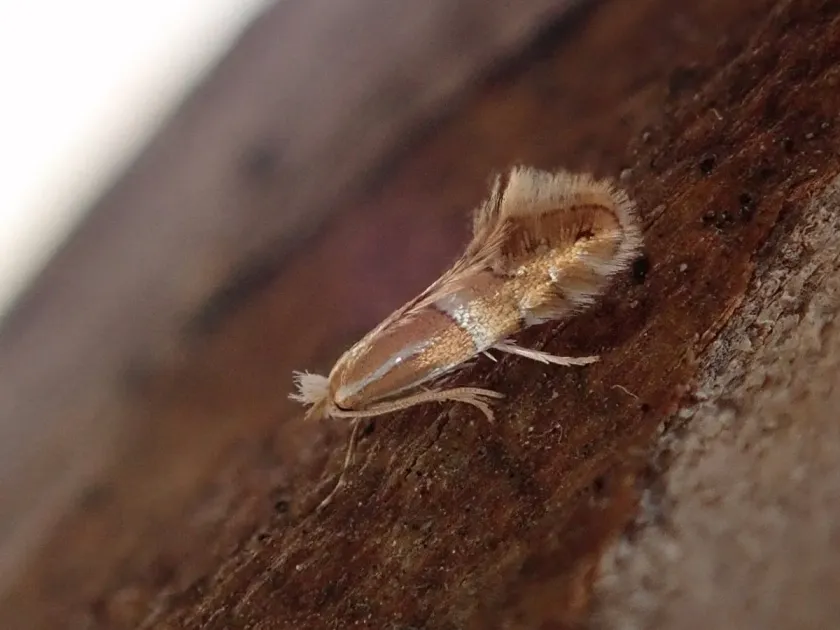
The pistachio moth (Stathmopoda masinissa) is a small insect belonging to the family Stathmopodidae, order Lepidoptera. It is recognized as a significant pest in regions where pistachio trees are cultivated.
Adult moths are characterized by slender bodies and narrow, often patterned wings that allow them to blend into the bark or floral parts of the pistachio tree during the day.
The lifecycle consists of four stages: egg, larva (caterpillar), pupa, and adult. Each stage is strictly adapted to the phenological stages of the host plant.
Larvae are the primary damaging stage. They undergo several molts, feeding actively on the nutrient-rich tissues of the developing pistachio flowers and fruits.
Overwintering typically occurs in the pupal stage. These pupae are hidden within crevices of the tree bark or under the scales of dormant buds, providing protection against winter conditions.
What it damages
The primary damage is caused to the inflorescences and young fruit. This moth can significantly reduce the marketable yield of a pistachio orchard.
Larvae bore into the developing nuts, consuming the kernels and leaving behind hollowed-out shells. This leads to premature fruit drop and direct loss of production.
In the spring, larvae damage the flower clusters, hindering pollination and fertilization. Affected blossoms often desiccate and fail to develop into viable fruit.
High infestations can result in the loss of a large percentage of the crop if monitoring and intervention are not carried out early in the season.
Secondary damage occurs as the moth's entry points into the nuts become sites for fungal infections and bacterial decay, which can spoil the remainder of the crop.
When it appears
Adult moths emerge from their overwintering sites in the spring, triggered by rising temperatures and the onset of pistachio tree growth and budding.
The timing of the moth's flight is closely synchronized with the flowering phase of the pistachio trees, allowing females to lay eggs near food sources.
The number of generations per year depends on the local climate, but typically, peak activity occurs during the spring and early summer months.
The most vulnerable phenological period is during pollination and the early nut-setting stage, when larvae are most active and feeding is concentrated.
By late summer or autumn, the final generation of larvae seeks protected sites for pupation, entering a diapause state to survive the winter season.
Signs of infestation
The presence of fine webbing covering the flower clusters or young fruits is a primary indicator that larvae are feeding in the vicinity.
Small, dark entry holes on the surface of young nuts, often accompanied by frass (larval excrement), are tell-tale signs of an active infestation.
Massive, premature fruit drop in the early stages of development is a common symptom, often indicating that the larvae have already destroyed the interior of the nut.
Visual inspection often reveals withered or discolored flower clusters that remain on the branches, indicating damage to the internal structure of the inflorescence.
At harvest time, growers may find deformed or hollow nuts that do not reach the expected size, signaling that the trees were affected during the growth cycle.
Control measures
Integrated pest management (IPM) is essential. Pheromone traps should be used to monitor adult moth populations and determine the optimal timing for insecticide application.
Chemical control should be targeted during the early bloom stage. It is crucial to apply insecticides before the larvae have penetrated deep into the fruit tissue.
- Sanitary pruning of infested branches to remove hidden larvae.
- Mechanical removal and destruction of fallen fruit and debris.
- Encouraging natural predators and parasitoids that prey on the larvae.
Maintaining clean orchard floors and cleaning the tree trunks of loose bark can eliminate potential overwintering sites for the pupae.
Rotating chemical classes is vital to prevent the development of insecticide resistance, ensuring that the control methods remain effective over multiple seasons.
Taxonomy
- Latin name
- Stathmopoda masinissa
- Order
- Lepidoptera (butterflies)
- Family
- Stathmopodidae
- EPPO code
- KAVOFL
Discussion
No discussions yet — be the first.