
Stathmopoda placida
Stathmopoda placida
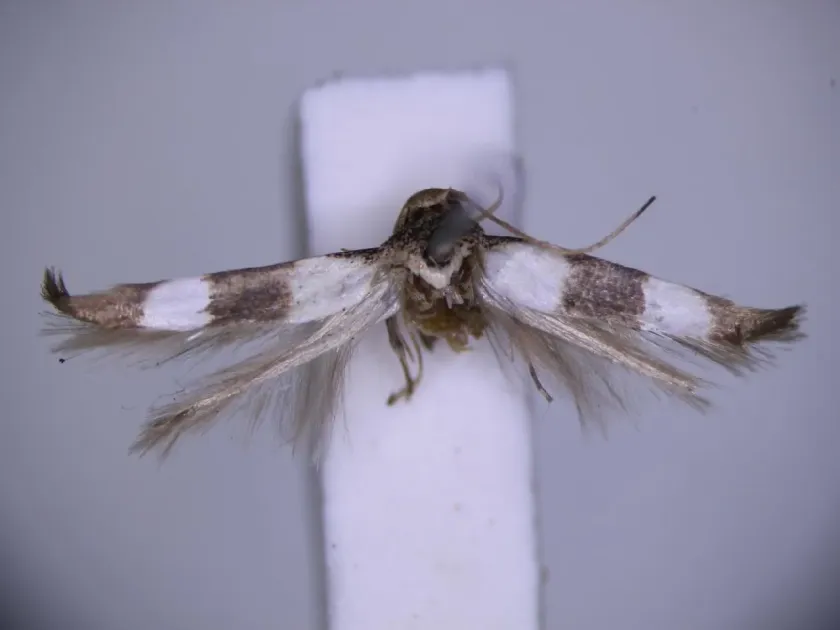
Description
How to identify
Stathmopoda placida is a species of moth belonging to the family Stathmopodidae within the order Lepidoptera. It is recognized as a pest in various agricultural systems where its host plants are cultivated.
The adult moth is characterized by its slender body and narrow, fringed wings. A distinct identification feature of this genus is the habit of lifting the hind legs upward while at rest.
The coloration of the moths is typically muted, blending well with bark and foliage, which serves as an effective camouflage against predators during the day.
The larval stage consists of a caterpillar that is the primary source of damage to plants. It possesses a well-developed chewing mouthpart suited for boring into plant tissue.
The life cycle undergoes complete metamorphosis, including egg, larval, pupal, and adult stages, with the pupal stage often occurring in sheltered locations on the host tree.
What it damages
This pest is primarily known for attacking persimmon fruits (Diospyros kaki). The larvae cause significant damage by boring into the fruit tissue during their development.
Feeding larvae create tunnels inside the fruit, which compromises the skin and allows for the entry of various pathogens, leading to fruit rot and decay.
Premature fruit drop is a common consequence of larval infestation, resulting in reduced yields and direct economic losses for farmers.
Besides immediate loss, damaged fruits that remain on the tree become unsuitable for market and storage due to the presence of internal tunneling and subsequent fungal growth.
High population densities can lead to severe infestations where a significant percentage of the crop becomes affected, necessitating effective intervention.
Signs of infestation
The primary indicators of infestation include small entry holes on the skin of the fruit, often surrounded by darkened, softened tissue indicating early decay.
Frass (larval excrement) found near the holes or at the point where the fruit attaches to the stem is a clear indicator of active feeding within the fruit.
The premature yellowing and dropping of young or maturing fruits are key field signs that warrant closer inspection of the orchard or plantation.
Opening an affected fruit typically reveals internal larval galleries, where the caterpillar can be found feeding or preparing for pupation.
Monitoring adult moth activity using light traps or pheromone lures can serve as an early warning sign before visible damage to the fruit appears.
Control measures
Sanitation is a critical control measure, which includes the immediate collection and disposal of all fallen or damaged fruit to break the life cycle of the pest.
Pruning of infested branches and maintaining an open canopy helps in monitoring the pest and improves the efficacy of applied spray treatments.
Chemical control involving selective insecticides should be timed based on the monitoring of adult flight activity to target the pest before larvae penetrate the fruit.
Biological control, including the use of natural enemies such as parasitoid wasps or predators, can help maintain population levels below the economic threshold.
An integrated pest management (IPM) approach, combining monitoring, cultural practices, and judicious use of pesticides, remains the most sustainable method for control.
Taxonomy
- Latin name
- Stathmopoda placida
- Order
- Lepidoptera (butterflies)
- Family
- Stathmopodidae
- EPPO code
- STATPL
Discussion
No discussions yet — be the first.