
Stathmopoda
Stathmopoda
Description
How to identify
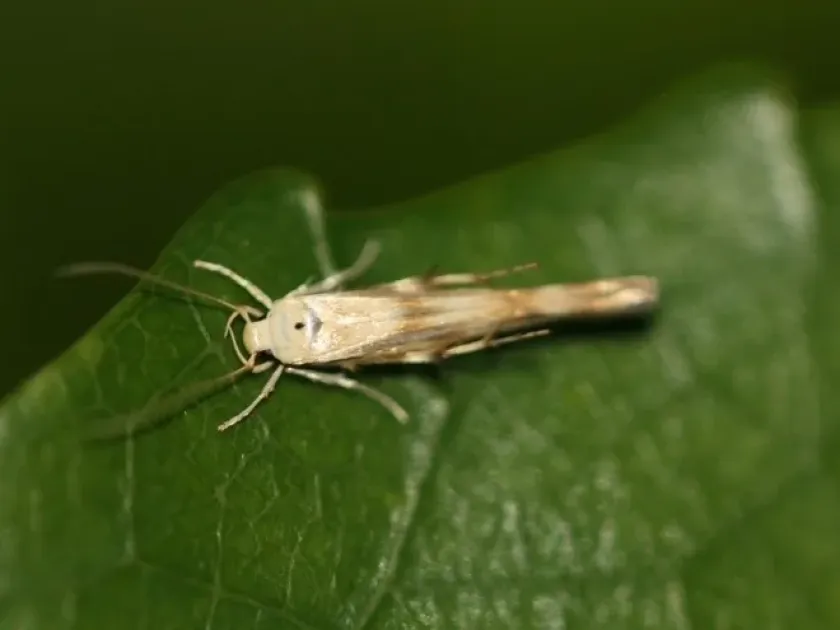
Stathmopoda is a genus of small moths belonging to the family Stathmopodidae. Adult moths are easily identified by their narrow, elegant wings and distinctively long, raised hind legs, which they often hold upwards when at rest or moving, a unique behavioral trait of this group.
These moths are generally small, with a wingspan usually ranging between 15 to 20 mm. Their coloration is often cryptic, appearing as shades of yellowish-brown to dark brown, sometimes with metallic highlights, allowing them to blend perfectly with tree bark or fruit surfaces.
The life cycle follows a complete metamorphosis: egg, larva, pupa, and adult. The larval stage is responsible for the damage, as they pass through several instars, usually sporting a darker head capsule that helps entomologists distinguish them from other fruit-boring larvae.
Pupa formation often occurs inside the fruit or within protected crevices of the tree bark. These pupae are well-adapted to survive dormant periods, remaining hidden from predators and harsh environmental conditions until the next season.
While identification to the species level is best done by a specialist, field identification focuses on observing the moth's posture and the damage patterns on host fruits, which provide clear indicators of their presence.
What it damages
Stathmopoda is recognized as a significant pest for various fruit crops, including persimmon, grapes, kiwifruit, and several stone or pome fruits. Its economic impact is observed in warm and temperate climatic regions globally.
The primary damage is caused by the larvae, which bore into the fruit flesh. These feeding galleries not only destroy the fruit's texture but also create entry points for secondary infections such as fungal and bacterial rots, leading to complete fruit degradation.
Infested fruits frequently drop prematurely, resulting in substantial yield losses for growers. Furthermore, any fruits that remain on the tree until harvest are often unsuitable for storage or long-distance transport, causing further economic losses.
In certain instances, larvae can also damage inflorescences and tender shoots, impacting the plant's overall vigor and reducing its reproductive capacity for the subsequent growing season.
The level of damage is highly variable and depends on population density. High humidity and poor air circulation within the canopy are key environmental factors that aggravate infestation rates by creating favorable conditions for the larvae.
When it appears
The flight period of adult Stathmopoda moths typically coincides with the flowering and fruit-setting stages of the host plants. Being nocturnal, they remain active primarily at night, making them difficult to spot during daylight inspections.
Multiple generations can occur throughout the growing season, depending on the climate. This prolonged activity makes the use of pheromone traps essential for continuous monitoring and timing of control interventions.
Larval pressure usually peaks during the fruit development and maturation stages. Consequently, protective measures must be concentrated in the weeks leading up to harvest to prevent late-season damage to ripening fruits.
Overwintering occurs in the larval stage, often inside cocoons attached to dried fruit mummies, under loose bark, or within leaf litter. They remain in these protected sites until spring temperatures trigger the start of the next cycle.
With the arrival of spring, overwintering larvae pupate, and the emergence of adults begins. These adults then seek out suitable hosts to deposit eggs, initiating the cycle of infestation for the new season.
Signs of infestation
The earliest indicator of a Stathmopoda infestation is the appearance of tiny entry holes on the fruit surface, often near the stalk or the calyx. Darkening of the skin or oozing of fruit sap around these holes is a common secondary symptom.
Upon inspecting the fruit interior, one will find winding galleries filled with frass (larval excrement). The larvae themselves are often visible and move quite actively when the infested fruit is cut open.
Premature ripening or localized rotting on otherwise healthy-looking fruits is a strong diagnostic sign. Growers should pay close attention to any discoloration that differs from the normal maturation pattern of the fruit.
Fine webbing or discarded pupal casings found near the fruit stems or in bark crevices serve as clear evidence of the pest's presence and establish that the tree requires intervention.
Routine inspection of fallen fruit (the "drops") is a critical diagnostic practice. If these fallen fruits show signs of internal boring, it is a definitive signal that the orchard is experiencing an active infestation.
Control measures
The foundation of Stathmopoda management is rigorous orchard sanitation. This includes the regular collection and destruction of fallen fruits and the removal of mummified fruits left on branches, which serve as reservoirs for overwintering larvae.
Chemical control is effective when timed with the egg-laying and larval hatching periods. It is critical to use insecticides during the evening hours to match the pest's peak activity and ensure maximum efficacy.
Pheromone traps are highly effective not just for population monitoring, but also for mating disruption, which can significantly reduce the number of fertile eggs laid if used on a broad scale across the orchard.
Integrated Pest Management (IPM) programs, which include the introduction or preservation of natural enemies like parasitoid wasps, offer a sustainable alternative to frequent pesticide applications in commercial orchards.
Maintaining proper canopy ventilation through regular pruning is a simple yet effective cultural practice. Reducing density and humidity within the tree canopy discourages larval development and makes the fruit less attractive to ovipositing females.
Taxonomy
- Latin name
- Stathmopoda
- Order
- Lepidoptera (butterflies)
- Family
- Stathmopodidae
- EPPO code
- STATSP
Discussion
No discussions yet — be the first.