
Stathmopoda skelloni
Stathmopoda skelloni
Description
How to identify
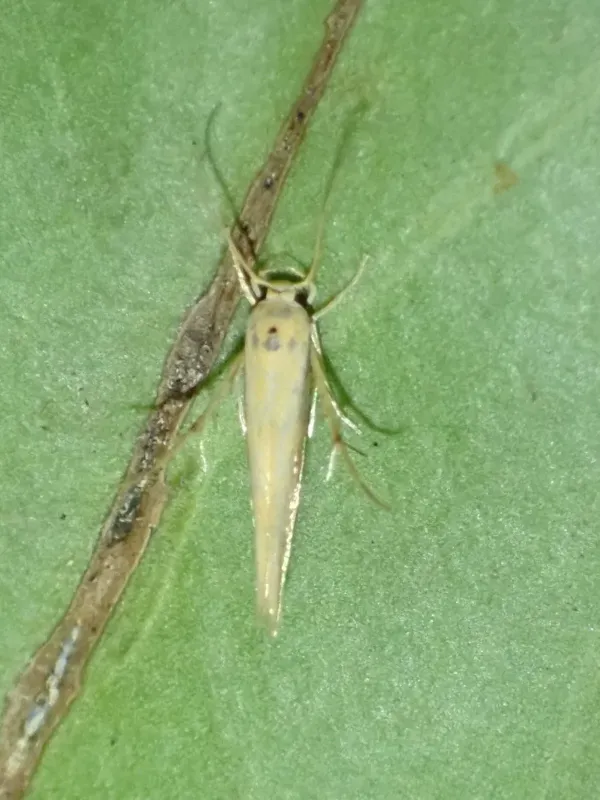
Stathmopoda skelloni is a species of moth belonging to the family Stathmopodidae. These small insects are characterized by their resting posture, where the hind legs are characteristically raised.
The adult moths have narrow wings, often featuring ochre or brown shades, which act as camouflage when they rest on the bark of vines or dried foliage.
The larvae, or caterpillars, are the primary life stage responsible for damage. They possess well-developed prolegs that enable them to navigate within fruit clusters effectively.
The life cycle is closely synchronized with the phenology of the host plant, with winter survival occurring as pupae or larvae hidden in sheltered places like crevices in the bark.
The moth emerges in spring, and females lay eggs on developing plant tissues, ensuring the next generation of larvae has immediate access to food upon hatching.
What it damages
The primary host for Stathmopoda skelloni is the grapevine (Vitis). The larvae are specialized to feed on reproductive organs, which makes them highly destructive to grape production.
Caterpillars cause direct damage by feeding on flower buds and young ovaries, which often leads to the premature abortion of the flower or the entire fruit set.
As the grapes mature, the larvae bore into the fruit. This feeding behavior destroys the interior of the grape, rendering the cluster visually unappealing and prone to rotting.
Damage to the berries provides an entry point for secondary infections, such as gray mold (Botrytis cinerea), which can spread rapidly through the cluster following larval attack.
In high-pressure years, if left unmanaged, the pest can cause significant yield loss, reducing both the marketable volume and the quality of the harvest.
Signs of infestation
The first sign of infestation is often the presence of fine webbing covering the flower clusters or young grape berries, indicating active larval feeding sites.
Visible wilting or browning of individual flowers within a cluster is a key indicator of caterpillar activity that occurred during the bloom period.
Small entry holes on the skin of the grapes, accompanied by frass (larval excrement), are classic symptoms of infestation in the later stages of fruit development.
If clusters show discoloration or premature softening of specific berries, it is likely that a larva has compromised the integrity of the fruit from the inside.
Careful inspection of the vine bark during the dormant season may reveal the silken cocoons where the insect overwinters, serving as a sign of local population density.
Control measures
Sanitation practices, such as removing loose bark and destroying fallen plant debris, are essential to disrupt the overwintering sites of the pest population.
Biological control agents, including parasitic wasps and specific microbial insecticides like Bacillus thuringiensis, are effective if applied during the early larval stage.
Chemical control measures should be timed based on moth flight monitoring using pheromone traps to ensure the application reaches the larvae before they bore into the berries.
Integrated pest management requires consistent monitoring before and after flowering to assess the need for targeted insecticide applications in the vineyard.
Maintaining a balanced ecosystem that supports natural predators can help keep population numbers below the economic threshold, reducing the reliance on chemical inputs.
Taxonomy
- Latin name
- Stathmopoda skelloni
- Order
- Lepidoptera (butterflies)
- Family
- Stathmopodidae
- EPPO code
- STATSK
Discussion
No discussions yet — be the first.